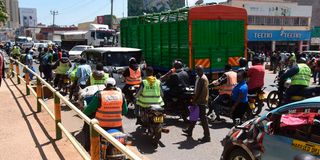
The boda boda sector has become an indispensable pillar of Kenya’s economy, providing income, mobility and opportunity to millions across the country.
With over two million licensed riders on the road, the sector contributes approximately 4.4 percent to the country’s gross domestic product, translating to over Sh660 billion annually.
This rapid expansion since President Mwai Kibaki opened the floodlights for their importation, underscores the importance of these two wheelers as a formal and informal economic engine.
This has also been driven by the fact that owning a motorcycle is becoming an increasingly attainable goal for many Kenyans, thanks to the rise of non-bank lenders offering asset financing solutions.
These lenders are catalysing a significant shift in the country’s boda boda industry — moving riders away from costly rental models towards sustainable ownership.
For a long time, many boda boda operators were trapped in a cycle of daily rentals. While the rental model may appear accessible, especially because it doesn’t require upfront payment, it is ultimately less cost-effective and offers no path to long-term financial security.
With the introduction and expansion of asset-financed motorcycles, the narrative is however changing. Much as there is some scepticism about the upfront costs of asset financing — including initial deposits and structured loan repayments — data increasingly points to it as the more financially sound option.
The economic benefits are striking. Studies show that over a five-year period, the total cost of renting a motorbike can reach up to Sh780,000, compared to about Sh340,000 for a financed one.
This financial relief translates into better daily cash flow, less stress and opportunities to reinvest in one’s business or household needs.
Moreover, the earning potential for asset-financed riders is also stronger compared to hiring from other people. On average, they generate an average of Sh1,100 daily, amounting to more than Sh316,000 annually — and without the drain of daily rental payments, they can retain more of what they earn.
Further, the owners of the bikes are made to pay over a period of time, giving the deal more flexibility especially during hard economic times.
Many asset-financed models offer flexible repayment plans, such as daily or weekly instalments, allowing riders to match payments with their income cycles. This flexibility has made it possible for even low-income earners to work towards ownership without the burden of large monthly bills.
The riders who own motorcycles report higher financial confidence, are better able to plan for the future and often participate in savings and investment groups such as Saccos. These cooperatives not only provide financial tools but also promote responsible riding and community engagement.
This transformation also plays into broader national goals. As the country pursues inclusive growth and youth empowerment, enabling boda boda operators to build assets supports both personal and national development.
The sector's integration into agriculture, logistics, health, and education illustrates its utility beyond transport — it is a lifeline connecting goods and services across the country.
As Kenya’s digital economy grows, so does the demand for last-mile delivery, and boda boda riders will be central to the rise of platform-based commerce. For example, the Competition Authority projects a 20 percent growth in the delivery market by 2027.
Amid rapid urbanisation and digitisation of the economy, supporting the boda boda sector with better regulation, safety, and financial access will be vital in harnessing the sector's full economic and social potential.
The shift from renting to ownership, driven by non-bank lenders, is the classical example of the structural evolution in the boda boda sector, empowering riders, boosting productivity, and fostering long-term stability.
As more operators embrace this model, the sector stands to become safer, more organised, and increasingly impactful. With the right support and continued access to credit, the journey from two wheels to financial independence is now more achievable than ever.
The writer is the Kenya Country Manager at Watu Credit
Unlock a world of exclusive content today!Unlock a world of exclusive content today!