The battle against malaria remains a major public health challenge in Kenya and many African countries. While recent efforts have yielded results, the prevalence remains high.
The Ministry of Health estimates roughly 5.5 million cases in 2023 alone. According to the World Health Organization (WHO), more than 12,000 Kenyans died from malaria in 2022 alone, yet effective interventions exist.
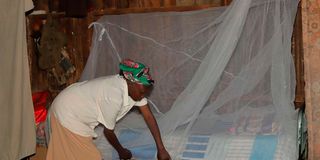
We already know that the use of insecticide-treated nets, rapid diagnostic kits, community outreach, and effective medicines, among other strategies, reduces malaria deaths and disease.
Sadly, the majority of these have been heavily reliant on donor funding. As donors continue pulling out, our ability to scale and sustain these interventions is running dry.
What this means is that we need a new way of thinking. A way of transitioning from donor reliance to self-sustenance. The Lake Region and Coastal counties have historically been the hardest hit by malaria. Innovative solutions are therefore expected to emanate from there.
Homa Bay County is proving that reliance is possible through well-thought-out public-private collaborations (PPCs).
The county achieved a 15 percent drop in malaria incidence between 2021 and 2023, with further declines in 2024 and 2025. In a sharp departure from the traditional donor-powered solutions, these gains have been largely driven by county-level innovations, backed by strategic partnerships with private sector healthcare actors, data providers, and civil society.
Homa Bay is making a strong case for co-investing in healthcare interventions to help meet health, social and economic development goals.
We know from previous Global Fund analyses that every Dollar invested in malaria control yields $31 in economic and health returns through increased productivity, reduced treatment costs, and healthier communities overall.
The Zero Malaria Campaign Coalition underscores the importance of partnerships between public and private institutions as a transformative approach to fighting malaria.
Across Kenya, smart partnerships between public institutions and private innovators are quietly transforming the way we fight malaria.
A standout example comes from the Kenya Medical Research Institute (Kemri), whose groundbreaking work in malaria diagnostics is bearing fruit. Tools like the locally developed Plasmocheck Malaria Rapid Diagnostic Kit are now being deployed in places like Busia and Siaya as part of the National Malaria Control Programme’s efforts.
But Kemri hasn’t walked this journey alone. Japan, through JICA, has long been a committed partner, supporting research and innovation in malaria testing. While public pilots linking startups to supply-chain platforms haven’t been fully rolled out—or documented—this collaboration is showing that when research meets resources, impact follows.
Under Kenya’s devolved system of governance, counties oversee about 70 percent of public-sector health functions. On paper, this is a powerful mandate. In practice, it’s becoming harder to deliver on.
National budget constraints are biting. At the same time, donor support, once the backbone of health sector funding, is stagnating or falling off altogether as global attention shifts elsewhere.
The result? Counties are left grappling with big responsibilities and very limited means.
Even when private-sector players are keen to invest in county-level health services through public-private community partnerships, progress stalls. Why? Counties often can’t provide the financial guarantees that make long-term private investment possible.
Most don’t budget for feasibility studies, the early-stage groundwork needed to move ideas from ambition to execution. Add to that a thicket of policy complexities and unclear legal templates, and it’s no wonder risk-averse investors hesitate. The system, as it stands, makes it hard for either side to move forward.
Worse still, mechanisms for rigorous evaluations and cross-county learning remain nascent.
Lessons and success stories in counties rarely permeate to other regions, limiting potential for peer-learning, co-investing in larger ticket-size items, and scaling across the country. Yet there are strong examples of PPCs in the country to aid in the fight against malaria and other healthcare challenges.
Tharaka Nithi County, for instance, is implementing an innovative laboratory diagnostics PPC whose lessons could massively benefit other counties struggling to scale diagnostics. Nakuru and Trans Nzoia Counties are using unique partnership models to strengthen primary healthcare and improve social accountability.
Kajiado, Makueni and Lake Region Economic Bloc counties are implementing initiatives aiming to scale innovations through public systems for better equity and impact. At the Coast, Kilifi County and Pwani University are working on a public-private partnership (PPP) that will see a multi-speciality hospital established to strengthen training and service delivery.
And there are many more examples across different counties. These provide opportunities for peer-learning as we look to scale services independent of donor funding.
To unlock the full potential of health PPCs, we need a coordinated push. This means fixing residual policy and institutional gaps that have long plagued Kenya’s PPP frameworks.
First, the National Treasury must lead from the front. Counties cannot shoulder the risk of these partnerships alone. A Devolution Health Guarantee Fund could be a game-changer. By offering partial sovereign backing—say, through letters of comfort or government support clauses the Treasury can give counties the credibility they need to attract private investment.
Then there’s the matter of feasibility studies. Without them, no investor will commit. A modest annual allocation of say, £6 million (roughly Sh900 million) to a Health Feasibility Grants Programme could fund 25–50 project assessments every year.
Administered jointly by the Ministry of Health, Council of Governors and Treasury, this would bring Kenya in line with global best practice and build a solid pipeline of investment-ready projects.
Adaptive learning must sit at the centre of PPC initiatives to build experience and establish evidence that can be built upon as more initiatives are tested and scaled. We propose the establishment of a ‘joint learning mechanism’, primarily housed within the Council of Governors peer-learning framework, but supported by academic and learning partners across respective regions and counties.
Counties, for their part, must step up and institutionalise PPC capacity. This could mean passing legislation to create County Health PPC Units, dedicated teams embedded within county governments.
These units should bring together finance experts, procurement officers, and impact evaluators who can shepherd projects from concept to implementation.
It’s also essential to build trust between counties and private partners. Transparent revenue-sharing frameworks must become the norm. Whether it’s service fees tied to performance or rebate structures, counties must spell out how private players will recoup their investments. Clear terms mean aligned incentives and less room for suspicion or misunderstanding.
Development partners remain important, even as the traditional aid model changes. Partners can play an important role in providing catalytic and bridge financing to improve chances of success and promote PPC sustainability. There’s also a need to review and improve the 2020 Kenya Health PPP Strategy and Resource Guide, guided by recent experience implementing PPC projects in health.
Working with the Ministry of Health and Council of Governors, organisations like Open Phences and the Zero Malaria Campaign Coalition could help convene relevant forums to institutionalise health PPCs and investment mechanisms, update PPC resource guides and toolkits, promote peer-learning and exchange, test, introduce, and/or scale health PPC contract templates, risk-sharing models, and performance and compensation/revenue-sharing benchmarks.
That said, frameworks alone won’t do. We propose that government and development partners consider seeding up to five scalable PPC initiatives with high potential for impact, and establishing a strong evaluation and adaptive learning framework alongside to solidify lessons and build experience for scaling.
For partners, these could be embedded within their “aid-exit” strategies, helping Kenya transition from aid and potentially open up the national and county governments as investment destinations for their companies. Imagine digital information management systems tracking patients in real time, powered by solar solutions that also support cold chain storage of vaccines in Kwale or Marsabit counties.
Such initiatives would do more than prove the blueprint’s worth. They’d show that it is possible to invest in health systems for impact, and still make a decent return. More importantly, these will allow us to appreciate areas where PPCs work, and those where PPCs don’t work very well and therefore need to be prioritised for public investment.
Picture this: from the sun-scorched plains of Turkana to the green hills of Taita-Taveta, every county in Kenya harnessing well-informed PPCs to build health systems that deliver quality, equitable care.
Homa Bay could scale up its rapid-test model to ensure no facility runs out of essential drugs.
Makueni’s solar-powered water treatment systems could free up funds to open more maternal clinics. Tech firms could pitch real-time disease monitoring platforms to governors eager to stay ahead of outbreaks and scale these through public systems.
We already know malaria control works and pays off. It’s a clear case where the returns, both financial and human, far exceed the costs.
Now imagine channelling that same thinking to other areas, including communicable diseases like HIV and TB, non-communicable diseases like hypertension and diabetes, accidents and injuries, disease outbreaks and pandemics, neglected tropical diseases, and other aspects of health systems, including health information management, and sharing and optimising human resources for health across sectors.
This is more than a health agenda. It’s a vision for sustainable development, made in Kenya and owned by Kenyans. We just need to build the system to make it real.
Wanga is the Governor, Homa Bay County, and Vice-Chair, COG Health Committee Wafula is Associate Professor of Health Systems, Strathmore University & Open Phences Team Leader
Unlock a world of exclusive content today!Unlock a world of exclusive content today!