Criminal prosecution does not shield tax evaders from paying up claims

Deliberate failure to file tax returns, gross under-declaration or omission of income, concealment of income, falsification of records, and the claiming of fraudulent refunds constitute prosecutable tax offences.

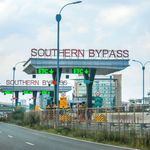
Photo credit: Shutterstock

It is a fundamental principle of tax administration that a person suspected of evasion must not be permitted to benefit from their wrongdoing.

Therefore, criminal prosecution does not preclude the recovery and payment of taxes due, nor does the settlement bar prosecution.

Deliberate failure to file tax returns, gross under-declaration or omission of income, concealment of income, falsification of records, and the claiming of fraudulent refunds constitute prosecutable tax offences.

Additional offences include misdeclaration of imported or exported goods, undervaluation, tariff misclassification, and other intentional breaches of tax and customs laws.

A robust investigations and enforcement function within the Kenya Revenue Authority (KRA) is therefore imperative—not only to safeguard revenue collection, but also to foster public confidence in the integrity of the tax system and to ensure that perpetrators of tax crimes are held accountable.

Tax investigations involve inquiries into a taxpayer’s affairs where the Commissioner for Investigations and Enforcement has reasonable grounds to suspect a tax offence.

Such investigations are initiated through a rigorous, intelligence-led approach designed to identify not only the principal offenders but also any facilitators, collaborators, and beneficiaries of the unlawful conduct.

An intelligence-guided, prosecution-led investigation focuses on gathering relevant and admissible evidence to support the prosecution, conviction, and recovery of taxes due from offenders. The prosecution of tax offenders serves as a vital deterrent against continued non-compliance and reinforces the rule of law.

Importantly, prosecution does not extinguish the obligation to pay taxes.

Section 193A of the Criminal Procedure Code provides for concurrent civil and criminal proceedings.

Similarly, Section 105 of the Tax Procedures Act provides that where a person is convicted of an offence under a tax law and for which taxes were not paid, the court may order the convicted person to make payment to the commissioner of the whole or such part as remains unpaid either in addition to, or in substitution of, any other penalty.

Further, Section 108 of the Tax Procedures Act provides that the amount of any tax or late payment interest due and payable under a tax law shall not be abated by the prosecution of a taxpayer for an offence under a tax law.

Accordingly, a person under investigation, prosecution, or even upon conviction for tax evasion remains liable to settle all outstanding taxes, penalties, and interest.

Doreen Mbingi is the Acting Commissioner for Investigations & Enforcement, Kenya Revenue Authority

PAYE Tax Calculator

Note: The results are not exact but very close to the actual.