Countries organise themselves into regional blocs for political and socio-economic reasons. These groupings protect shared interests and strengthen collective bargaining power. Behind the many trade principles lies the most powerful and least understood: rules of origin.
Rules of origin determine which country’s tariff, quota or sanction applies to an imported good, effectively assigning products their economic nationality. What was once a technical customs concept has become increasingly consequential.
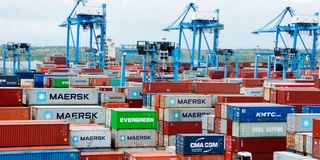
Rules of origin fall into two categories: preferential and non-preferential. Preferential rules, embedded in free-trade agreements, decide if a product qualifies for reduced or zero tariffs in a bloc.
The criteria have been straightforward. A good is considered originating if it is “wholly obtained” in one country – such as agricultural produce or minerals – or “substantially transformed” there through meaningful manufacturing or processing.
However, these “usual criteria” are becoming less usual. The shift is clearest in the US. President Donald Trump brings into the open what many politicians and trade specialists prefer to keep obscured. Under his influence, Washington has begun to rethink what rules of origin actually mean.
The US-Mexico-Canada Agreement signals a potential break with long-standing practice. A new principle is emerging; sovereign control rather than physical presence.
Under this approach, origin would depend on who owns, controls and directs the producer. The objective is to prevent Chinese firms from establishing factories in Mexico in order to gain preferential access to the US market.
Europe is moving in a similar direction. Under the EU-UK Trade and Cooperation Agreement, fish caught outside territorial waters qualify as “originating” only if the vessels are registered, flagged and at least 50 per cent owned by nationals or companies of either the UK or the EU.
Rules of origin, once a dry customs exercise, are being repurposed as instruments of geopolitical screening.
The writer is a trade policy analyst and customs risk specialist.
Unlock a world of exclusive content today!Unlock a world of exclusive content today!