Githunguri in Utawala does not try to impress, especially on a rainy day. The entrance feels chaotic and almost clogged. Muddy patches cut across the access roads, and puddles stubbornly pool in uneven spots. Movement slows to a crawl as vehicles, boda bodas and pedestrians negotiate the space.
Yet, as any seasoned property seeker will tell you, this is exactly the time to come looking for land. Beyond this first impression lies one of Nairobi’s fastest-evolving peri-urban zones, shaped by affordability, infrastructure expansion and relentless demand for housing and commercial space.
“I have lived in Githunguri since 1999. That’s when I bought land and settled here,” says Dr Charles Monda, a lecturer at St Paul’s University.
Like many early residents, his decision was driven by cost. “As Nairobi expanded to Thika Road, Kinoo and Rongai, plot prices were quite high. We heard that Githunguri in Utawala had cheaper plots, even though there were no proper roads at that time,” he recalls.
Back then, the area was organised under ranching systems. Ownership came through shares, and eventual subdivision created the grid that defines Githunguri today.
“I bought land from someone who owned 13 acres and had subdivided it into plots measuring 40 by 80 feet,” says Dr Monda.
Those plots were incredibly affordable. “At the time, they were selling for just Sh6,000, and I bought my two plots for Sh12,000,” he says. Today, the same size fetches millions. “Currently, the cheapest plot measuring 40 by 80 feet can be priced at Sh3 million.”
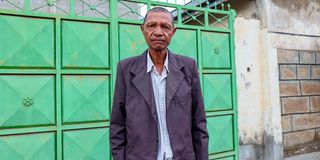
Charles Monda, a resident of the Githunguri area in Utawala, Machakos County, on May 1, 2026.
Photo credit: Wilfred Nyangaresi | Nation Media Group
Price surge
This increase in price is closely tied to growth in infrastructure. The Eastern Bypass and the expansion of Mombasa Road and Thika Road pulled Utawala firmly into Nairobi’s commuter belt.
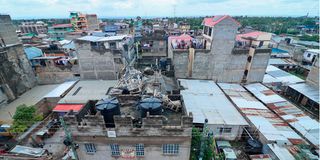
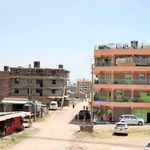
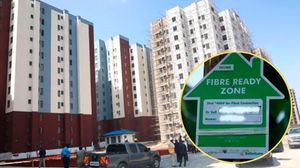
Construction now defines Githunguri’s identity. Unfinished buildings stand beside newly completed rental properties, while others are being built floor by floor.
“The only problem is that, over time, we may start to experience congestion in the area. This is especially likely as more flats continue to be built,” warns Dr Monda.
That early subdivision into 40 by 80 plots did more than make land accessible; it determined how Githunguri would grow. Buildings stand wall to wall, and schools are squeezed between rental blocks.
“The 40 by 80 plots are small, and you can see how flats are being built. The houses will definitely be squeezed together,” he says.
Developers continue to pour in, targeting rental income rather than owner-occupied housing.
“People started moving to Githunguri in large numbers from 2020, especially after the Eastern Bypass was paved. You can see that the buildings are quite new, which means construction is still ongoing,” adds Dr Monda.
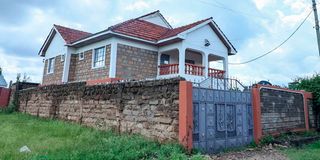
A home at Githunguri area in Utawala, Machakos County on May 1, 2026.
Photo credit: Wilfred Nyangaresi | Nation Media Group
Commercial shift
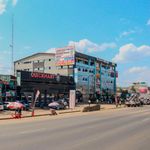
Closer to the main tarmac road, the commercial shift is unmistakable. Rental blocks rise to three or four storeys, competing with roadside shops.
Height restrictions, partly linked to flight paths, cap vertical expansion, but density is still increasing.
“Some of these flats may not be very tall because this is a take-off zone for flights. The highest they’re supposed to go is three or four floors,” Dr Monda explains.
What began as a residential area is fast becoming commercial.
“When we bought here previously, we wanted a residential home. Unfortunately, people have turned it into a commercial area, especially since the roads were built. Sadly, we didn’t have controlled development. That’s why you see lots of flats being built,” he says.
Drainage remains a pressing challenge. “There is a lot of water and sewage, especially when it rains,” he notes.
Another long-time resident, William Kayago, echoes this concern: “My compound is flooded due to the rainy weather. There are a lot of rental buildings that do not have proper drainage.”
The problems also affect feeder roads, water supply and electricity.
A flooded road following heavy rains in the Githunguri area of Utawala, Machakos County on May 1, 2026.
Photo credit: Wilfred Nyangaresi | Nation Media Group
“Fresh water is another problem. They are laying pipes, but the water has not started flowing yet. We use borehole water, which is not very safe, so we end up buying drinking water from vendors,” says Dr Monda.
The electricity supply is patchy. “Most of our streets are very dark. If you are late getting back from town, it is difficult to find your way home. It is so dark that anyone could feel unsafe.”
Growth story
For residents like Mr Kayago, growth was expected. “I used to live in Umoja, then in Kayole, before buying land here in Githunguri. I moved here in 2002 but did not build until 2006. What attracted me was its potential. I knew it would grow,” he says.
Back then, even basic administration was absent. “We did not have a police station; we used to go all the way to Ruai. There was not even a chief’s office, but they are available now.”
William Kayago, a resident of the Githunguri area in Utawala, Machakos County, on May 1, 2026.
Photo credit: Wilfred Nyangaresi | Nation Media Group
His investment reflects the price advantage that once defined the area. “I bought my plot measuring 40 by 80 metres for Sh35,000. The area has grown significantly. We have seen a lot of businesses come in and commercial premises being built. It is not the same,” he says.
Market today
Patrick Muchiri, a land agent and resident since the early 1990s, remembers when Githunguri was almost empty.
“When I arrived in 1993, there were only about 10 of us. There were hardly any houses, and the area was very green,” he says.
His first purchase reflects the undervaluation of the time. “I bought my plot, which is 40 by 60, for Sh16,500, even though it is near the road.”
Today’s market is unrecognisable.
“We have plots measuring 40 by 80 metres, 30 by 60 metres and 50 by 100 metres, which are currently selling for around Sh6 million. If it is not the same size and near the tarmac, it will go for about Sh5 million,” he says.
Patrick Muchiri, a resident and land agent, during an interview at Githunguri area in Utawala, Machakos County, on May 1, 2026.
Photo credit: Wilfred Nyangaresi | Nation Media Group
Availability near the main road is almost non-existent. “The whole area near the tarmac is full. It is full of commercial buildings.”
The buyer profile has also changed. “Those buying are mostly young people in their 30s who want to build commercial structures. This year, I have only sold three plots,” says Mr Muchiri.
Rental demand reflects the population density. “A one-bedroom property will cost around Sh12,000 or more and a two-bedroom property up to Sh30,000,” he notes.