Time flies with great content! Renew in to keep enjoying all our premium content.
Prime
Developers relief on softened construction inflation
The number of building works completed in Nairobi increased by 15.1 percent to 25,090 units, largely driven by residential housing, which rose by 18.2 percent.
The overall growth in average prices of key construction components, including materials, fuel, labour, and transport, flattened in 2025, providing relief to developers and contractors after years of elevated building costs that had squeezed margins.
Data from the Kenya National Bureau of Statistics (KNBS) shows that growth in the Construction Input Price Index (CIPI) dropped to 0.5 percent in 2025 from 2.8 percent in 2024 and well below the recent peak of 7.48 percent recorded in 2022.
The CIPI tracks changes in the cost of essential inputs such as cement, steel, equipment, wages, transport, and energy, pointing to a broad-based easing of price pressures across the construction value chain.
The deceleration marks the lowest annual increase in more than half a decade and translated some relief in construction budgets.
“The average annual inflation declined from 2.8 percent in 2024 to 0.5 percent in 2025,” KNBS said in the newly published 2026 Economic Survey, highlighting the scale of the slowdown in input cost growth.
The easing in construction costs coincided with continued momentum in ongoing projects.
The data shows that cement consumption - a key indicator of building activity - rose by 20.3 percent to 10.3 million tonnes, suggesting that developers pushed ahead with projects already in the pipeline as input prices stabilised.
Employment in the sector also expanded by 2.1 percent, driven by gains in both private and public construction activity. Private sector employment increased to 228,200 workers, while public sector jobs rose to 10,100.
This came in a period when commercial banks increased lending to the construction activities, including real estate development, by 12.2 percent to Sh646.5 billion, signalling sustained financing support.
Caution on new projects
The benefits of lower input costs were, however, not fully reflected in new project pipelines.
The value of private building plans approved in Nairobi declined by 9.2 percent to Sh201.3 billion, indicating that developers are holding back on new investments despite improved cost conditions.
The number of building works completed in Nairobi increased by 15.1 percent to 25,090 units, largely driven by residential housing, which rose by 18.2 percent.
Public sector construction, backed by billions of shillings in housing levy flows, also played a critical role in sustaining activity.
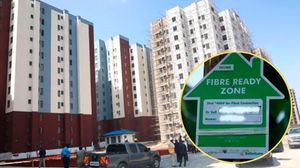
The State Department for Housing and Urban Development, together with the National Housing Corporation, ramped up delivery, with completed housing units rising to 7,148 in 2025 from 1,655 the previous year.
The value of these projects more than doubled to Sh8.2 billion.
The data underscores a sector in transition, where developers largely benefitted from stabilised input costs across materials and labour, but remain cautious about launching new projects.