Real estate investors are expected to hold back on launching new projects for 2026, instead opting to complete ongoing ones and absorb completed units, a new market tracker says.
A review by real estate firm Knight Frank showed that real estate investors have adopted a cautious wait-and-see strategy on election-related uncertainty, with supply largely limited to completion of ongoing projects.
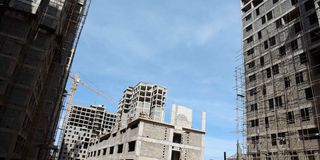
“The real estate sector outlook for 2026 points to a year of absorption and completion. Developers are expected to focus primarily on completing existing projects, while absorption of current stock is likely to improve as new supply remains constrained,” the firm said.
Kenya heads to General Elections in 2027 with campaigns already taking centre stage in many parts of the country amid rising uncertainty over risks of chaos in some areas.
The global World Security Report 2025 by security firm Allied Universal and its local arm G4S said political instability and civil unrest overtook economic volatility as the biggest threat to Kenyan businesses in 2026, forcing firms to reallocate budgets towards physical security and crisis preparedness.
The report published in December found that 45 percent of Kenyan chief security officers ranked political instability as their top concern, while 43 percent cited civil unrest, both well above regional averages. Economic instability, which had dominated the previous year’s outlook at 52 percent, had fallen to 41 percent.
Knight Frank said investor appetite for real estate has shifted despite macro-economic stability.
“Expansion is expected to be strongest in segments supported by targeted capital inflows, particularly affordable housing, underpinned by the World Bank financing package and the Housing Levy.
Although the stabilisation of the shilling and easing interest rates should support developer and investor confidence in 2026, uncertainty surrounding the 2027 general election presents a material risk,” Knight Frank said.
“As a result, 2026 is likely to be characterised by a cautious, wait-and-see investment stance, with supply largely limited to the completion of ongoing projects and the launch of new developments remaining subdued,” the real estate firm said.
Subdued investment would build on a trend from 2025 in which a growing number of private investors have been cutting back on new housing projects amid jitters on disruptions of the State’s ramped-up affordable housing programmes (AHPs), high material costs, and market shifts towards mixed-use units.
Data by the Kenya National Bureau of Statistics shows that the value of building approvals in Nairobi dropped by 24.5 percent during the first 11 months of 2025 compared to a similar period the prior year, underlining a continuous go-slow in private construction activity as developers cut back amid uncertainty of housing demand and rising project costs.
It shows that Nairobi City County approved building plans worth Sh149.2 billion between January and November 2025, down from Sh197.5 billion over the same period in 2024.
Private investors have held back as government-backed housing projects expand supply, particularly in residential segments that dominate Nairobi’s construction market.
In March last year, the Parliamentary Budget Office warned that public investment in affordable housing may be crowding out private capital, reducing credit to the private building and construction sector.
The government says more than 239,446 houses are currently under construction under the AHP.
The rising cost of construction has also raffled developers. For instance, data shows that construction costs rose by up to 16 percent in the 10 months to October 2025, driven by higher fuel prices, inflation, and rising material costs.
The Architectural Association of Kenya, in a recent update, revealed that the average cost of building a standard bungalow, for instance, increased to Sh54,730 per square metre in +2025, while maisonettes rose to Sh59,868 per square metre, both having risen 12 percent during the period.
KNBS data shows that the construction sector expanded by 6.7percent in the third quarter of 2025, marking a rebound from the contraction recorded in the previous year. This was backed by a 21percent year-on-year increase in cement consumption over the first 11 months of 2025, signalling strong activity in project completion nationwide.