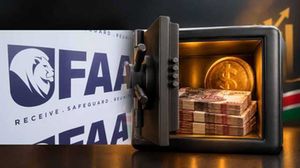
A group of fund managers plans to set up a Sh388 billion ($ 3 billion) reserve aimed at buying out investors seeking to exit their stakes in firms through the Nairobi Securities Exchange (NSE).
An exit occurs when an investor opts to sell part or all ownership in a company. In a healthy or growing company, an investor may exit to gain a return on investment. In some cases, an exiting investor may want to access cash to invest elsewhere.
In Kenya, exits mainly occur through secondary buyouts where a strategic investor, such as a private equity fund, acquires the stake of the exiting shareholder, with investors citing low liquidity and challenges with striking fair value of their assets.
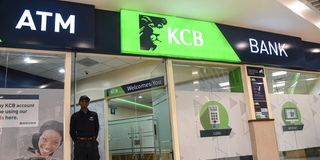
The group of fund managers, which is anchored by KCB Investment Bank, said that the Sh388billion reserve would help unlock investor exits through Initial Public Offers (IPOs) at the bourse. The reserve is scheduled to begin operations in the fourth quarter of 2026.
“We realised that to see exits happen via the NSE demands that we reorganise our market. Collectively as an industry, if you look at pension funds, we are talking about Sh2.8 trillion in assets under management. If you look at Collective Investment Schemes, they are holding close to Sh1 trillion. KCB Investment Bank is taking the lead in determining how we can reorganize ourselves as an industry to ensure this Sh3.8 trillion helps unlock exits via the NSE,” KCB Investment Bank’s Managing Director, Maurice Opiyo, said in an interview.
Among the latest exits via secondary buyout was the January 2025 sale of Java Coffee House by London-based private equity fund Actis, to Alterra Capital and Phatisa Group. In July 2025, LeapFrog Investments exited Goodlife Pharmacy by selling the business to pharmaceutical and medical distributor, CFAO Healthcare.
Only the State has managed exits via the NSE so far, with the latest major transaction on that front being the partial divestiture from Kenya Pipeline Company, where it sold a 65 percent stake in a Sh106.3 billion deal earlier this year.
Mr Opiyo says that Kenya’s capital markets and the growing institutional capital pools need to be deployed in running home-grown businesses, the same way markets in the West are structured.
He said that the Sh388 billion fund would attract more institutional capital and provide enough liquidity to buy out stakes in local companies from investors seeking exit routes via IPO at the NSE.
“If you go to markets like the US and Europe, it is local institutional capital which is literally running big businesses through capital allocation, governance and continued growth. We do have that institutional capital pool and expertise in our local market here. To start, KCB Investment Bank has built its own platform internally called Keza through which we will approach other institutional investors. Already, we have crowdfunded what we require,” Mr Opiyo said.
The official said that the reserve would help the market address the long-held concern about price discovery at the NSE by handling the disparity that often exists in valuation between private markets, where secondary buyouts take place, and public markets where IPOs take place.
Price discovery refers to the ability to unlock the optimal value of an asset in the market by finding the right price for a transaction such as an exit by a shareholder.
“On an exit, private markets will give an investor around 30 to 50 percent premium above the public market. How to change the narrative is by having entities like KCB Investment Bank taking the lead and organising the market and taking a strategic position such that we can track the premiums”, Mr Opiyo said.
The setup of funds for exits is gradually picking up in Kenya. For instance, by Two Rivers International Financial and Innovation Centre (TRIFIC) and Nabo Capital recently partnered to set up a fund for the buyout of those exiting the dollar-denominated Income Real Estate Investment Trust (I-REIT), which would limit illiquidity risks by ensuring that investors would quickly sell their assets without suffering significant loss in value, especially in instances where there are no willing buyers in the market.
According to the parent firm of TRIFIC, Centum Investments Plc, the fund had by June 2026 been capitalised to the tune of Sh517.8 million ($ 4 million), which will provide immediate counterparty availability to match any small-ticket exits by investors.