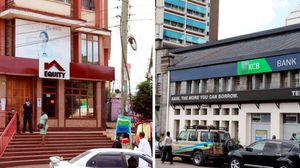
NSE drops minimum 100 shares trading rule

DNNSE2504S

Since 2019, foreigners have largely remained bearish on smaller markets, largely due to a flight to the safety of developed markets amid global shocks such as the Covid-19 pandemic and the Russia-Ukraine war.

Photo credit: File | Nation Media Group

The Nairobi Securities Exchange (NSE) has changed its rules to allow for trading in shares in multiples of a single unit, shutting down the odd lots board, which has handled trades of less than 100 shares since the market’s automation in 2006.

Under the previous rules, the NSE had a minimum trade limit of 100 shares on its normal trading board, which has now been tweaked to allow for trades in lower multiples as low as one share.

The approval of the new rules by the Capital Markets Authority (CMA) ends more than two decades of the two-tier trading board system, improving market access for retail investors by lowering the entry barrier imposed by the 100 shares minimum purchase rule.

With the 100 shares floor in place, stocks with a high nominal price are often out of reach for some retail investors, locking them out of the dividends and capital gains that are often available on such counters.

“This change supports the NSE 2025–2029 strategic plan, which focuses on revitalising the market through greater retail investor participation,” the Kenya Association of Stockbrokers and Investment Banks (Kasib) said in a post on social media X.

“Trading participants are requested to inform their investors and adjust their systems accordingly. These changes will take effect from August 1, 2025.”

Under the separate boards system, the odd lots often attracted a lower price compared to the normal board shares, due to lower liquidity and demand from investors.

The odd lots were also restricted to limit orders (meaning the seller or buyer had to specify a price), unlike normal lot orders which could be placed at market price, effectively hastening their sale or purchase.

Further, the odd lots could not be entered into the system during the pre-open period, or be considered for execution during the opening auction, making it harder to shift them compared to normal board shares.

The NSE’s existing odd lots are partly a legacy of the days when investors held stock certificates that did not require holders to observe the 100 shares multiple limits. The immobilisation of these certificates once the Central Depository and Settlement Corporation (CDSC) was formed in 2004 fed the market with odd lots.

Share bonus issuances and splits also generate odd lots, depending on the multiples of division or allocation applied on the issuance.

Other odd lots were generated via the popular, oversubscribed initial public offers (IPOs) of the mid to late 2000s, which saw pro-rata allocations of shares that were based on a percentage of the units for which one had applied.

The oversubscribed Safaricom IPO of 2008, which raised bids of Sh236.6 billion against a target of Sh50 billion, for instance, saw the government allocate retail investors 21 percent, qualified institutional investors 31 percent and foreign investors 15 percent of their applied shares.

This meant that a retail investor who had applied for the minimum of 2,000 shares (at a price of Sh5 per share) was allocated 420 shares, effectively leaving the market with thousands of investors with small odd lots of 20 shares.

The 2006 KenGen IPO, which targeted Sh7.59 billion from the sale of a 30 percent stake (659.8 million shares) in the power producer, was oversubscribed by 236 percent, resulting in a cap on allocations of 6,600 shares for those applying for more than 10,100 units.

Investors who applied for the minimum 500 shares were allocated in full, but those seeking 1,000 shares were allocated 820 units as the pro rata allocation system kicked in.

PAYE Tax Calculator

Note: The results are not exact but very close to the actual.