The five largest firms on the Nairobi bourse have lost Sh200 billion in valuation since the start of the US-Israel war with Iran, hit by sustained net sales by foreign investors.
Foreigners have sold a net of Sh4.2 billion worth of shares on the Nairobi Securities Exchange (NSE) since March 2, 2026, opting to hold onto cash due to fears of global inflation and recession as the conflict raged on.
This has pulled down share prices of Safaricom, Equity Group, KCB Group, EABL and Co-operative Bank of Kenya.
The five largest listed firms have high exposure to foreign traders due to their stable fundamentals and ample liquidity. They account for 60 percent of investor wealth at the bourse, with changes in their share price having a significant impact on the overall performance of the market.
The Middle East conflict started on February 28, when the US and Israel launched strikes against Iran, which responded with strikes of its own on neighbouring Gulf States.
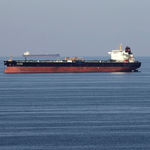
Iran has also effectively shut down the Strait of Hormuz, a key sea lane in the Gulf, which carries about 25 percent of the world’s oil and liquefied natural gas shipments.
The supply disruption has caused turmoil in the global market amid fears of higher inflation due to elevated fuel and food prices, pushing investors towards holding dollars as a hedge, hence the equities selloff.
On the NSE, some institutional investors with large exposure to equities have also been converting some of their shares into cash to protect the gains they have made in the recent bull run, while increasing flexibility in case an inflation spike raises yields in the fixed-income market.
“Although foreigners have been holding a net outflow position for the last four or five quarters on profit-taking actions, we have seen accelerated exits in the last three weeks, linked to the geopolitical concerns,” said Wesley Manambo, a senior research associate at Standard Investment Bank.
“The local market has, however, not seen the full transmission (of the global risk) on share prices because of the higher local retail investor participation in trading activity, even as some institutional peers opt to hold on to cash as they wait to see if interest rates go up due to the higher oil prices.”
For foreign investors, the exposure to Kenyan equities is only a small part of their global holdings, but local institutions have a larger share of their assets in the market.
Safaricom has seen the largest valuation decline at 10.8 percent or Sh138.22 billion to Sh1.14 trillion, with its share price retreating to Sh28.55 on Wednesday from Sh32 on February 27, the last trading day before the Iran war broke out.
KCB has shed 12.1 percent or Sh31.33 billion in valuation to stand at Sh226.55 billion at the close of trading yesterday, while Equity’s market cap has fallen by 8.1 percent or Sh23.59 billion to Sh267.93 billion in the period.
EABL and Co-op Bank have recorded smaller valuation drops of Sh2.37 billion and Sh2.64 billion, respectively, within the three weeks, to stand at Sh202.83 billion and Sh168.68 billion, respectively, yesterday.
Overall, the NSE has shed Sh88.5 billion in market cap in the period, with the losses softened by the entry into the market by Kenya Pipeline Company (KPC) on March 10, which immediately added Sh166.83 billion to the bourse’s valuation.
Excluding the impact of the KPC listing and its current valuation of Sh164.29 billion, the rest of the market has shed Sh252.74 billion over the three weeks. The bourse closed yesterday with a market cap of Sh3.322 trillion, compared to Sh3.41 trillion on March 27.
Blue chip stocks have also seen their prices fall despite the majority of their books being open for dividend payments for the 2025 financial year.
Eight of the nine listed tier-one banks have released their full-year results in the last three weeks—NCBA releases its numbers today— with their shareholder registers set to close for dividends between April 2 and May 22, 2026.
Except for Standard Chartered Bank Kenya, all the banks have increased their dividend payouts for the period compared to 2024, which would ideally cause a rally in their share prices as investors position themselves for the higher cash distribution.
However, the opposite has been the case, due to the foreign investor sales, with Stanbic Bank the only lender to record a share price gain (1.4 percent or Sh1.38 billion) since the end of February.
Beyond the equities market, investors are also keeping an eye on the potential rise in interest rates if inflation goes up due to the effects of the Iran conflict.
The biggest inflation risk is a prolonged peak in the price of oil, which would translate to higher household energy and transport costs, and therefore higher prices of basic goods.
Oil marketers have also warned of potential hitches in fuel supply in the near term should suppliers from the Middle East continue facing shipping limitations.
Higher inflation would put the brakes on Kenya’s recent monetary policy easing path, which has been backed by stable prices and the exchange rate. The Central Bank of Kenya (CBK) has made 10 successive base rate cuts since August 2024, lowering the policy rate to 8.75 percent from 13 percent.
A reversal in the policy stance would make fixed-income assets such as Treasury bills and bonds more attractive to investors once their yields go up in tandem with the Central Bank Rate.