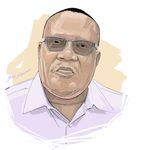
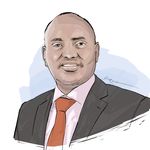
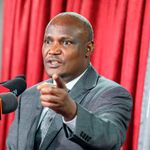
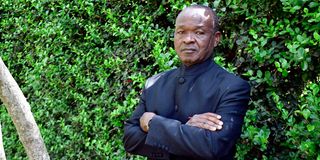
There he is Erastus Mwencha on the video feed, sitting somewhere that looks like a backyard, his camera positioned the way your own father would position his. He's stoic and wise, measured.
When reflection presents itself—and for a man in his 70s who has shaped Africa's economic architecture, there is much to reflect upon—he doesn't indulge it. Instead, he reverts to the dignity of purpose.
This is a man who wanted to be a lawyer but became an economist instead, who calls it providence. Who left a secure government job in Kenya to join an obscure regional body called PTA, a decision that baffled his peers but became his life's defining moment.
For over three decades, Mr Mwencha has been the quiet engineer behind Africa's integration ambitions—first as Secretary-General of Comesa, where he built the continent's first free trade area and established institutions with balance sheets exceeding $10 billion, then as Deputy Chairperson of the African Union Commission, where he helped birth the African Continental Free Trade Area.
But spend time with him (even on video), and you discover something unexpected: this Pan-Africanist who speaks of Ubuntu and collective humanity is haunted not by personal regrets, but by Africa's unfulfilled promise. "We haven't progressed as much as we should have," he says.
He's writing a memoir, taking courses, and busier now than before. Yet there's an urgency beneath the calm—a recognition that understanding the world more clearly has only deepened his fears. "Countries without power risk being on the menu instead of at the table," he says. For Mr Mwencha, Africa's unity isn't idealism; it's survival.
Was becoming an economist a calling, or did it just happen?
Interestingly, I initially wanted to become a lawyer, but I didn’t get a place in law school. Economics became my second choice. Looking back, I don’t regret it at all. I believe there was providence in that path. I thank God for the opportunity to contribute in the way I have, and I feel I’ve lived a fulfilling life.
What are you most proud of when you look back?
I’m proud I was part of the team that launched Africa’s first free trade area under Comesa. We also established strong institutions— a regional bank with a balance sheet of over $10 billion, insurance and reinsurance companies, and agencies that provide trade finance and political risk cover across Africa.
Former African Union Commission Deputy Chairperson, Erastus Mwencha, photographed at Karen Country Club on January 29, 2026.
Photo credit: Francis Nderitu | Nation Media Group
At the African Union, I’m proud of the institutional reforms we carried out—digitising the Commission, strengthening financing from member states, and supporting the African Continental Free Trade Area. When I look back, I’m grateful for the opportunity to contribute in these areas.
How old are you now?
I’m in my 70s—and still very young.
What do you think has been your contribution to humanity?
Under African values, we talk about Ubuntu—humanity as something collective, not individual. I believe my contribution has been in lifting others: helping someone access education, supporting businesses, and enabling people to see better possibilities in life through the work we’ve done. I’m grateful to God for those opportunities.
What questions are you asking yourself at this stage of life?
Naturally, you look back and see moments where you might have taken a different path. But you also understand that decisions are made with the information and circumstances available at the time. What troubles me more is Africa’s journey.
We haven’t progressed as much as we should have in regional integration. In some cases, we’ve gone backwards, and that saddens me deeply. Those are among my biggest regrets.
What would you undo?
At a family level, there are things I wish had turned out differently. Professionally, there are moments—both at regional and continental levels—where, in hindsight, we could have done better. Sometimes we took certain things for granted.
Where did you grow up, and what do you remember about your parents?
I was born during colonial times and grew up in a village in Kisii. Life was difficult. Schooling was not guaranteed—I had to join my father, who worked as a labourer on a white man’s farm, and it was only in his absence that I was allowed to attend school.
I’ve written about this in my memoir, which is coming out soon. The book focuses on continental integration, but it also weaves in my personal journey alongside Africa’s.
My father, having experienced colonialism, was determined that his children would be educated. He insisted on it, even forcing my older brother back to school when he wanted to stop.
He lived his values. My mother was hardworking, frank, and deeply loving. She raised nine children and made sure we were fed, clothed, and educated. When I look back, I’m deeply grateful to both of them.
When did you pivot in your life?
Several times, but one major pivot was leaving Kenya to become an international civil servant at PTA/Comesa. At the time, I was a senior government officer with a clear path upward.
Many people couldn’t understand why I would leave for an organisation that was largely unknown. It was a major inflection point, but I’ve never looked back. It was the right decision.
What has scared you most in recent memory?
My greatest fear is failure—failure of the work we have done, particularly around regional and continental integration. Integration efforts are not new in Africa. We’ve seen them collapse before. Even globally, when you look at developments like Brexit, you realise nothing is guaranteed.
Former African Union Commission Deputy Chairperson, Erastus Mwencha, photographed at Karen Country Club on January 29, 2026.
Photo credit: Francis Nderitu | Nation Media Group
I fear that Africa could still fall apart in this regard, and more than that, that Africa is being left behind. A great deal would change if we had leaders with foresight—leaders who understood that pursuing development purely at the national level is not sufficient. Our economies are too small. To survive and grow, we must trade, and the best option Africa has is to trade with itself.
Yet I see many leaders who are blinded to these opportunities. That is not just a fear—it is a deep frustration.
What about personal fears?
Yes, at the family level. The environment today is different from the one we grew up in. It is far more contaminated—socially, technologically, morally.
Our children and grandchildren are growing up in a hostile environment, and for them to succeed, it requires focus, discipline, and strong values. That worries me greatly.
What are you currently struggling with?
Not health-wise, my health is good. But I continue to work on being more present as a family person. International work takes you away from home.
I also want to keep offering my skills where they’re needed to support economic transformation. That struggle continues, and I’ll keep contributing as long as God gives me breath.
Do you credit your good health to discipline, genetics, or luck?
[Pause] I honestly don’t know. I thank God. But I’ve tried to live by Christian values, exercise regularly, read, and watch what I eat. All of that contributes to one’s health.
How many children do you have?
Three. All married.
How was your fatherhood journey?
It was a good journey. Living in Zambia helped because the society was very integrated. While my children were uprooted from Kenyan culture, they found roots through church, school, and community. They grew into global citizens, now spread across the world, and I’m very proud of them.
What’s one thing you wish they understood about you?
I leave that to them. But my hope is that they uphold African values—Ubuntu, humanity, family. Culture isn’t about returning to the village; it’s about how we treat each other. Above all, I pray that they become citizens of God more than citizens of the world.
When was the last time you changed your mind about something important?
Many times—even recently. [Grins] One defining moment was when I felt frustrated and wanted to leave Comesa because integration was moving too slowly.
Former African Union Commission Deputy Chairperson, Erastus Mwencha, photographed at Karen Country Club on January 29, 2026.
Photo credit: Francis Nderitu | Nation Media Group
Just as I reconsidered, events unfolded that placed me at the centre of that transformation. Looking back, I’m glad I didn’t jump ship.
What do people who no longer work with you say about you—fairly or unfairly?
Fairly, many appreciate my hard work and commitment. Unfairly—or perhaps fairly—some feel I can be too accommodating, trying to bring everyone on board, sometimes at the expense of firmness.
Which part of leadership makes you uncomfortable?
Loneliness—especially when making difficult decisions. Trying to ensure no one is left behind can sometimes make you overly accommodating. That tension is uncomfortable.
Do you consider this season of your life retirement?
I’ve never felt comfortable with the word “retirement.” I’m active in the private sector, exploring new ideas, enrolling in courses, and writing my memoir. In fact, I’m busier now than I was before.
Do you understand the world more as you grow older—or less?
More. And the more I understand it, the more I’m scared.
What scares you?
As I pointed out earlier, I fear that Africa is being left behind. Attempts to deglobalise, in my view, are futile. Globalisation is a fact of life, driven by technology, multinational corporations, and the movement of people.
The danger is that countries without strength are not at the table—they are on the menu. Africa has the capacity to influence global decisions if it acts in unity. The tragedy is that we are not united, and because of that, we continue to be left behind.