Newly released album, 'Roots Rocking Zimbabwe', retraces soundtrack of colonial liberation movement

The album cover for Roots Rocking Zimbabwe: The Modern Sound of Harare Townships 1975-1980.

Photo credit: Pool

The release of an album that retraces the soundtrack of one of the most protracted liberation struggles on the continent coincides with Africa Month and is a reminder of the huge role that music has played in shaping historic events on the motherland.

Roots Rocking Zimbabwe: The Modern Sound of Harare Townships 1975-1980, released on May 2, contains 25 songs that represent the evolution of the modern music industry in what was then Southern Rhodesia, including never-before-released songs by two of the country’s musical icons, Thomas Mapfumo and Oliver Mtukudzi.
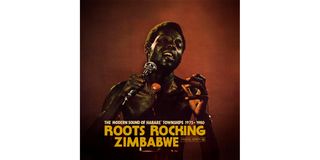
The album cover is an image of Mtukudzi’s first LP Ndipelwo Zano, a collection of hits he recorded between 1977 and 78, later compiled on one disc.

During that era, a generation of musicians created a sound combining elements of pop, rock, and soul, Congolese rumba and traditional Southern African rhythms.

In 1972, the Rhodesia Herald, a white-owned newspaper, printed the picture of Manu Kambani, a guitarist with the band Dr Footswitch under the headline “Jimi Hendrix is dead but Manu is alive. (A rarity a time when black people only made the news for alleged “terror” activities).

The headline was a reference to Kambani’s antics like playing guitar with the teeth, strumming it behind his back and even burning his instrument on stage, copied of course from the legendary Hendrix. It made him a star among many aspiring young musicians in the townships of the country, especially Harare (the name later given to the capital after independence in 1980).

The Rhodesian Broadcasting Corporation played a repertoire of Western rock music and it was the sound of the Beatles and the Rolling Stones that influenced the style of this early generation of musicians.

This was also the golden age of American soul and funk, the soundtrack to the US civil rights movement, that resonated with Africans who were struggling to free themselves of oppression in their own country.

Some Congolese bands, like OK Success and The Limpopo Jazz, also ended up in Rhodesia seeking playing opportunities and brought with them the infectious sound of rumba. The Harare Mambos and The Great Sounds among others, recorded Congolese rumba with Shona lyrics.

The migration of workers across the border led to the popularity of South African mbaqanga, also known as township jive, a fusion of kwela dance music, with jazz and elements from other musical styles from the region.

The major record companies in South Africa were quick to notice the emerging trends in Rhodesia. In 1974, Teal Record Company recruited Crispen Matema, a drummer with a passion for traditional music to manage their Rhodesian subsidiary.

A photo of Oliver Mtukudzi in 1979.

Photo credit: Pool

Driving across the country in his Peugeot 504, Matema organised live music contests to tap fresh talent who then travelled to the capital Salisbury for recording sessions. The music of the Baked Beans, Blacks Unlimited, New Tutenkhamen, The Acid Band, Echoes Ltd, Gypsy Caravan is included in this compilation.

Legendary music producer/saxophonist West Nkosi also landed in Rhodesia on behalf of Gallo Records, the biggest label in South Africa.

This resulted in the success of the Green Arrows the first Rhodesian band to attain gold status when their single Chipo Chiroorwe sold over 25,000 copies in 1974.

They followed up that achievement a year later with Towering Inferno, dedicated to actor Paul Newman who had starred in a Hollywood film of the same name that year. Gallo set up two imprints that specialised exclusively in Rhodesian music.

During this period, Thomas Mapfumo, who became the country’s foremost musical ambassador was modernising traditional music in a style that came to be known as chimurenga (‘struggle’ in Shona language).

The style, based on Shona culture rallied the population in support of the freedom fighters though the lyrics had to be couched in Shona and Ndebele idioms and proverbs to hide the resistance message from the ears of the censors.

However, the popularity of the musicians drew the attention of the Police Anti-Terrorist Unit and both Mapfumo and Zexie Manatsa were locked up. Rather than silence the music, their incarceration only lit the spark for the music.

Other names emerged like Tineyi Chikupo who composed music that would resonate with the people who by now identified with chimurenga.

Events like the 1970 Pop Extravaganza ‘70 provided a major platform for the promotion of Rhodesian music while South African acts like Mahotella Queens now had an opportunity to sidestep apartheid and cross the border to perform in Rhodesia where mingling between people of different races was ‘tolerated’

The in-depth booklet complete with a rich collection of pictures delves into the club scenes, the recording studios, the local record labels and profiles of all the musicians featured on the album.

The story of how copies of vinyl records from the 1970s were located in mint condition at a store in the mining town of Zvishavane in 2002, is by itself a fascinating tale contained in the booklet. Roots Rocking Zimbabwe: The Modern Sound of Harare Townships 1975-1980 is released by Analog Africa label on vinyl, CD and streaming platforms.

PAYE Tax Calculator

Note: The results are not exact but very close to the actual.