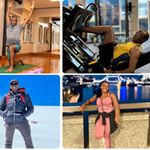
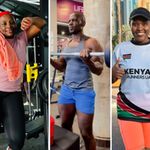
On weekday mornings and in the quiet hours of the evening, runners can be found moving through estates, parks and open roads, pacing themselves between work, family and other daily demands. Most are not training for competitions. They are running to stay fit, clear their minds and maintain routines that feel manageable.
People who run say the appeal lies in its simplicity. Running does not require bookings, subscriptions or fixed schedules. It can be done alone or in small groups, at a pace that suits the day, making it easier to return to regularly than more structured fitness programmes.
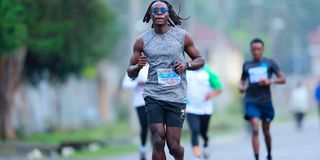
That experience is familiar to Billy Nelson Omingo, a 30-year-old runner who says his relationship with fitness changed last year.
“I started running more intentionally in March 2025,” Billy says. “I had been in the gym consistently since mid-2023, mostly doing strength training and CrossFit, but running came in at a different point in my life.”
At the time, Billy says he was between jobs and had more free time than he was used to. He had also sold his car, something that forced him to rethink how he moved around.
“I was overly dependent on my car. I used it even for the shortest distances,” he says. “Because of that, I added a lot of weight. By January, I was in the 90s.”
The turning point came through family. One of his sisters had just undergone surgery and was recovering at home. A committed fitness enthusiast, she encouraged him to start walking with her.
“She kept pushing me to take walks with her and our dog, Piper,” Billy says. “I had been complaining a lot about my weight and clothes not fitting anymore. That’s how we ended up joining We Run Nairobi, it started as more of a mental and physical health walk.”
Before he began running regularly, he carried several fears.
“I was worried I’d get very skinny, Kipchoge-like, and that’s not the look I wanted,” he says. “I’d also been told about studies claiming men who run more than five kilometres constantly have lower testosterone levels. Then there was runner’s knee. I didn’t want to deal with physios and long-term pain.”
He also admits he felt unprepared.
“I didn’t know anything about running, shoes, form, tracking, watches, all of that was completely new to me,” he says.
Despite the doubts, progress came quickly. Within six months, he had completed three half marathons.
“I’ve done three half marathons in half a year and so many long runs,” he says. “I’ve lost more than 15 kilos since I started running. I look better, and I feel better.”
He saved up for a Garmin Forerunner watch to track his pace and progress, learned how to choose shoes for different terrains and became more deliberate about form.
“Being able to track my runs, understand my pace and even sample new shoes through my running club has been exciting,” says Billy. “I’ve also managed to get over seven medals from different races and hit new personal records on Strava.”
The journey, however, has not been without setbacks. During one road session involving hill repetitions, Billy suffered a serious knee injury.
“I got a bad runner’s knee that took me out for about two months,” he says.
Billy Nelson Omingo, 30, embraced running after leaving the gym, shedding over 15 kilos, regaining structure, and coping with personal loss.
Photo credit: Pool
More recently, the loss of his mother has disrupted his routine. “I haven’t been able to run since losing my mum,” he says. “It’s taken a huge toll on me mentally and physically. But I’m determined to get back. I’ll keep pushing.”
What keeps him anchored, he says, is the mental aspect of running.
“Long runs are more about the mind than the body,” Billy says. “Once the mind is right, you keep moving. I don’t even use headsets during races or long runs. I live in my head.”
For Ronaldo Lipesa, running began without much planning.
“I started running in February last year,” Lipesa says. “I wouldn’t say seriously, because I just woke up one morning, saw a poster for a run club and showed up. That was my first run.”
It took a few months before the habit settled in. “I started running seriously about two or three months after that,” he says.
Like many beginners, Ronaldo says his early hesitation had more to do with perception than ability. At the time, he weighed around 90 kilogrammes and had been focused mainly on weightlifting.
“My biggest misconception was that I was too heavy,” he says. “I was really concerned if my joints would hold up. But I realised anyone can run at whatever weight.”
Since then, running has become a central part of his routine. Ronaldo says the journey has been both social and personal.
“I’ve learned a lot, met a lot of people, had struggles and injuries. The small wins usually come in the races.”
Those races, he notes, are frequent in Nairobi and across Kenya. “We go run, get a few medals, have a good time. I really love those wins.”
Ronaldo describes himself as having moved from a beginner to what he calls “a novice,” logging between 50 and 60 kilometres a week across four sessions.
“In my typical training week, I do one easy run, one long run, one speed session and a recovery run,” he says.
What keeps pulling him forward, he says, is the constant desire to push a little further.
“Every time you run, you want to go further,” Ronaldo says. “That mentality just comes once you start running.”
That drive has shaped his interest in running a full marathon.
“Statistics say only about one percent of the world’s population has ever finished a marathon,” he says. “Once you start running, you want to be part of that one percent.”
Beyond races, Ronaldo says running has changed how he approaches fitness altogether. Having started as a weightlifter, he is now transitioning into hybrid training.
“I’m incorporating weightlifting, running, swimming and more outdoor activities,” he says. “Running has given me discipline and motivation to keep going for my overall health.”
He also points to the social side of the sport. “I enjoy running in the community,” Ronaldo says. “I like seeing people push themselves. You’re in your most natural state — experiencing nature, taking everything in. And after every run, you feel better.”
The changes, he says, go beyond the physical.
“Physically, I’m leaner. Mentally, I’m stronger,” he says. “Even emotionally, you learn to push through difficult situations because running is never easy. It never gets easy — you just get better.”
January, he notes, is often when motivation dips or becomes performative.
“What keeps me going is showing up for myself,” Ronaldo says. “Every time I go for a run, I tell myself I’m doing this for my future self. I want my future self to be proud.”
For beginners intimidated by pace, body type or social media comparisons, his advice is simple.
“Just focus on yourself,” he says. “Anyone can run. Shut off everything else and do it for yourself.”
Community, he adds, makes a difference. “It’s easier to run when you’re running with people,” Ronaldo says. “If you want to run further, run with people.”
For Kennedy Kaunda, running is not a recent discovery. It has grown alongside his work as a graphic designer and visual artist, shaping both his routine and his thinking.
Kennedy Kaunda, a graphic designer and visual artist, has run for eight years, honing his discipline, mental clarity, and creative focus.
Photo credit: Pool
“Running is my go-to activity,” says Kennedy.
His approach to running changed after joining We Run Nairobi, where the sense of community pushed him further than he expected.
“I met awesome people who pushed me so much to achieve more in running,” he says. “They even introduced me to ultra running.”
That exposure forced him to rethink his limits. “I realised I can do better than what I was doing,” Kennedy says. “That’s how I ended up getting serious with running.”
Being naturally slim, he says, often invited assumptions from others.
“Whenever people saw me running, they’d say, ‘You don’t have anything to lose,’” he says. “Most people think running is all about losing weight, but it’s also about mental health. It helps me a lot.”
He is also quick to challenge common fears around injuries.
“They say running is bad for your knees, I’ve been running for about eight years now, and my knees are better than I feared they would be.”
Still, he acknowledges that setbacks are part of the sport. “Not every day is a Sunday,” he says. “When I get injured, I have to take a break and heal so I can get back to running.”
His consistency, however, has produced notable milestones. In 2025 alone, Kennedy says he logged about 2,900 kilometres.
“That’s my biggest win,” he says. “I also ran my longest distance ever — 100 kilometres in one day, in 12 hours.”
While he does not describe himself as a professional runner, he says his training has become structured over the past two years.
“I do speed work, hill reps, long runs and also have a rest day,” he says. “On average, I can run about 100 kilometres a week, supported by proper nutrition.”
His motivation, he says, is rooted in self-competition. “I want to beat my previous time,” Kennedy says. “I’m chasing discipline and patience, because marathon training is no joke. You train consistently for at least six weeks before race day.”
That discipline, he says, has spilled into his creative work.
“I’ve become more disciplined,” he says. “If I set my mind to something, I achieve it. That consistency comes from running.”
Running, he adds, plays a significant role in his mental health.
“When my thoughts are rushed and I don’t know how to solve something, I go for a run or a walk,” he says. “After that, my mind is clearer.”
What keeps him going is goal-setting. “I always set a goal at the end of a training block,” he says. “Many people start fitness because others are doing it, but they don’t set goals. When I write mine down, that’s what keeps me going even on days I don’t feel like running.”
He is candid about the realities beginners face.
“People think running is cheap, but it is not,” he says. “Shoes, watches, outfits, race registration, gels — it demands a lot. If you’re not clear on your goals, running will drop you out.”
For Benter Marion, founder of the Benaura Walking Club, walking isn’t just exercise, it’s a way of life. She’s turned it into a niche of her own, covering long distances from Nairobi CBD to Kitengela, Ngong, and Thika, inspiring others to do the same.
Benter says her long-distance walking journey began in earnest in April 2025, when she recorded her first significant walk from Juja to Nairobi CBD, covering 35 kilometres in eight hours. “It blew up on TikTok,” she recalls, “and that was a turning point for me. I realised this could be something unique, something I could do intentionally and consistently.”
Ronaldo Lipesa started running on impulse but now logs 60 km a week, crediting the sport with discipline, mental strength, and overall fitness.
Photo credit: Pool
Since then, walking has become central to her daily routine. She aims for 15,000 steps a day, whether on a rest day or a workday, believing that moving the body in any form counts as fitness. “Walking, to me, is the easiest physical activity anyone can sustain, whether it’s one kilometre or 50,” she says. “It’s accessible, and it can be a start for anyone looking to get fit.”
Benter credits her walks with mental clarity and emotional reflection. She avoids music or headphones on her long walks, preferring the solitude to focus on her thoughts. “I use the time to confront the demons in my head,” she explains. “It’s like therapy. Walking helps me align my thoughts and gives me clarity I can’t get elsewhere.”
Her walks have also evolved into a community-building exercise. The Benaura Walking Club now organises group walks that draw dozens of participants. Some of the club’s notable distances include CBD to Kenol (around 60 kilometres) and festive walks on Christmas Day or New Year’s Day, where members join her for celebratory long walks. “Seeing people wake up early to join these walks, even on holidays, is incredibly motivating,” she says.
Marion highlights the physical and logistical challenges of walking long distances in Kenya, from non-pedestrian-friendly roads to security concerns. She recalls moments of being followed while walking alone but says careful planning and situational awareness keep her safe.
Despite the challenges, Marion sees walking as a tool for discipline and consistency, qualities she believes transfer to other areas of life. “Don’t go hard, go often,” is her mantra. “Even if consistency is just 5 percent or 10 percent some days, it’s better than zero. The rhythm builds itself over time, and it shapes your character, your fitness, and your mindset.”
Beyond exercise, Marion emphasises walking’s long-term benefits. “Some people think only intense workouts count,” she says, “but moving your body at your own pace, consistently, has an impact, getting fitter, feeling stronger, having stamina. It shows after several weeks.”