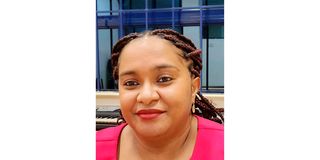
When John Mukinisu started waking up soaked in sweat every night back in 2021, at first he blamed it on the heat, then on the effects of Covid-19 and the vaccines he had received earlier.
Every day, between 3am and 4 am he would wake up to find his sheets completely soaked, change, and then go back to sleep.
Then came another trend: an unending tiredness and a burning sensation in his hands.
"I was experiencing these symptoms, and, because I had received the Covid-19 vaccine, I thought they were side effects," he says.
However, it was neither a symptom of the virus nor the vaccine. One day, he experienced painful swelling in his left arm and pain when passing urine. These symptoms eventually prompted him to see a doctor.
The specialist ordered a blood test, and the result shocked him. His blood sugar level was 14. It should have been around six.
"I was really scared when I heard that news. I have heard of diabetes, but not prediabetes. The doctor told me that my levels were so high that I could collapse at any time," John recalls.
During the pandemic, people adjusted their lifestyles in many ways to cope with the new normal. John's days had become largely sedentary. His meals were based around what was easy to obtain, such as white rice, refined maize meal, sugary drinks and nyama choma from roadside stalls.
But he was forced to change that after the diagnosis. What followed was a drastic change in his lifestyle that eventually helped him manage his sugar level.
"The doctor told me to make changes first. If they didn't work, we could talk about medication. I decided to give it a try," he says.
He began with sugar. Not just the sugar he added to his tea, but also the sugar lurking in the juices, sauces and packaged foods he had been buying without checking the labels.
"Most food in our supermarkets contain sugar," he says. "You have to read everything." He stopped buying sugary drinks and started drinking water.
He also cut back on white rice and ugali made from refined flour. He added vegetables to every meal. He started moving his body every day—not at the gym, but through regular movement built into his routine.
Every few months, he went back to check his blood sugar levels to see if any of it was working.
Now aged 47, he takes no medication, and his blood sugar level is between six and seven, a progress that took him about seven months. He says the hardest part of this journey was the social side. Much of Kenyan social life revolves around nyama choma and drinking, so changing your diet means changing how you participate in those activities.
"It's not easy to find healthy food. When you're sitting at the table with everyone else, you get tempted. I can't enjoy it like I used to. It makes me angry, actually," he says.
John was suffering from a condition called 'prediabetes', which means that his blood sugar was higher than it should be but not yet high enough to be classed as 'diabetes'.
At this stage, the body is struggling to manage sugar, but most people don't notice anything obviously wrong. Sweating, tiredness and tingling in the hands are easily blamed on stress, malaria or a long week. So people do nothing, and the condition quietly gets worse.
In Kenya, studies show that around three out of every 100 adults have prediabetes, but health experts say that the actual number is much higher because most people have never been tested.
In higher-risk groups, such as city dwellers and office workers, the rate is as high as 14 in every 100 people. Over 800,000 people already have diabetes, and this figure is increasing.
Without action, someone with prediabetes has a high chance of developing diabetes within a few years, after which complications such as heart disease, kidney failure and nerve damage become much harder to avoid.
Rosslyn Ngugi, a consultant endocrinologist at Kenyatta University Teaching, Referral and Research Hospital and AAR Hospital, says that the body can still recover at this stage, but only if people understand what they are dealing with and act deliberately.
She breaks her guidelines down into three clear points.
First, understand what is happening in your body. Most people with prediabetes feel reasonably well, and this is precisely why the condition is so dangerous. Symptoms such as fatigue, night sweats and tingling in the hands are often attributed to stress or a busy week, meaning that nothing is done about them. However, something significant is already shifting beneath the surface.
In prediabetes, the body's cells stop responding properly to insulin, the hormone responsible for moving sugar out of the blood and into the body's tissues. In response, the pancreas produces more insulin to keep blood sugar in check. For a while, this works.
However, the pancreas cannot sustain this effort indefinitely, and eventually, blood sugar levels begin to climb.
“Understanding this process is important because it explains why delaying treatment is dangerous; the longer the body is left to struggle alone, the harder it is to recover. However, if it is caught early, the body still has enough capacity to correct itself,” says Dr Ngugi.
Make the right lifestyle changes and keep them simple. Once you understand what is causing your raised blood sugar, you can take appropriate action. The body needs less sugar and more movement to process what is already there.
Rosslyn Ngugi, a consultant endocrinologist at Kenyatta University Teaching, Referral and Research Hospital and AAR Hospital.
Photo credit: Francis Nderitu | Nation Media Group
In practice, this means cutting out sugar and processed food, eating more vegetables and walking for at least 30 minutes a day, particularly after meals when blood sugar naturally spikes. Even modest weight loss can make a significant difference.
“Losing 5 to 10 percent of your body weight can make a significant difference,” she says.
For someone weighing 80 kilograms, that is as little as four to eight kilograms. “You don't need a gym. You don't need expensive food. You need consistency.” The changes do not need to be dramatic to be effective. Patients who commit to the changes typically see real improvements within three to six months, and many avoid medication altogether.
Keep checking, even when you feel fine. This is where many people make a mistake. Once blood sugar levels return to normal, it can be tempting to assume that the problem has been solved and stop monitoring.
“We prefer to talk about remission rather than reversal because even after your blood sugar returns to normal, the risk does not fully disappear,” she says.
The cells that struggled to respond to insulin do not simply reset. The underlying vulnerability remains, and without continued monitoring, prediabetes can return unnoticed, particularly if old habits creep back in.
Patients whose levels have normalised should therefore check every three to six months. The goal is not a single good result, but sustained improvement.
Studies consistently show that changing diet and getting regular exercise can reduce the risk of developing type 2 diabetes by more than half.
However, some obstacles can hinder this process. Lifestyle changes worked for John, but they do not work equally well for everyone, and the barriers are real.
The biggest one is food. "We don't have many options in our market," says John. "Healthy food takes time and costs more. Vegetables, beans and whole grains require more effort and money than chips, white rice and processed snacks, the cheapest and most readily available options for many Kenyans."
Dr Ngugi says that lack of awareness is another barrier. "Many Kenyans only seek care when things have already gone very wrong," she says. "By then, simple changes are no longer enough, and long-term medication becomes necessary."
Similarly, Kenya's health system has historically focused more on infectious diseases than chronic conditions such as prediabetes. This has resulted in inconsistent testing, particularly outside major cities.
"The gap in access to testing between urban and rural areas is still very wide," says Dr Ngugi.
For some people, particularly those dealing with obesity or a strong family history of diabetes, lifestyle changes alone may not be enough. Medication is available for such cases, and newer weight-loss treatments are becoming more widely offered. However, these are not the starting point for most people.
Dr Ngugi says that the most important step is to make testing more routine. A simple blood sugar test is available at most clinics and does not require fasting. Anyone over 35 should request one at their next check-up.
Those who are overweight, inactive or have a family history of diabetes should not wait that long.
"Many Kenyans with these risk factors are already in the prediabetes range without realising it," she says. "Early action is highly effective."
She also challenges the belief that only overweight people need to worry. "You can look completely normal on the outside and still have high blood sugar," she says. "This is especially true if you sit behind a desk all day, eat a lot of processed food, or have a parent or sibling with diabetes."
Even people who exercise regularly but spend most of their working day sitting down are at risk because the body needs movement throughout the day.
"Prediabetes is a window of opportunity, not a death sentence," says Dr Ngugi. "The question is whether we are doing enough to help people identify that window of opportunity before it closes."
Unlock a world of exclusive content today!Unlock a world of exclusive content today!