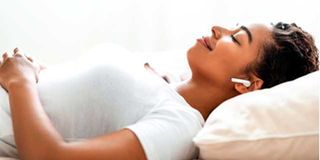
For some people, earbuds are a part of the bedtime routine to get what they call ‘quality’ sleep. They put them on to listen to their favourite music, settle into a favourite podcast or drown out the sound of a snoring partner.
For others, the earbuds have become a way of creating a quiet space at the end of a long day, with soothing sounds helping them relax into sleep.
But is it safe to sleep with earbuds in your ears every night?
According to Dr Valerie Salano, an ENT surgeon at the Aga Khan University Hospital, using earbuds occasionally and at a low volume is generally fine. The concern begins when they become a daily habit, particularly when they are used at high volume or are tight-fitting.
“There are some people who say there are benefits to using their earbuds, especially while sleeping,” she says.
One of those benefits is masking unwanted sounds. “Someone whose partner snores, for instance, may use earbuds to block out the noise. Music or other sounds may also help some people relax.”
She notes that for people who experience tinnitus, a ringing or buzzing sound in the ear, listening to something in the background can also be useful.
“One of the ways we advise the patients to deal with that is called masking. So it's kind of like confusing your brain not to focus on that ringing in the ear,” she explains.
However, while there may be situations where sound can help with sleep, she cautions against using in-the-canal earbuds every day.
“The ear naturally produces wax, which serves a purpose. But when earbuds are repeatedly placed inside the ear, they can push the wax further in and cause a buildup.”
That, she says, can leave someone wondering why their hearing does not seem as good as usual.
“An ear canal with an earbud in it can become a confined space, trapping moisture inside. This can create an environment where an infection of the outer ear can develop,” she adds.
She notes that some earbuds are hard and do not have soft tips. For people who sleep on their side, the pressure of lying on an earbud for hours can cause irritation and discomfort. “Constant pressure can also cause dryness and, in some cases, hyperpigmentation, a change in the colour of the skin around where the earbud rests.”
Noise-cancelling earbuds
Additionally, Dr Salano says even with noise-cancelling earbuds, a person may become less aware of what is happening around them while asleep. This could be a concern in an emergency, such as a fire or gas leak, because the person may not hear the warning signs.
Still, she notes volume remains an important consideration even for those who choose to use earbuds. “Many devices now warn users when the sound level is dangerously high. Individuals should not ignore such notifications,” she advises.
Repeated exposure to loud sound can affect hearing. She explains that people may first experience a temporary threshold shift, where their hearing feels different after being exposed to loud sound for some time. Continued exposure to loud sound can eventually lead to noise-induced hearing loss. “If you are consistently exposed to loud sound, then you will develop hearing loss quite later on in life,” she says.
Recommended volume
For those who still choose to use earbuds, she recommends keeping the volume at around 60 percent and limiting listening time: the “60 to 60” approach: about 60 percent volume for around 60 minutes, followed by a break.
The same caution applies to cleaning the ears. “Earwax naturally moves toward the outer opening of the ear, where it can simply be wiped away with a piece of cloth. Putting cotton buds or other objects into the ear can instead push the wax further inside,” she says.
After showering, she cautions against putting an earbud into a wet ear because it can trap moisture. “If water gets into the ear, it should be allowed to drain, with the outer part gently dried using a piece of cloth.”
An infection of the outer ear may be caused by bacteria or fungi. Some warning signs include pain, discomfort, discharge, ringing in the ear or difficulty hearing. A person may also experience fever or headaches, although these symptoms do not occur in everyone.
So, are there people who can safely sleep with earbuds every night? “Not really,” she says. “Technology, however, offers alternatives for people who rely on sound to fall asleep. Instead of placing earbuds inside the ear, one can use a soft sleep mask or headband that plays sound without putting pressure inside the ear.”
There are also pillow speakers, while others may simply place a speaker beside the bed or under the bed.
And for those who feel they cannot fall asleep without earbuds, Dr Salano says it’s a misconception that some people say they cannot sleep without earbuds. “It’s just a habit, and with a habit, it's something one can learn to change,” she adds.