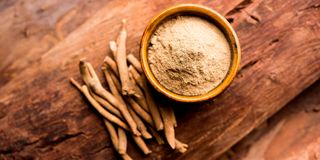
From demanding bosses to money troubles and sleepless nights, ashwagandha has gained popularity as a remedy for everyday struggles.
The herbal supplement is increasingly being touted as a way to beat stress, improve sleep and cope with the pressures of modern life.
“I was going through peri-menopause [which usually begins between ages 40 and 44] and was irritable. My mind would wander and I would toss and turn in bed,” says Jackie, who chose to use one name.
“Since I am studying herbalism, I did some research and, backed by testimonials from other women. I decided to try it.”
For the first week, she steeped ashwagandha powder in a cup of hot water and drank it every evening.
“I wasn’t fully nonchalant, but my mind was calm. The small things that used to irritate me didn’t anymore, my mind didn’t wander as it used to, and I would sleep well. Even my children noticed the shouting had subsided,” she says.
Jackie later encountered other users who said the herb made them feel emotionally detached or overly nonchalant, which prompted her to reduce her intake to twice a week.
“I am still in my peri-menopausal stage, and use it now and then if need arises,” she says.
“I also take it whenever I feel overwhelmed by work, emotions or when I have a lot going on.”
One unexpected effect, she says, is becoming less preoccupied with other people’s affairs.
“There are times I would get overly involved and do much more than I was supposed to,” she says.
“When I take ashwagandha, I don’t get too concerned about other people’s business, though it weighs down on me emotionally sometimes.”
Jackie’s experience mirrors the testimonials flooding social media. But even as the popularity of ashwagandha continues to soar, it is worth asking where the hype ends and evidence begins.
Dr Joseph Maitha, a pharmacognosist, says ashwagandha – scientifically known as Withania somnifera – is a herb that traces its origins to India, where it has been used in traditional medicine for many centuries.
“It was mostly used to treat respiratory conditions such as asthma, coughs and colds, as well as skin ailments,” he says.
“It has traditionally been used in Kenya as well for many of the same conditions, but now there are modern uses that have been supported by scientific research.”
Among its most widely studied uses is its potential to help the body cope with stress.
Dr Maitha says this ability has earned ashwagandha the nickname “Indian ginseng” because of its similarities to ginseng, another herb associated with helping the body adapt to physical and mental stress.
Dr Sospeter Njeru, the acting deputy director and centre head at the Centre for Community-Driven Research, and a principal research scientist at the Kenya Medical Research Institute (Kemri), says ashwagandha’s stress and anxiety-relieving effects are thought to work, at least in part, by helping to regulate cortisol, the body’s primary stress hormone.
Beyond stress relief, research has explored the herb’s potential in several other areas.
“Studies have found that ashwagandha may boost physical performance and energy levels, though researchers are still unsure whether it helps build bigger muscles,” Dr Njeru says.
“It has also been associated with improvement in memory, concentration and mental sharpness.”
Dr Maitha adds that research has found that the herb may help reduce inflammation, fight certain bacteria, relieve pain and reduce fever. Other studies have explored its potential to lower cholesterol and support the immune system.
“Claims that it helps manage diabetes, however, remain less convincing,” Dr Njeru says.
“Animal studies have shown only modest effects compared with conventional diabetes medication.”
Researchers have also examined ashwagandha’s effects on reproductive health.
According to Dr Njeru, studies suggest the herb may improve male fertility by helping balance reproductive hormones and improving sperm count and movement.
It has also traditionally been regarded as an aphrodisiac. There is little research on whether it offers similar benefits for women’s reproductive or sexual health.
However, experts caution that while some benefits have been tested in people, much of the evidence still comes from animal studies.
While the findings are promising, ashwagandha should not be treated as a cure-all.
According to Dr Maitha, the herb is generally considered safe when taken in moderation and no major toxic effects have been widely reported at recommended doses.
It is commonly sold as a powder, capsule or tablet, with the root being the most widely used part of the plant.
“You don’t have to take too much. Too much of everything is poisonous after all, even food,” he says.
He also advises consumers to be mindful of where they buy their supplements.
“There are concerns about contamination or adulteration, so don’t just get it from anywhere,” he says.
“Because many ashwagandha products are imported, they have to undergo quality control and standardisation to ensure they are free from contaminants such as harmful microorganisms and aflatoxins.”
Dr Njeru further emphasises the need for caution.
“Most studies have found Withania somnifera to be generally safe, but there is still need to be cautious of the possible side effects,” he warns.
“This is especially true of people suffering from autoimmune diseases, hyperthyroidism and pregnant women.”
High doses have been associated with intestinal problems, drowsiness, and sedative effects.
Dr Njeru says it is not clear how ashwagandha may react with some medicines or other supplements. For that reason, he advises people taking prescription medication to speak to a healthcare provider before using the herb.