Appetite for Japanese whisky has remained low in Kenya, despite it being ranked among the best in the world.
Retailers say high prices, limited availability due to lack of a distributor, and consumer loyalty to Scotch and Irish whiskies have kept Japanese spirits largely confined to high-end bars and niche buyers.

Some sellers, however, hope that demand will grow with the entry of Asahi Group into the Kenyan market following its acquisition of Diageo's stake.
But Sylvia Karanja, a director at Liquor Library in Nairobi, says it is too early to tell.
"Japanese whisky has been in the limelight for a while, but it's an emerging category in terms of exposure to the Kenyan market. It's still very new to consumers. The product is also very prestigious, which explains why the target audience is high-end.”
Vivek Gosrani, a director at Vintage Liquor, says high prices may not necessarily be the reason why its uptake has remained low.
"While most Japanese whiskies are considered premium, there are also lower-end ones that are of good quality. Still, many Kenyans prefer to stick to what they are used to. I think it's because of the reputation Scotch whiskies have built through marketing.”
There is also the small matter of names.
"Japanese whiskies have difficult names to pronounce, and so many curious Kenyans become hesitant to ask, so they stick to what they know."
Exclusivity is another reason Japanese whiskies seem to be reserved for very few Kenyans.
Besides a lack of exposure in the Kenyan market, exclusivity is another reason Japanese whiskies seem to be reserved for very few Kenyans.
Liquor Library Director Sylvia Karanja poses for a photo after an interview at her store along Kiambu road on February 5, 2026.
Photo credit: Lucy Wanjiru | Nation Media Group
"As a luxury product embodying exclusivity and heritage craftsmanship, it's not surprising that there's no mass marketing for Japanese whiskies in Kenya like there is for European whiskies. It's for the consumer who understands Japanese heritage. This probably explains why the product is not easily accessible in high-end bars in the country but rather in bespoke lounges or high-end eateries that serve Japanese cuisine,” he says.
Why it's pricey
Over the years, Japanese whisky has earned global acclaim for its craftsmanship and collectability. The price of Japanese whisky has also increased since 2008, when two Japanese malts received top honours at the World Whisky Awards. The Yoichi 20-year-old was named Best Single Malt, and the Hibiki 30-year-old was awarded Best Blended Whisky.
Since then, Japanese whisky has continued to improve, earning recognition from the wider whisky world. In 2015, the Jim Murray Whisky Bible crowned Suntory's Yamazaki Sherry Cask 2013 the Best Whisky in the World.
In Kenya, a 700 ml bottle of Hibiki Suntory Whisky Master’s Select sells for Sh34,000, while a 700 ml bottle of Hibiki Japanese Harmony sells for Sh27,500. A 700 ml bottle of Komagatake IPA Cask sells for Sh27,600, while a 700 ml bottle of Yamazaki 18 years old Japanese Single Malt Whisky fetches as much as Sh170,000.
According to industry players, the reason for high pricing is that finding and stocking this product on Kenyan shelves is difficult.
"It's widely known how obsessed the Japanese are with craftsmanship. Their whiskies are not mass-produced. This creates a scarcity of the product, driving up its value. The majority of the most sought-after bottles from closed or highly selective distilleries are no longer being produced. This ensures their rarity increases over time, so when you find a good bottle, it will be expensive. Some of these bottles are sold at international auctions,” Sylvia explains.
Gosrani offers another explanation for the steep pricing.
"There is no official distributor of Japanese whiskies in Kenya, so everyone tries to get them from all over, which makes the pricing structure very erratic. It's also good to note that Kenya is not a priority market for these products, so manufacturers distribute them elsewhere.”
From a performance standpoint, the Rare Whisky 101 Japanese 100 Index, which tracks 100 notable bottles, has delivered a 340 per cent increase over its lifetime.
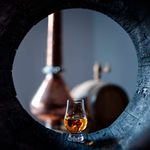
Japanese whisky is winning affluent Kenyans for its craftsmanship and exclusivity, with Asahi’s entry hinting at wider access.
Photo credit: Pool
Although the index dipped 16 per cent in 2025, reflecting short-term market volatility, the report states that this is not unusual in collectible asset markets and can present buying opportunities for well-informed investors and collectors.
Whisky Invest Direct points out that the scarcity premium, along with the growing international recognition and tighter authenticity regulations in Japan, suggest that bottles chosen with care may appreciate over time if bought with attention to provenance, storage, and market timing.
Sylvia agrees, adding that stocking Japanese whisky at her establishment is more value-driven than for profit-making.
"A lot goes into getting that bottle on the shelf. For us, Japanese whisky is mostly for value-driven consumers. You wouldn't ordinarily find someone drinking a Japanese whisky in one sitting. When stocked in bespoke lounges and bars, it will never be sold by the bottle, but rather as shots or highballs.”
Not bestsellers
Gosrani also stocks Japanese whiskies for value, not profit margins.
"They aren't our best-sellers because they're scarce. But we still go out of our way to ensure we have them in stock because, from a business perspective, it doesn't look good if a customer wants their favourite drink and it's not available."
Liquor Library Director Sylvia Karanja poses for a photo after an interview at her store along Kiambu road on February 5, 2026.
Photo credit: Lucy Wanjiru | Nation Media Group
However, it doesn't mean that they don't make money from the whisky.
"With luxury goods, there's always an opportunity to make a good margin because there's always a market. For the Kenyan consumer, this comes in different forms. One, it could be to celebrate a huge milestone. It could be an anniversary, a birthday, or a promotion. Another element is hosting, something we Kenyans love to do,” 'says Sylvia. Although Asahi Group will officially begin operating in the country soon, Sylvia isn’t convinced that the beverage company will have a significant impact on Japanese whisky consumption in Kenya.
"Asahi focuses more on beer. When the takeover was first announced, I thought they would focus on whisky, but I later learned their focus would be beer. However, if they had the opportunity to bring in whiskies as well, I think that would be fabulous because they would be able to introduce more Kenyans to Japanese whisky.”
Interestingly, Asahi Group’s line of Nikka whiskies is among the most notable and widely distributed Japanese premium whiskies at reasonable prices. A 700ml bottle of Nikka 12-year-old retails for Sh17,000. A 700ml bottle of Nikka Coffey Grain or Coffey Malt retails for Sh12,800. For Sh8,200, you can purchase a 700 ml bottle of Nikka from the barrel.
Gosrani is convinced that Asahi's entry into the Kenyan market will have a significant impact on the Japanese whisky trend in the country.
"Asahi owns Nikka, whose prices are reasonable, and if they decide to import directly, the prices will be more favourable than they are now because they have the channel.”