Spanish olive and alcohol producers seek Kenya partners as entry point to Africa

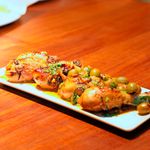
Olives with jalapeño made by Aceitunas Cazorla on display, while David Bermudez (right) of Aceitunas Cazorla explains the range of olives on offer to visitors at his stand during the Taste of Spain exhibition at Pax Manor on June 12, 2026.

Photo credit: Francis Nderitu | Nation Media Group

Spanish food producers are stepping up efforts to expand their presence in Kenya, betting on rising demand for imported foods and beverages among a growing middle class, expatriates and hotels.

Last week, 12 Spanish producers showcased a range of beverages and speciality foods in a Taste of Spain event held in Nairobi’s Pax Manor hotel. Among them was David Bermudez of Aceitunas Cazorla, a Spanish olive producer exploring opportunities in Kenya.

“We want to bring olives into the Kenyan market, but not the normal ones that Kenyans know about,” he told BDLife. “We would like to introduce flavoured olives.”

The company produces olives marinated with ingredients such as garlic, pepper, olive oil, lemon, and orange, alongside varieties stuffed with blue cheese, truffle, jalapeño, anchovy, and other flavours.

“For the stuffed varieties, we use machines to remove the pit and then fill the olives with a jelly paste of the different flavours,” he said, adding, “I visited several markets and found that the choice was largely limited to pitted or sliced olives. This is not a product that exists widely in Kenya, and we believe that allows us to carve out a niche in the market.”

The target market

In Spain, olives are commonly served as appetisers or tapas alongside meals and drinks. Mr Bermudez believes flavoured olives could similarly find a place in Kenya's hospitality sector and among consumers seeking new food experiences.

“Olives stuffed with anchovies, for instance, can be paired with cold beer, fruity white wines, fish dishes or salads,” he said at the event organised by the Economic and Commercial Office of the Spanish Embassy in Nairobi.

“The olives stuffed with jalapeños pair well with grilled meat, tequila, margaritas, or Mexican food.”

A selection of Beveland’s ready-to-drink cocktails on display at the Taste of Spain exhibition at Pax Manor on June 12, 2026.

Photo credit: Francis Nderitu | Nation Media Group

Aside from a single private-label customer in South Africa, Aceitunas Cazorla has no established presence on the continent.

“We currently have one customer in South Africa, but the products are marketed under a private label rather than our own brand,” he says. “Our objective is to find importers and distributors who can help us build a presence in Kenya and, eventually, across other African markets.”

Another exhibitor was Beveland, a Spanish producer of liquors and spirits, a returning player in the Kenyan market.

“We produce all kinds of spirits, ranging from entry-level to premium products,” said Federico Vullien, the company’s representative.

“We previously sold our Scotch whisky, tequila, and brandy in Kenya, but our importer ran into difficulties during the pandemic. We have since returned with a partner who imports about 40,000 bottles of our gin annually, but we are looking for additional partners for our whiskies and ready-to-drink canned cocktails.”

Strong potential

The family-owned company exports to about 80 countries and works with distributors across Africa. While Mr Vullien said the company’s products generally resonate with the African palate, he was pleasantly surprised by the reception of its canned cocktails during the event.

Federico Vullien of Beveland gestures while addressing visitors at the Taste of Spain exhibition held at Pax Manor on June 12, 2026.

Photo credit: Francis Nderitu | Nation Media Group

“I knew the trend of low-alcohol, ready-to-drink cocktails was growing all around the world, but I didn’t expect so many people in Kenya to enjoy these flavours,” he said.

“Among others, we have mojito and pina colada varieties, and I can already see a strong potential for them here in Kenya. The pina colada, in particular, which tastes like pineapple and coconut, has generated a lot of interest today.” Like many of the producers at the showcase, Beveland is seeking importers and distributors to expand its presence in the Kenyan market.

Less conventional varieties

Bodegas Cornelio Dinastía, a family-owned winery from Spain's Rioja region, was also seeking a foothold in the Kenyan market.

While Rioja is best known for its traditional winemaking styles, the company is positioning itself differently, relying on organic production methods and less conventional grape varieties.

“Instead of following the traditional or classic styles, we try to use different grape varieties that are not as commonly used in the region,” said the winery's representative, Oscar Rivas.

“For red wines, Tempranillo is the most widely used grape, and while we use it too, we also work with Grenache and Graciano, which are native to our area. For white wines, Viura is the most popular grape in Rioja, but we focus on white Grenache and Sauvignon Blanc.”

Bodegas Cornelio Dinastía currently produces about 150,000 bottles annually, focusing on quality rather than volume. It is still in the early stages of establishing a presence in Kenya and is currently seeking an importer to bring its wines into the market.

Olives marinated with red pepper, garlic and olive oil by Aceitunas Cazorla on display at the Taste of Spain exhibition held at Pax Manor on June 12, 2026.

Photo credit: Francis Nderitu | Nation Media Group

The company sees Africa as a key growth frontier for the wine industry.

“Traditional wine markets are already very mature,” he says. “I think Kenya and the wider African market represent the future. There is a lot of potential and an opportunity to introduce more people to wine culture.”

Among the labels the company showcased in Nairobi was La Guarida del Lobo (The Wolf's Lair), a red wine that the winery believes could resonate well with Kenyan consumers.

Made from 90 percent Tempranillo and 10 percent Graciano grapes, the wine undergoes a slow fermentation at low temperatures and is not aged in oak barrels, a decision intended to preserve its fruit-forward character.

“New red wine drinkers are looking for wines with more fruit and less oak,” he explained. “I think this wine could perform very well in Kenya.”

The wine pairs well with a variety of foods, including meats, rice dishes, and cheese, making it versatile enough for both casual and formal dining occasions.

Peabut and pistachio cream

Borges is yet another Spanish producer seeking a larger share of the Kenyan market, even though some of its products may already be familiar to local consumers.

The company produces a range of vinegars, creams, nuts, and cooking oils, including olive and sunflower oils, and is particularly keen to introduce its honey-and-salt peanuts, single-serve soy sauce sachets, and creams to Kenya's hotels, restaurants, and catering sector.

“We already have olive oil in the market, but I believe the peanut cream and the pistachio cream will do well too, more so for bakeries,” said Manuel Caro, the company’s representative.

“The peanut cream is different from the usual peanut butter because it also has honey and salt in it, enhancing its flavour, and the pistachio cream will do well because there are not too many pistachio products in Kenya.”

Follow ourWhatsApp channel for the latest business and markets updates.

PAYE Tax Calculator

Note: The results are not exact but very close to the actual.