Stanley Kioko, 36, wasn't just chasing adventure when he got into a Toyota Prado with some friends to travel from Nairobi to South Africa. He was stepping into the unknown, driven by the hope of finding better opportunities and living beyond the boundaries of his familiar life.
Their first stop outside of Kenya was Namanga, followed by Arusha. "Our first meal outside the country was in Arusha," Stanley recalls. "That's when it really hit us that we had left Kenya." The journey took nearly seven days.
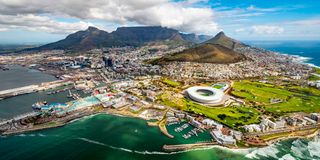
Today, Stanley lives in Tyger Valley, a small area in the northern suburbs of Cape Town. He describes Cape Town as one of the best places to live in South Africa.
Stanley, who was born in Machakos County, began his education there before moving to Eldoret after high school. He worked for two years while studying Information and Communication Technology (ICT) at Moi University, graduating in 2009.
After graduating, he was transferred to Mtwapa, Mombasa. It was during this period that he began to consider leaving Kenya. Stanley and his colleagues would sit together after long workdays, sharing their frustrations and dreams.
"We were working very hard and kept asking ourselves if this was all life had to offer," he recalls. "We started talking about greener pastures and the spirit of adventure."
They wanted better opportunities, higher pay, and a chance to see the world beyond what they had always known. "You need to know more than what you're used to," says Stanley.
At the time, he was working the night shift, from six in the evening to seven in the morning. "I kept asking myself, 'Can I really do better than this?' That question pushed me to make a hard decision."
After unsuccessful applications to other countries, Stanley did not hesitate when his South African visa was finally approved. He didn't even formally resign from his job. "I was already on my way," he says. He arrived in South Africa on September 9, 2011.
On reaching, his first task was learning how to live in a new society. Integration took him about three months. Language remained one of the biggest challenges, especially as a lecturer.
Students often asked questions in their local languages. Stanley had to learn quickly, not just the language but also cultural expressions and ways of life.
“Over time, I embraced local food, customs, and social life. Before I knew it, I living like locals,” he says with a smile.
His first job was as a lecturer. He worked part-time, moving between the University of Johannesburg and several further education and training colleges. One of these was Rand Training College, which was owned by a Kenyan and where he taught ICT. He also lectured at the Johannesburg Technical and Vocational College and participated in training programmes in Sandton.
His career gave him flexibility. Some of his work could be done remotely. At night, he programmed, and during the day, he lectured students. He worked this way for almost three years as a trainee, lecturer, and programmer. "I enjoyed teaching," Stanley says. "The more you teach, the more you learn. The more you learn, the more you realise how much you still need to learn."
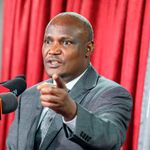
Stanley Kioko, 36 is an IT professional turned entrepreneur, based in Tyger Valley, Cape Town, he runs a financial and logistics business after years of lecturing and programming.
Photo credit: Pool
After working for three years, he realised employment alone would limit his growth. He moved into finance and has been running a financial company for over a decade. He later expanded into logistics, shipping cars from South Africa to Kenya for clients.
The minimum wage at that time was about Sh50,000. Stanley explains that a general worker in South Africa could earn more than a teacher or a police officer in Kenya. “When we looked at those numbers, we said this is the place to be,” he says. “We knew we could support our families better.”
One thing that stood out to him in South Africa was the absence of a rigid hierarchy. "Nobody cares about your background or your tribe," he explains. "If you have something to offer, you are welcome." This openness helped him grow and learn faster while building strong professional networks.
Taking the risk
Miriam Nyamai, a Kenyan scientist, is currently based in the Netherlands and works at an observatory in Dwingeloo. She is a support scientist with the European VLBI Network, a radio telescope network coordinated from the Netherlands.
Her story begins in Kasevini, Makueni County, Kenya. She grew up in a quiet, rural setting where life was simple and education was valued. She attended a day primary school, joined Makueni Girls High School then attended Kenyatta University, where she earned a Bachelor of Education in Science degree. "I specialised in mathematics and physics and graduated in 2012."
While teaching at Mukaa Boys High School in Makueni County, Mirriam came across an opportunity to apply for a postgraduate programme in South Africa.
It was the National Astrophysics and Space Science Programme. It offered a one-year postgraduate honours course in astrophysics and space science.
"The programme was fully funded. Visa fees, flights, accommodation, food, tuition, and transportation were all covered." Accepting the offer came with risks. She had just received an employment offer from the Teachers Service Commission. She decided to turn down the offer and left for South Africa at the end of January 2014.
Arriving in South Africa as a first-time traveller was overwhelming. Miriam was based in Cape Town, a city often described as "Little Europe" because of its diversity. At the University of Cape Town, she joined a class of 20 students and quickly formed close friendships that helped her settle in.
The biggest academic challenge was computer programming, especially learning Python, which was new to her.
"General relativity was also difficult because it was unfamiliar. The rest of the coursework, including physics and introductory astronomy, was manageable," she recalled.
Life in South Africa was more expensive than in Kenya. Accommodation and medical insurance were particularly costly. When she started working, she paid about Sh21,000 for medical insurance. "As a student, costs were lower due to discounts."
Miriam Mumbua Nyamai, is a Kenyan scientist who began her journey as a high school teacher, trained in astrophysics in South Africa and is now a support scientist at a radio astronomy observatory in Dwingeloo, Netherlands
Photo credit: Pool
After completing her degree in December 2014, she immediately enrolled in a master's programme at the University of Cape Town.
"After six months of coursework, I moved to the University of the Free State to finish my research, which I completed in December 2015."
The programme funded her undergraduate and graduate studies, but for her doctoral studies, she applied for additional funding. I received offers from Italy and South Africa and chose to return to at the University of Cape Town for my Ph.D.”
She graduated in December 2021. “My research focused on radio astronomy. Afterward, I worked as a postdoctoral researcher at the same university for about 11 months. I later joined the South African Radio Astronomy.”
The transition from student to professional was intense. She spent 11 years and eight months in South Africa. During that time, she attended international training programmes, such as the European Radio Astronomy School, and other radio astronomy initiatives for African students.
"I did more than just get a degree to strengthen my profile," says Miriam.
Her decision to leave South Africa was driven by the intensity of her work and a shift in the balance of her job. The role she took at the observatory was supposed to be split equally between research and operations, but it became heavily focused on operations. She wanted to do more research. "That is why I left," she says.
She initiated her move to Europe. "I searched online for positions I qualified for and applied." She started her current role in the Netherlands in October 2025. "I work as a support scientist, with an even split between operations and research." So far, she has mostly done research, and she feels fulfilled. "This is paradise," she says. "I wake up and get to do research."
Starting from scratch
Willie Macharia, 28, always desired to build a meaningful future. Alhtough he currently 2 lives in San Francisco, California, in the United States, he spent a decades in Cape Town, South Africa.
Willie left Nairobi on February 22, 2017. At the time, he was young and felt stuck and uncertain about his education path. He had just dropped off from Moi University in Eldoret, where he had been studying electrical and electronics engineering. "After three semesters, I felt there was no difference between my Form Four level and where I was. I had theory, but no practical skills.”
This realisation pushed him to rethink his future.
After searching for and applying for scholarships, he was selected for the MasterCard Foundation Scholarship at the University of Cape Town. "This opportunity changed everything. I decided to leave Kenya and my previous university work behind to start from scratch in a new country.”
Arriving in South Africa was his first time leaving Kenya. He was excited, but also fearful and confused. Cape Town was beautiful, but it also felt foreign.
Willie Macharia, 28, is a software engineer and aspiring entrepreneur, he spent ten years studying and working in Cape Town before moving to San Francisco, USA, where he is pursuing a master’s degree at the University of California, Berkeley.
Photo credit: Pool
"The biggest shock was the language. Even though English is widely spoken in Kenya, the accent and style of speaking in South Africa were very different."
Willie slowly adapted. Over the years, he learned the language, accents, culture, and social norms. He blended in and began to feel at home.
Willie studied at the University of Cape Town from 2017 to 2020. His graduation period was difficult because of South Africa's immigration rules.
"Getting work permits has become harder than before. While Kenyan migrants had previously found it easier to obtain work visas and permanent residence, the situation had changed by the time Willie finished his studies.
His field, software engineering, was listed as a critical skill, meaning that South Africa needed professionals like him. Nevertheless, the process was not easy. Luckily, Willie met a senior leader from a FinTech company while he was a student leader in the Computer Science Student Association.
"When I told them about my visa issues, the company agreed to hire me and help with the legal process." He says, "They told me to come work there while they arranged for lawyers to help with my paperwork. That is how I started working."
From 2020 until August 2025, Willie worked in South Africa as a software engineer. "I started as a junior graduate engineer. Over time, I advanced to software engineer level one, then level two, and later became a software engineering team leader."
However, living in Cape Town was not easy financially. The cost of living was high, especially rent. "Living near the city meant high rent but low transportation costs. Living farther away meant cheaper rent but higher transportation costs.” As a software engineer, he could afford to live about 10 kilometres from the city centre.
His experience in South Africa extended beyond work. Through university and work, he travelled to Germany for a study programme, attended tech conferences in the United States, (US) and toured parts of Europe. "These experiences taught me how to network, adapt, and communicate with people from different backgrounds," he said.
In 2021, he spent five and a half months working on a tech startup in Minnesota, US. Although the startup did not succeed, the experience was eye-opening.
As an entrepreneurial person, Willie began thinking long-term. Starting a business in South Africa as a foreigner was difficult.
Registering a company required local partners, and without stable documentation, establishing a credit history was nearly impossible.
Meanwhile, his friends were buying homes and building assets, but he could not even establish a credit history. "I realised that if I stayed longer, I wasn't playing the long-term game."
In August 2025, he left South Africa and moved to San Francisco to pursue a master's degree at the University of California, Berkeley. “The programme will take two years. I have about one and a half years remaining.”
Within his first month in the US, he started building a credit record. He sees this as a major advantage for future business and investment. Now, Willie feels prepared in San Francisco.
"I am open to building businesses in the US, gaining professional experience, owning assets, and investing back home in Kenya," he said.