For many theatre lovers in Nairobi, a sold-out show signals success. Full houses, loyal audiences, and growing cultural relevance suggest a creative enterprise that has found its rhythm.
But behind the applause lies a more complex reality: sold out does not always mean profitable.
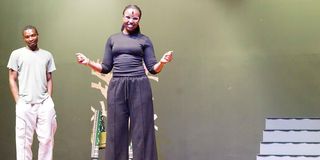
Ngartia, whose official name is Ngatia Kimani, a writer and actor who prefers the simpler label “storyteller” knows this all too well. As co-founder of Too Early For Birds (TEFB) alongside Abu Sense (Abubakar Nuuman), he has watched the production evolve from a passion project into a demanding, high-stakes creative business.
“We didn’t know what selling out meant,” he says of their first show. “It took a while, and some hard lessons.”
TEFB began as an experiment driven by instinct rather than strategy. Ngartia even used money he had saved to buy furniture to instead book a venue for their debut show.
The idea was simple: Kenyans would be interested in their own history, especially when told in a way that connects past and present. Early audiences were largely friends and supporters, some showing up out of curiosity, others, as Ngartia puts it, “out of pity” after the founders quit stable jobs in a marketing agency.
But something clicked. Word spread. Audiences returned, not out of obligation, but because they enjoyed the performances.
The illusion of success
As TEFB grew, so did the numbers. Shows that once hosted 100 people began drawing thousands over a weekend. On paper, the math seemed impressive: 4,000 people paying an average of Sh2,000 could bring in Sh8 million.
But the books told a different story.
“We don’t have affordable, quality performance spaces in Nairobi,” Ngartia explains. Venues like Jain Bhavan and Visa Oshwal can cost up to Sh 1 million per day, with additional charges for foyers, gardens, and other spaces. Add taxes, and the costs climb even higher,” he says.
Then there is the scale of production. Research teams, writers, editors, legal teams, accountants—all are engaged months before a single ticket is sold. By the time actors, crew, and support staff come on board, the payroll is substantial. “The payroll is immense,” says Ngartia.
He points out that in this context, more shows do not always mean more profit. In fact, overextending can be risky. “It’s cheaper doing 15 shows at once, but you don’t know. If people don’t show up, now you’re in debt.”
Lessons in loss
The learning curve, he says, has been steep, and costly. One early misstep came when TEFB took its show to Nanyuki, influenced by enthusiastic supporters who promised a large turnout. “It did not work,” Ngartia recalls with a laugh. “Everything that could go wrong went wrong. Even our food went missing.”
The losses were significant enough that it took an entire year to recover.
Around the same time, TEFB began engaging with HEVA Fund, which pushed them to think beyond individual shows and start planning as a business, in essense, making projections, considering growth, and structuring operations more deliberately.
“Being taken that seriously shifted everything,” Ngartia says.
Building the machine
As TEFB matured, so did its internal systems. Early on, the founders paid actors based on what they themselves would have wanted as artistes, often exceeding industry recommendations.
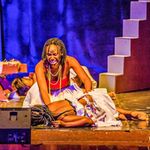
Samson Omondi and Red Brenda perform during a media teaser of Too Early For Birds’ “Wangari Maathai” edition on April 9, 2026.
Photo credit: Thomas Rajula | Nation Media Group
“We thought if we were feeling thirsty after three hours, then everyone likely was,” Ngartia says, referring to providing basics like water and meals during rehearsals.
But sustainability required a shift. By the third edition, it became clear that passion alone could not dictate the payment model.
Meanwhile, production timelines expanded. A major show now can consume at least two months of intensive work. For instance, for their upcoming Wangari Maathai edition, research began months in advance, with multiple writers and researchers submitting invoices long before ticket sales opened. “It becomes way bigger than you expect,” Ngartia says.
A case study
The Wangari Maathai production reflects TEFB’s evolution. What began years ago as a small vignette (a theatrical form consisting of multiple short, descriptive scenes—or "vignettes"—that often centre on a common theme, setting, or mood rather than a single,) has grown into a full-scale exploration of her life, shaped by extensive research and collaboration.
The story goes beyond her Nobel Peace Prize to interrogate themes of governance, justice, and civic resistance—issues that remain sharply relevant today.
Different actors will portray Wangari at various stages of her life, underscoring both the complexity of the narrative and the ambition of the production.
The audience impact
If TEFB has managed to sustain itself despite challenges, Ngartia says much of the credit goes to its audience.
Attendance figures now range between 3,800 and 4,000 per show weekend. But Ngartia believes loyalty is built on something deeper than entertainment. “It’s trust,” he says.
That trust was tested during the pandemic. When Covid-19 disrupted a sold-out run in 2020, TEFB offered full refunds. Many audience members declined, opting instead to wait nearly two years for the eventual comeback show.
Similar transparency has guided other difficult moments, from rain-damaged performances to logistical setbacks. “We owed them honesty,” Ngartia says. “Even if it hurts our pockets.”
Beyond passion
Looking back, Ngartia admits they had little idea what they were building. “We had an idea of what we thought was cool,” he says. “We didn’t have a clue what we were getting into.”
Today, TEFB stands as more than a theatre company. It is a complex creative enterprise balancing art, history, and business realities in equal measure.