Kenya and the World Bank plan to roll out a Hustler-type saving scheme that will see the multilateral lender match monthly savings of up to Sh258 by the poor, offering a breath of fresh life to President William Ruto's fledgling Hustler Fund.
The scheme seeks to help 50,000 poor individuals build a savings war chest to help them diversify their sources of income, the World Bank says in a new report dated November 2024.
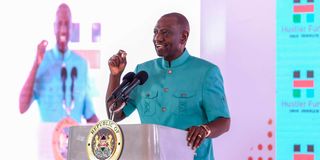
In the first six months of the so-called Economic Inclusion Programme (EIP), the World Bank through the government will match the savings in a scheme that has some resemblance to the government's Financial Inclusion Fund, popularly known as the Hustler Fund.
The savings plan is aimed at boosting enterprises in fresh efforts to tackle the country's acute youth unemployment problem.
Kenya's years of strong economic growth have created jobs.
But they are mostly low-paying, informal and coming at a rate economists say is too low to absorb the rapidly growing population.
"During the first six months, beneficiaries will receive a 100 percent matching grant, subject to a cap of $2 (Sh258.5) per month per beneficiary, if they contribute to the scheme," said the World Bank in the report dated November 2024.

"This nudge is intended to reinforce the behaviour change communication and promote a long-term saving habit," added the Washington-based global lender.
The disclosure is contained in a report on a World Bank-funded programme known as the Second Kenya Social and Economic Inclusion Project.
This programme aims to improve access to social and economic services for vulnerable households in Kenya through cash transfers and social protection programmes.
However, the report does not reveal whether the savings will earn interest or how they will be managed.
A similar savings scheme was started by the Ruto administration through the Hustler Fund. Under the fund Kenyans can borrow and save through their mobile phones as part of his Bottom-Up Economic Transformation Agenda (Beta).
For all the cash borrowed, 5.0 percent of the funds are directed towards the savings portion. Of these saved funds, 30 percent can be accessed after one year while the remainder could be claimed after retirement. Kenyans also have the option of saving voluntarily.
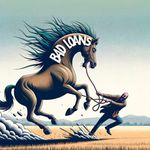
The Hustler fund programme, however, has run into headwinds with default rates rising, and the government reportedly going slow on giving loans on the platform.
In February last year, during a consultative meeting between President Ruto and World Bank Regional Vice President for Eastern and Southern Africa, Victoria Kwakwa, the global lender pledged to support the Hustler Fund with technical and financial support for programmes and initiatives that would empower the poor.
As part of the Economic Inclusion Program (EIP), the World Bank wants to help poor adults, particularly those negatively affected by climate change, diversify and invest in more productive household enterprises.
The World Bank notes that the EIP beneficiaries will be provided with social insurance in the form of savings opportunities and incentives. In one of the components of the EIP, all the beneficiaries will be auto-enrolled in the social insurance scheme with a flat benefit.
The EIP beneficiaries' contributions will then be matched to "inculcate a savings habit."
Savings dropped from 74.0 percent in 2021 to 68.1 percent in 2024, as households prioritised meeting day-to-day needs, according to a financial inclusion report produced jointly by the Central Bank of Kenya, the Kenya National Bureau of Statistics and Financial Sector Deepening.
It was the first time since 2009 that the savings rate dropped, reflecting the high inflationary pressures aggravated by higher fuel and food prices.
Official data shows that Kenyans keep money aside for the rainy day. The financial inclusion report showed that 35.9 percent of Kenyans save for day-to-day needs, followed by 27.7 percent for emergencies and 9.9 percent for education.
Another 12.6 percent of those surveyed said they put money aside for retirement and a tiny 7.5 percent were business-related savings.
Compulsory savings under the National Social Securities Fund (NSSF) increased more than fivefold effective February 1, 2024, from Sh400 per month to Sh2160. Employers are required to match the contribution, which the government insists is aimed at improving the country's savings rate of 12 percent, which is lower than the African average of 17 percent.
However, the high cost of living—exacerbated by more statutory deductions such as the 1.5 percent housing levy and 2.75 percent social health insurance fund (Shif)—has left workers with little cash to save.
As part of its plan to help the EIP beneficiaries diversify and invest in climate-resilient activities, the World Bank has identified beekeeping, sheep rearing, fodder production, milk, livestock production, fishing, and root crop production as some of the economic activities these individuals will engage in.