Weak competition in key sectors stifling jobs growth, World Bank says

Qimiao Fan, World Bank Division Director for Kenya, Rwanda, Somalia and Uganda.

Photo credit: Pool

The World Bank Group has linked entrenched market dominance and weak competition in sectors such as electricity, telecommunications and fertiliser distribution to stagnating investments and expansion of formal jobs in Kenya.

The multilateral lender said in a report that domination by a few powerful players in the key economic sectors is raising business costs, suppressing investments and constraining expansion of firms that drive formal employment.

The World Bank’s latest Kenya Economic Update unveiled Monday lists Safaricom in telecommunications and Kenya Power in electricity distribution among firms operating under weak competition policies.

Kenya Power, the report states, retains a near-monopoly over electricity distribution and influences tariffs and reliability of energy.

This translates into high prices, limited alternatives, and slow efficiency gains, which curb growth in investments in labour-intensive sectors such as manufacturing.

Manufacturers— who have one of the biggest potential to generate large volumes of formal jobs— have over the years partly blamed high cost of electricity as a barrier to scaling operations.

Safaricom’s tight grip on mobile money and data services, the World Bank’s report suggests, has shaped pricing and market access in ways that smaller digital players struggle to overcome.

The lender says that Safaricom’s mobile broadband prices for monthly bundles, for example, are higher than those of its competitors in Kenya and in key regional markets such as Ghana, Nigeria, Rwanda and Zambia.

These distortions, the report goes on, are feeding directly into Kenya’s shrinking share of formal jobs.

“Kenya has the foundations of a strong economy but unlocking its full potential requires reducing distortions, further opening markets and ensuring that policy frameworks are transparent, predictable and grounded in evidence,” World Bank Country Director Qimiao Fan said during the launch of the Kenya Economic Update.

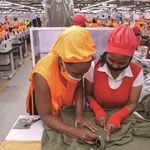
Citing data from the Kenya National Bureau of Statistics, the report shows that despite Kenya creating 782,000 jobs in 2024, nearly nine of 10 jobs created were informal. The share of Kenya’s formal employment has fallen from 18.5 percent in 2010 to 15.5 percent in 2024, a trend the bank attributes partly to weak competition that raises input costs and limits firm growth.

The report identifies Kenya as having the most restrictive product market regulations among all countries with available global data, with an overall Product Market Regulation (PMR) score of 2.92.

This poor scoring — driven by firms operating behind protective barriers rather than earning market share through efficiency, innovation, or better products — has stifled private investment, limited new entries, and slowed formal job creation.

The result is an economy where the informal sector — characterised by low-productivity activities with limited earnings, security and prospects for growth — dominates job creation.

“When you have competition, prices go down and Kenyans can buy more for their money. And that means more demand for goods and services which means more jobs within the economy,” World Bank economist for finance competitiveness and investments Ryan Kuo said.

Mr Kuo added that competition also improves productivity, enabling firms to generate more value per worker and pay higher wages.

“When competition is fair and vigorous, it means firms are always trying to improve their productivity… The net effect is that average wages go up,” he said.

Kenya, the economist said, has unusually high gross operating surpluses — higher than in competitive advanced economies — indicating that dominant firms in Kenya could be charging above-cost prices due to low competitive pressure.

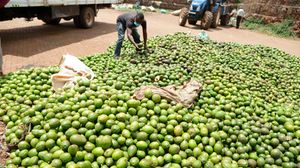
The report cites the State-funded fertiliser subsidy programme — which relies on a narrow distribution chain controlled by leading suppliers Yara and ETG — has created geographic distortions, reduced availability of high-demand blends and locked out many private players.

The weak competition in the subsidised input market, the World Bank says, has suppressed agricultural productivity, thereby slowing growth in formal jobs in agri-processing, logistics and retail sectors.

Kenya’s transport sector, on the other hand, suffers from opaque licensing, regulatory fragmentation and barriers to market entry, raising logistics costs which hurt margins for manufacturers and exporters.

Albert Mwenda, the director-general for budget, fiscal and economic affairs at the Treasury, said that Kenya’s dominant micro and small-sized enterprises have made it difficult to enforce competition policies because they “fear formalisation” and prefer to operate outside structures where competition policy can reach them.

“Competition works well if there are more people working in the formal economy. Competition policy will be effectively implemented if we have more people working in the formal economy,” Mr Mwenda said. “We have a challenge especially in the informal sector — the MSMEs — where the experience we have seen, through the credit guaranteed scheme, is that there is a fear of formalising operations.”

Competition Authority of Kenya (CAK) director-general David Kemei said in a speech that the agency was widening its focus beyond enforcement to advocacy in collaboration with other regulators.

“Pro-competitive reforms have the power to unlock growth by removing unnecessary barriers and improving market access,” Mr Kemei said in a speech read by CAK’s director for competition & consumer protection, Amenya Omari.

“Businesses already have enough hurdles to jump towards success, so we collectively have a duty to reduce legal and policy issues that increase chances of failure rather than success.”

Betty Maina, the East Africa director at Genesis Analytics and a former Trade Cabinet Secretary, cited a lack of a strong consumer constituency to counterbalance large firms, represented by powerful industry groups such Kenya Association of Manufacturers (KAM) and Kenya Private Sector Alliance (Kepsa) as a challenge in enforcing competition policies.

“Without a strong consumer body, it is difficult to manage those conversations on competition when they confront strong bodies like the KAM,” Ms Maina said.

PAYE Tax Calculator

Note: The results are not exact but very close to the actual.