US tariff deadline looms over Kenya as Trump stands firm

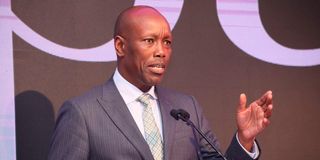
Ministry of Investments, Trade and Industry Cabinet Secretary Lee Kinyanjui addresses participants on May 28, 2025. 

Photo credit: Bonface Bogita | Nation Media Group

Kenya is staring at a 10 percent tariff on exports to the United States of America from August 1 as it waits for Washington to respond to its appeal for a review, Cabinet Secretary for Investments, Trade and Industry Lee Kinyanjui said Wednesday.

President Donald Trump has indicated that the Friday deadline for enforcement of the reciprocal tariffs will not be extended.
"The August first deadline is the August first deadline - it stands strong, and will not be extended. A big day for America!!!" the US leader wrote in capital letters in a post on Truth Social — which he owns through Trump Media & Technology Group (TMTG).

Mr Trump, on April 2, invoked the International Emergency Economic Powers Act (IEEPA) to impose a 10 percent baseline tariff on all US trading partners' tariffs in a bid to address “absence of reciprocity in our bilateral trade relationships”.

Washington, however, paused enforcement of the tariffs initially for 90 days from April 10, which lapsed in July before being extended to August 1.

Mr Trump’s post on Wednesday appeared to go against his pledge in July that the August 1 deadline would be “firm, but not 100 percent firm”.

Washington has since inked tariff deals with most of its key trade partners, including the 27-member European Union, the UK, and Japan.

Kenya is among countries that were slapped with the lowest tax of 10 percent in the protectionist tariff changes, which largely targeted countries that run a large goods trade surplus with the US, the world’s largest economy.

Ministry of Investments, Trade and Industry (MITI) Cabinet Secretary Lee Kinyanjui said Nairobi was keen on pursuing a deal with Washington, which will see a return to “normalcy” in tariffs on exports to America.

“Our wish is that there will be normalcy, but the call will come from the Americans,” Mr Kinyanjui told the Business Daily. “However, 10 percent is the lowest anyone has gotten, and so there is no cause for alarm whatsoever.”

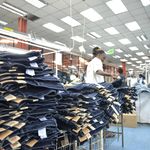
Kenya largely exports textiles and macadamia nuts to the US at zero tariff and no restrictions on quantities under the Growth and Opportunity Act (Agoa).

President Trump’s insistence on reciprocal tariff policies in trade negotiations has raised anxiety among beneficiaries of the tax- and quota-free Agoa deal over its renewal upon expiry in September.

The Agoa treaty, initiated under the Bill Clinton administration in 2000 to integrate sub-Saharan Africa into global trade and wean it off foreign aid, was initially intended to last for 15 years before being extended for a further 10 years in June 2015.

“We are pushing for zero percent tariff, but 10 percent in comparison to our competitors would still be a slight advantage to us. The most important thing is to continue our exports to this market because losing it will be a big deal to Kenya because of the direct and indirect employment created since Agoa was put in place,” said Tobias Alando, chief executive officer of Kenya Association of Manufacturers, the lobby for factories including those under apparel and textiles sector.

“Until the time that Agoa term ends and a new tariff is set — and in this case 10 percent or any other rate which will be arrived at— we expect the zero tariff on Kenya exports to continue. We are optimistic that the conversation between Kenya government and the US will yield a good deal” he added.

Kenyan firms in apparel exports to the US are yet to start making adjustments in line with tariff changes in the US pending the conclusion of talks between Nairobi and Washington and expiry of the Agoa deal on September 30.

“We are waiting for outcome of the ongoing negotiations,” said Jaswinder Bedi, a leading textiles and garment manufacturer in sub-Saharan Africa through Bedi Investments in Kenya and Fine Spinners in Uganda.

Mr Trump’s tariffs will, however, see Kenyan goods entering the US, such as apparel, slapped with a 10 percent tariff.

Kinyanjui said Kenya will likely be a priority when the US starts negotiations with African countries. The tariff talks, he said, currently covered countries with huge trade surpluses with the US.

Trade balance between Kenya and America is tilted in the latter’s favour, with Kenya’s imports from the world’s largest economy standing at Sh155.64 billion in 2024 against Sh88.86 billion in earnings from exports.

“The US President has said that he is trying to correct situations of countries that were taking advantage of the US and had huge trade surpluses. Kenya does not fit in that space,” Kinyanjui said.

“They have not started dealing with Africa. We believe there will be a time when they will start focusing on Africa. Kenya has made an appeal, and filed all applications [for a review]. It is not a Kenyan problem, but a global issue. Come August 1, they may extend [the deadline] or decide otherwise. The decision will come from America itself.”

Washington has, in the past, flagged barriers erected by Kenya’s Director of Veterinary Services (DVS), which have made it difficult for American firms to export bovine (cattle) embryos to Kenya despite a deal struck with the US Department of Agriculture Animal and Plant Health Inspection Service in January 2020.

Mr Kinyanjui travelled to Washington for talks with his US counterpart, Jamieson Greer, in the wake of the announcement of the reciprocal tariff policies in early April.

PAYE Tax Calculator

Note: The results are not exact but very close to the actual.