Treasury to do more restructuring of external debt amid low rates

Ratings agency Moody’s said that the improved external market access is supportive of liability management, and smoothening of the external debt maturity profile. 

Photo credit: Shutterstock

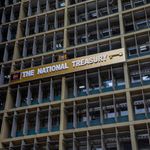
The National Treasury is set to ramp up external debt restructuring activity in the second half of the fiscal year, riding on lower global interest rates and the recent upgrade in the country’s credit rating.

The government on Wednesday opened its latest Eurobond partial buyback tender that will see it refinance Sh64.5 billion ($500 million) worth of notes on a 10-year bond due to mature in February 2028 and a 12-year paper maturing in May 2032.
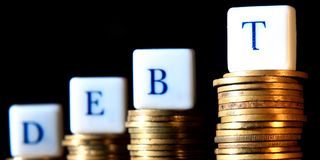
The repurchase will be financed using proceeds of a new Eurobond whose sale is running concurrently with the buyback, but whose value and tenor are yet to be disclosed.

In the supplementary budget column on the 2026 Budget Policy Statement (BPS) that was published last week, the Treasury indicated an increase in proposed external debt principal repayments for the current fiscal year by Sh342.5 billion to Sh682.7 billion.

At the same time, it will increase its commercial borrowing by Sh358.2 billion, from the Sh221.2 billion that was approved in the June 2025 budget to Sh579.4 billion, allowing it to cover the expanded debt repayments.

The concurrent increases in the external borrowing and repayments, which would leave the country in a fairly neutral debt position, point to increased confidence by the Treasury that interest rates will be low enough to allow it to refinance or retire old debt at a lower cost.

Ratings agency Moody’s, which upgraded Kenya’s long-term foreign currency sovereign credit rating to “B3” from “Caa1” last month, said that the improved external market access is supportive of liability management, and smoothening of the external debt maturity profile. 

“Looking ahead, sustaining market access and pursuing further liability management, when market conditions allow, will remain important given the still sizable external amortisation schedule,” said Moody’s after making the Kenya rating change.

Domestic financing conditions have also improved with the cuts in the Central Bank Rate helping lower interest rates on government securities.

Treasury bonds are now paying coupons of between 11 and 14 percent, down from highs of 18.46 percent in early 2024, while Treasury bill rates have halved to a range of 7.7 to 8.9 percent, from 16 percent to 17 percent in 2024.

In terms of liability management, the lower external and domestic rates have thus allowed the State to refinance and lengthen the maturity profile of debt at a lower cost, reducing pressure on the already strained public purse.

For Eurobonds, the current buyback is the fourth executed by the National Treasury in just over two years —and the second in the current fiscal year.

It is targeting $350 million (Sh45.2 billion) on the 12-year bond maturing in 2032, and $150 million (Sh19.4 billion) on the 10-year bond that falls due in 2028. The 2028 bond has an outstanding principal of $371.56 million (Sh47.94 billion), while the 2032 paper has a principal of $1.2 billion (Sh154.8 billion).

In February 2024, the Treasury undertook its first Eurobond buyback of $1.5 billion (Sh193.5 billion) to partially refinance the $2 billion (Sh258 billion), 10-year tranche from 2014, which paid interest at 6.875 percent per annum and was due to mature in June 2024.

To fund the transaction, the Treasury floated a new six-year, $1.5 billion paper at a rate of 9.75 percent. This bond matures in February 2031.

In March 2025, the Treasury bought up $579 million (Sh74.7 billion) from a $900 million (Sh116.1 billion), seven-year bond that had a seven percent interest rate, and which was to mature in three equal instalments starting May 2025. The repurchase was financed using proceeds of a new 11-year, $1.5 billion paper issued at 9.5 percent.

The third buyback was done in October last year, targeting the same 10-year 2018 bond that is the subject of the latest refinancing transaction.

The October buyback, which was funded using proceeds of a new $1.5 billion issuance, however fell short of its $1 billion target after bondholders agreed to sell $628.4 million (Sh81 billion) worth of notes in the tender, leaving the balance of $371.56 million in issue.


PAYE Tax Calculator

Note: The results are not exact but very close to the actual.