State eyes Mau Summit-Malaba road for tolling, expand capacity

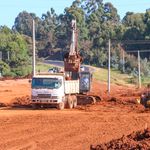
Dualing of the Sh200 billion Rironi-Mau Summit highway project ongoing at Manguo Swamp near Limuru junction on December 15, 2025.

Photo credit: Boniface Mwangi | Nation Media Group

The government plans to expand and toll the Mau Summit–Malaba highway, a move that will require motorists travelling to parts of Western Kenya to pay user fees for their entire journey from Nairobi.

This follows the launch of a pre-feasibility study aimed at upgrading the 243-kilometre highway, converting it into an access-controlled tolled road and expanding its capacity from two lanes to four, according to disclosures by the Public Private Partnership (PPP) Directorate.
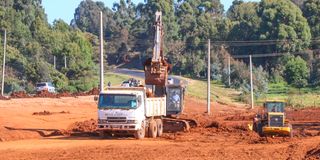
With the section from Rironi to Mau Summit already being upgraded into a toll road, this means motorists using the route—including those travelling to Eldoret, Bungoma, Kitale and Busia—could be required to pay for the full trip.

The pre-feasibility study is being funded by the China-led Asian Infrastructure Investment Bank (AIIB). The Beijing-based lender has already procured the services of Canadian management consulting firm CPCS Transcom Limited as the transaction advisor. The study is reported to have commenced in November last year.

“The strategic transport route is part of the Northern Corridor connecting western Kenya and Uganda and will complement the upstream Nairobi—Mau Summit highway already under construction,” said the PPP Directorate in its latest disclosures.

“The highway is also one of nine roads that constitute the Trans-African Highway Network, a continental development policy coordinated by the African Union,” added the Directorate, a department under the National Treasury.

President William Ruto’s administration aims to upgrade the 175-kilometre stretch from Rironi to Mau Summit, as well as the Rironi–Maai Mahiu–Naivasha and Naivasha–Gilgil sections, under a PPP arrangement. Under this 30-year concession, private investors will charge motorists toll fees to recover their estimated Sh184 billion to Sh200 billion investment.

Toll fees for the Mau Summit–Malaba highway will be reported once the PPP project advances to the feasibility stage, a point when detailed traffic studies, cost estimates are finalised to determine viable tariff levels.

Plans to extend tolling to Malaba come despite concerns over the lack of a viable alternative route for motorists who wish to avoid user fees on the Nairobi–Nakuru–Mau Summit section, particularly daily commuters.

The contracting authority, the Kenya National Highway Authority (Kenha), is said to have already acquired the land for the expansion of the Mau Summit-Malaba highway.

The private investors that have so far been tapped include a consortium involving China Road and Bridge Corporation (CRBC), the National Social Security Fund and Shandong Hi-Speed.

The CRBC-led consortium, which had initially been awarded the entire contract before it was split, had proposed a base toll of Sh8 per kilometre for passenger cars in the first operational year, with tolls escalating by one percent annually. Higher tariffs would be set for heavier vehicle classes.

The highway passes through Eldoret, Webuye, Bungoma, Malaba and Turbo before terminating at the border town of Malaba, in Busia County.

Should the expansion of the highway get the green light, the transport node will become a beehive of construction activity.

Besides the ongoing expansion of the Nairobi–Nakuru–Mau Summit highway, plans to extend the Standard Gauge Railway from Naivasha to Malaba are also at an advanced stage.

Recently published budget documents have also revealed plans to rehabilitate the metre gauge railway to Malaba, signalling that the government does not intend to abandon the old line as it seeks to make the Northern Corridor more competitive.

“The Northern Corridor is a key part of this road network and serves as one of East Africa’s busiest trade routes,” said the Directorate.

“This road links the Port of Mombasa to Uganda, Rwanda, South Sudan, and the DRC sees nearly 3000 daily trucks moving over 35 million tons of cargo annually.”

The AIIB, in which Kenya recently became a fully paid up member, had earlier invited bids for a consultant to conduct a pre-feasibility study on upgrading the 243-kilometre Mau Summit–Malaba Highway into an access-controlled, tolled, four-lane road—marking its maiden activity in Kenya’s projects scene.

AIIB, a multilateral lender founded in 2016 and now boasting 110-member states, finances sustainable infrastructure across developing regions. Kenya formally joined AIIB in September 2024, seeking more flexible concessional long-term funding beyond traditional lenders.

The consultant’s assignment includes reviewing Kenya’s PPP legal and institutional framework, developing delivery-model options and providing a technical outline detailing route alignment, cross-sections, key performance indicators, and tolling strategy.

The study will also compare the Mau Summit–Eldoret–Malaba and Mau Summit–Kericho–Kisumu–Busia–Malaba routes to determine the most economically viable option.

Other tasks include traffic and socio-economic analysis, cost and revenue projections, creation of a high-level financial model and environmental and social screening.

The consultant will further assess climate resilience, roadside services, electric vehicle charging and risk allocation, and conduct value-for-money tests, market sounding, and a roadmap towards full feasibility.

Under Kenya’s transport plan, PPPs are expected to deliver about 12 percent of total investment needs—approximately Sh1.94 trillion.

According to the Kenya National Highways Authority, most of the wayleave, or right-of-way, has already been secured, but the Mau Summit–Malaba segment lacks technical, financial, and environmental assessments—making this pre-feasibility exercise a top priority.

Dr Cavince Adhere, a scholar of international relations focusing on China-Africa relations, said the speed at which AIIB has moved to finance its first Kenyan project “shows why Kenya needs this kind of multilateral lender.”

“It will help Kenya to speed up its infrastructure projects,” he said, arguing that traditional US-backed institutions have slowed progress with excessive conditionalities. “AIIB adds to the basket of partners that have supported Kenya over the past decade.”

As part of China’s Belt and Road Initiative, the AIIB was designed to strengthen connectivity across Asia, Europe, and Africa through road, rail and power projects.

It also serves as a counterweight to US-dominated institutions like the International Monetary Fund and World Bank, both of which resisted Beijing’s push for greater influence within their governance structures.

Follow our WhatsApp channelfor the latest business and markets updates.

PAYE Tax Calculator

Note: The results are not exact but very close to the actual.