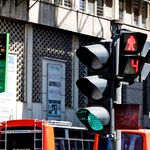
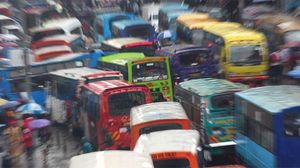
The Treasury has set aside Sh1.1 billion to fast-track the rollout of AI-powered traffic lights and surveillance cameras to cut reliance on police officers at busy junctions in Nairobi, promising relief to motorists frustrated by chronic gridlocks and long commuting hours.
Budget documents tabled in the National Assembly show the State plans to spend Sh1.18 billion in next financial year on the Nairobi Intelligent Transport System (ITS) Phase III, a nearly tenfold jump from the current Sh116.1 million allocation.
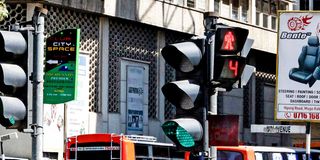
The cash will help install intersections with cameras and sensors to make sense of traffic patterns in real time and ease congestion.
With the help of artificial intelligence, the system will count the number of cars and passengers and capture vehicles’ direction and movements, such as turns and violations, and relay live data to a central command centre at City Cabanas on Mombasa Road.
The system, being implemented by the Kenya Urban Roads Authority (Kura), is designed to work like smart traffic management networks used in cities in developed economies such as Singapore and London, where cameras, sensors and AI-controlled traffic signals are used to ease congestion and improve traffic flow.
Under the project, Nairobi will deploy intelligent traffic lights capable of adjusting signal timings in real time depending on congestion levels at specific junctions.
The Treasury plans to use a portion of $185 million (Sh23.9 billion) concessional loan that Cabinet Secretary John Mbadi signed with Export–Import Bank of China in November 2025 to finance the broader smart traffic management programme.
The budget documents show that the bulk of the funds, about Sh1.1 billion, will come from external sources, with the exchequer shouldering a measly Sh75 million of the planned spending in the next financial year.
“The third phase of ITS marks the full integration of Nairobi’s traffic ecosystem,” Kura said in project documents. “It will encompass 125 intersections, linking them to the central control system at Cabanas.”
The increased funding is expected to support expansion of the ITS network as the government targets 20 percent completion in the 2026/27 financial year, which starts in July, rising to 50 percent in 2027/28 before full completion in 2028/29.
Treasury projections show the State plans to spend at least Sh5.3 billion on the project over the next three financial years, underlining a growing shift towards technology-driven traffic management instead of relying solely on road expansion.
The project is also expected to gradually replace roundabouts with synchronised traffic signals and intelligent monitoring systems along major roads in the capital.
Among the intersections targeted are Moi Avenue/Kenyatta Avenue, Koinange Street/Kenyatta Avenue, Raila Odinga Way/Lang’ata Road and Limuru Road/Muthaiga Road — junctions notorious for severe rush-hour congestion.
The technology uses smart cameras and road sensors to continuously analyse vehicle movement and congestion patterns across the city.
Using artificial intelligence, the system automatically changes signal timings to ease traffic build-up at overloaded junctions without requiring officers to manually direct vehicles.
“You don’t have to walk into a junction to adjust signal timings any more,” Kura wrote. “Everything happens from the control room.”
The rollout could significantly reduce the presence of traffic police officers at intersections as automation takes over traffic coordination during peak hours. Every smart junction will be equipped with cameras capable of detecting vehicles and recognising automated number plates.
The system will also identify red-light violations, speeding offences and helmet compliance among boda boda riders. It will further determine the number of passengers inside vehicles and automatically transmit detected offences for enforcement, paving the way for digital traffic policing.
Officials say the technology will also improve emergency response during accidents and major traffic disruptions by instantly detecting abnormal changes in traffic flow.
“If there is an accident, the system detects a change in traffic flow and immediately alerts the control centre,” Kura explained last year.
“Police and emergency teams can then be dispatched instantly.”
The government is banking on the system to cut massive economic losses linked to Nairobi’s worsening congestion. Transport ministry estimates released in July 2024 showed traffic jams cost the economy about Sh120 billion annually through lost productivity and fuel wastage.
The ministry said commuters trapped in severe congestion spend more than 57 minutes on trips that would ordinarily take just 10 minutes under free-flowing traffic conditions.
The Nairobi Intelligent Transport System project was first approved by Cabinet in February 2024 as part of wider plans to modernise traffic management through automation and digital monitoring.
“Cabinet approved the implementation of the Nairobi Intelligent Transport System (ITS) Establishment and Junction Improvement Project,” a Cabinet dispatch said at the time.
“The Phase III of this seminal project is expected to revolutionise traffic management in Kenya, eliminating human interfaces in traffic control, and streamlining the payment of penalties for traffic offences.”
The first phase of the project will see the construction of the main command hub at City Cabanas to house engineers and specialists monitoring live traffic data across the city in real time.
The second phase will scale the technology across a wider geographic area to create a more integrated traffic network by coordinating with other urban transport systems, including possible links to Bus Rapid Transit corridors and electronic fare payment systems.
→ cmunda@ke.nationmedia.com
Follow our WhatsApp channel for the latest business and markets updates.
Unlock a world of exclusive content today!Unlock a world of exclusive content today!