Ruto-era reforms drive leadership changes at KRA

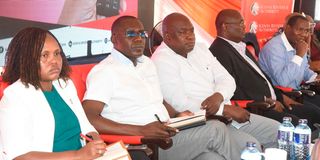
 Kenya Revenue Authority’s Commissioner Shared Services Nancy Ng'etich, the Authority’s Commissioner, Micro, Small and Medium Tax Enterprises George Obell, Leonard Shimaka a Board Director at the authority, Richard Ndungu, a Board Director, and the Authority’s Chairman Ndiritu Muriithi, listen to participants during the Kenya Revenue Authority Citizen Assembly, a public engagement with businesspeople, and other taxpayers from the North Rift Region, held at Eldoret Sports Club in Uasin Gishu County on February 05, 2026.

Photo credit: Jared Nyataya | Nation Media Group

When President William Ruto took office in September 2022, he made little secret of his intention to reshape Kenya’s tax administration, arguing that the country’s revenue collection system had become aggressive and counterproductive to expanding the tax base.

The President at the time signalled plans to reform tax administration and overhaul leadership at the Kenya Revenue Authority (KRA).
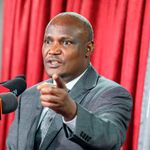
“A huge obstacle to the realisation of our national revenue target is that in practice, tax administration has traditionally been a repressive, menacing affair which resembles extortion,” Dr Ruto said.

“This extinguishes taxpayer incentive and diminishes the prospect of an expanded tax base, pulling Kenyan backwards from its national revenue potential and denying its citizens critical services and development programmes.”

That administrative shift is steadily reshaping the leadership ranks and institutional structure of the KRA, as a series of internal promotions, management changes and structural reforms gradually transform the agency under Commissioner-General Humphrey Wattanga.

Part of that transformation has involved a change of KRA’s top management structure. The KRA board has since July last year appointed six commissioners from within the tax authority’s ranks as part of a recruitment process that initially targeted four commissioners and 12 deputy commissioners.

The commissioner-level appointments have been filled, although recruitment for deputy commissioners—the second tier of senior leadership—is still ongoing, meaning the management transition at the tax agency is not yet fully complete.

The restructuring is designed to align KRA’s leadership with evolving enforcement priorities, improved taxpayer services and expanded research capacity as the government seeks to broaden the country’s tax base, while strengthening compliance.

The first of the new appointments came in September 2025 when Nancy Ngétich was named Commissioner for the newly created Shared Services Department, a unit tasked with overseeing organisational reforms including human resource alignment and technology adoption.

Two months later, in November, George Obell was appointed Commissioner for the Micro and Small Taxpayers Department (MST), a unit created earlier in March 2025 to enhance focus on the country’s vast informal and small-business tax base.

The board then announced the appointment of Alex Mwangi as Commissioner for the newly established Tax Research and Analysis Unit (TR&A) on January 12 this year, followed three days later by the appointment of Weldon Ng'eno as Commissioner for the crucial Large and Medium Taxpayers Department.

On the same date, Dorine Mbingi, who had been serving as acting head of that department since September 2025, was appointed Commissioner in the Office of the Commissioner General— another newly created role meant to strengthen cross-departmental coordination and oversight of revenue performance.

And last week, the authority elevated intelligence specialist Mohamed Abdul M’maka to serve as Commissioner for Investigations and Enforcement.

Mr M’maka’s promotion from a chief manager’s role to commissioner level is notable for vaulting him directly into the senior management tier, skipping the deputy commissioner rank within the KRA hierarchy.

The former field intelligence manager and troop commander in the Kenya Defence Forces brings more than 21 years of experience in intelligence, security and investigations.

Before his elevation, he served as chief manager for intelligence coordination and operations, where he oversaw intelligence-sharing initiatives aimed at tackling tax fraud, smuggling and illicit trade.

The leadership overhaul at Times Tower has unfolded alongside broader efforts to reposition the tax agency from a feared enforcer into a more service-oriented institution.

When the current administration took office, the previous government had already begun plans to rebrand the tax agency from KRA to Kenya Revenue Service (KRS).

The proposed shift, announced in 2021, was meant to shed KRA’s reputation as an aggressive tax enforcer and to a taxpayer-friendly institution. But the rebrand has since been put on hold, pending the ongoing reforms.

In an interview in August last year, Mr Wattanga said the transition from “Authority” to “Service” would only happen once the internal reforms underway at the tax agency fully matched the new identity.

“We believe we are laying the tenets and the anchors that will enable us to transform or ‘rebaptise’ ourselves to a service,” Mr Wattanga said at the time, pointing to ongoing digital upgrades of core tax systems and the restructuring of the agency’s leadership and operations.

“By the time we are changing to a Service, we want that to be actual truth on the ground. We will not just be changing from authority to service.”

All the six commissioners appointed since last September rose through the ranks within KRA and serve on five-year contracts that are renewable once. Before their promotion, several of them held senior operational roles within the agency.

Mr Ng’eno served as Deputy Commissioner at the Large Taxpayers Office, while Mr Obell was Deputy Commissioner for the Medium Taxpayers Office.

Ms Ngétich had been Deputy Commissioner for Policy and International Affairs in the Customs and Border Control Department, Mr Mwangi served as acting Commissioner for Business Strategy, Technology and Enterprise Modernisation, while Ms Mbingi was Deputy Commissioner responsible for East and South Nairobi.

In addition to personnel changes, the reorganisation has also reshaped the operational architecture of KRA.

The former Domestic Taxes Department has been split into two separate units--the Large and Medium Taxpayers Department and the Micro and Small Taxpayers Department. This is meant to mirror KRA’s strategy to tailor compliance and enforcement approaches to different segments of the economy.

The Shared Services Department has also been established to drive internal organisational reforms, including human resource alignment and digital transformation aimed at strengthening revenue mobilisation.

The Tax Research and Analysis Unit has been tasked with providing research, modelling and forecasting capabilities to support evidence-based tax policy analysis.

The Commissioner in the Office of the Commissioner General, meanwhile, is responsible for coordinating revenue performance across departments to help the tax authority meet its collection targets.

The ongoing restructuring has also reduced the number of senior officials who served during the previous administration of Uhuru Kenyatta.

Following the latest appointments, only three members of the Kenyatta-era commissioner-level management remain in office.

They are Lillian Nyawanda, who heads the Customs and Border Control Department, Commissioner for Legal and Board Services Paul Matuku and Fred Mugambi, Commissioner for the Kenya School of Revenue Administration.

The leadership transition traces its roots to events that began months after President Ruto assumed office.

Before and immediately after taking power, President Ruto openly criticised what he described as heavy-handed tax enforcement practices under the previous administration of his predecessor.

Part of the enforcement drives during the latter years of President Kenyatta’s reign involved high-profile arrests of suspected tax cheats, which were conducted on Fridays in what earned the nickname “Kamata Kamata Fridays” in political circles.

Critics argued that the sting operations were politically motivated and disproportionately targeted individuals linked to Dr Ruto. The transition began earlier when former Commissioner General Githii Mburu exited the authority in February 2023. He was later replaced in August that year by Mr Wattanga.

During the interim period, Rispah Simiyu served as acting Commissioner General before reverting to her role overseeing domestic taxes.

Following the split of that department in March 2025, she took charge of the Large and Medium Taxpayers unit before leaving the position in September 2025—despite being eligible for a second five-year term. She was later seconded to the National Treasury.

Mr Mburu departed alongside senior officials, including former Commissioner for Investigations and Enforcement Edward Karanja, Commissioner for Intelligence and Strategic Operations Terra Saidimu and Corporate Support Services Commissioner David Kinuu.

At the time, Ms Nyawanda was briefly seconded to the National Treasury before later being recalled to her post at KRA.

Despite the leadership changes and ongoing restructuring, the tax agency has continued to post steady growth in revenue collections under the current administration.

Total revenue collected by KRA has grown from Sh2.031 trillion in the 2021/22 financial year to Sh2.571 trillion in the financial year ending June 2025, representing an average growth of about 8.2 percent over the period.

The agency collected Sh2.571 trillion in the 2024/25 financial year, up from Sh2.407 trillion in 2023/24 and Sh2.166 trillion in 2022/23.
Earlier collections stood at Sh2.031 trillion in 2021/22, Sh1.669 trillion in 2020/21, Sh1.607 trillion in 2019/20 and Sh1.580 trillion in 2018/19.

Follow our WhatsApp channel for the latest business and markets updates.

PAYE Tax Calculator

Note: The results are not exact but very close to the actual.