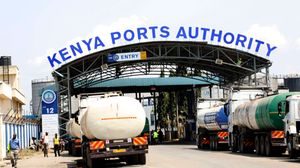
New higher taxes on imported alcohol and sugar lifted customs revenue collection to a record Sh82.55 billion in January, representing a 121.1 percent performance rate for the Customs and Border Control Department.
The Kenya Revenue Authority (KRA) attributed the record collections in the period to the Tax Laws (Amendment) Act, which took effect on December 27, 2024, and introduced a new formula for calculation of excise duty on alcoholic beverages.

Previously, excise on beer, wine, and spirits was levied using a flat rate per litre. But under the new law, the Treasury adopted a formula based on pure alcohol content—commonly known as alcohol by volume (ABV).
From a flat-rate per litre, excise duty on alcoholic drinks was now based on strength, Sh10 per centilitre of pure alcohol.
This transition meant that stronger alcoholic drinks attracted higher taxes, leading to increased revenue from imports, especially from traditional trading partners such as the United Kingdom and the European Union, from which Kenya imports its whiskies and wines, respectively.
“This change in the excise formula was effective immediately, and its impact on revenue was felt in just a few days,” said a senior official in the Customs Department.
Excise duty on imported sugar was also raised from Sh5 per kilogramme to Sh7.50 per kilogramme, in a move aimed at shielding local producers from cheaper imports and boosting domestic production.
The combined effect of these measures significantly lifted the customs department’s performance in the second half of the financial year.
By the end of the 2024/2025 financial year in June, Customs and Border Control had collected Sh879.3 billion, representing an 11.1 percent growth compared to the previous year. This growth outpaced the 4.9 percent growth rate recorded in 2023/2024.
The department exceeded its revenue target, posting a 105.9 percent performance rate, with an average daily collection of Sh3.55 billion, according to Customs Commissioner Lilian Nyawanda. She noted that imported alcoholic beverages were a key driver of this growth.
The customs department’s strong performance comes at a time when the government is under pressure to boost domestic revenue collection amid reduced access to concessional loans and mounting debt repayment obligations.