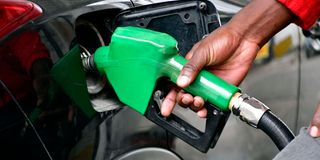
The Energy and Petroleum Regulatory Authority (Epra) has announced a Sh1 drop in the costs of a litre of petrol and that of diesel, a month after the prices recorded the highest jump in nearly two years, rising by Sh8.99 and Sh9.65 a litre, respectively.
A litre of petrol will now retail at Sh185.31 in Nairobi for the next monthly pricing cycle to September 14, 2025, while diesel, whose price remains unchanged, will sell at Sh171.58. Kerosene, on the other hand, will be selling at Sh155.58.
“In the period under review, the maximum allowed petroleum pump prices for super petrol and kerosene decrease by Sh1 per litre respectively, while the price of diesel remains unchanged,” wrote Epra in its monthly review.
“The average landed cost of imported super petrol decreased by 0.73 percent from $628.30 per cubic metre in June 2025 to $623.71 per cubic metre in July 2025; Diesel increased by 3.03 percent from $616.59 per cubic metre to $638.58 while kerosene increased by 3.2 percent from $608.54 per cubic metre to $628.02 over the same period.”
The marginal drop in the prices of petrol and kerosene signals an attempt by the State to quell public outrage sparked by the aggressive increase last month, as homes and businesses braced for tougher living costs.
Fuel prices have a big contribution to inflation as the country relies heavily on diesel for transport, power generation, and agriculture, while kerosene is deployed for household uses such as cooking and lighting.
Last month’s hike came at a time the State had depleted funds from the subsidy kitty used to stabilise retail fuel prices, exposing consumers to volatile price shifts such as the one witnessed at the time.
High landed costs coupled with heavy taxation have forced the government to subsidise fuel prices for most of the time since April 2021 in a bid to cushion consumers against costly fuel and inflationary pressure.
The State has, however, previously diverted cash from the kitty to other uses, such as in the railways sector, notably in 2021 when Sh18 billion was illegally used to pay the Chinese firm operating the Standard Gauge Railway (SGR).