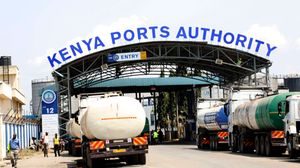
Members of Parliament will have a greater say in the sale of State firms as a revised version of the Privatisation Bill reinstates the role of Parliament in the adjudication of divestitures from government enterprises.
The new legislation follows the rejection of the Privatisation Act of 2023, which was deemed unconstitutional by the courts for bypassing public participation.
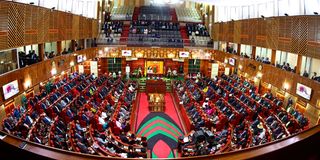
The State lost a petition challenging the Act in September last year after a joint suit filed by the Orange Democratic Movement (ODM) party, Gitahi Ngunyi, Katiba Institute, Institute of Social Accountability and the African Centre for Open Governance.
The revised privatisation legislation places MPs back at the heart of the sale of State firms even as it retains some substantive powers with the National Treasury Cabinet Secretary.
The adoption of the new bill will be pivotal for the government as it eyes at least Sh149 billion from the sale of its enterprises in the current financial year including an initial public offering (IPO) for the Kenya Pipeline Company (KPC).
“The Privatisation Bill, 2025 is a bill that seeks to repeal and re-enact the regulatory framework for the privatisation of public entities with a view to improving the efficiency of public entities,” the National Assembly states in a memorandum inviting public comments on the bill.
“The bill is being re-enacted in view of the court decision in Orange Democratic Movement Party & 4 Others V Speaker of the National Assembly & 5O others which declared the Privatisation Act, 2023 unconstitutional. In accordance with the decision of the court, the bill now provides for an elaborate role of the National Assembly in the privatisation process.”
The National Treasury Cabinet Secretary shall retain powers to originate the privatisation programme, identifying and determining entities to be included in the privatisation programme.
The CS shall however be required to submit the privatisation programme to the National Assembly for approval.
MPs shall have 60 days after the receipt of the approval to scrutinise the blueprint, and in the end, approve the programme for implementation, make amendments to the programme or reject it.
The Clerk of the National Assembly shall notify the Cabinet Secretary of the decision of the National Assembly within seven days of the decision.
“The National Assembly shall consider a privatisation programme within 60 days of receipt. The National Assembly shall be guided by the principles of public finance under Article 201 of the constitution, principles of good governance, the criteria for identification of entities specified under section 21 and any other relevant consideration,” reads part of the bill.
The court petition against the bill’s predecessor and a decision to privatise the Kenyatta International Conference Centre (KICC) established that the National Assembly did not conduct reasonable, meaningful, adequate and or effective public participation before passing the Privatisation Act, 2023.
The illegality of the Privatisation Act, 2023 halted the privatisation process and forced the government to revert to the old privatisation legislation.
The State considered appealing the decision of the High Court at the Court of Appeal but abandoned the quest upon the advisory of the Attorney-General and instead opted to consider fresh amendments.
In addition to maintaining the central role of the National Assembly in the execution of the privatisation process, the Privatisation Commission will be transitioned to become the Privatisation Authority.
The government has stepped up efforts to privatise commercially viable State-owned enterprises (SOEs) to unlock a new source of funding for the budget.
In the current fiscal year which runs to June 30, 2026, the government is betting on the KPC IPO to deliver the bulk of the Sh149 billion expected from privatisation.
The government expects to raise at least Sh100 billion from offloading a 65 percent stake in the company.
The stake will be offloaded through an IPO on the Nairobi Securities Exchange (NSE) with the issuance potentially being the largest in the region since the initial public offer by Safaricom in 2008.
The National Treasury has nevertheless said it is still weighing the viability of other means of offloading the government shareholding in KPC.