MPs question Kiptoo over the ‘rushed’ sale of Safaricom shares

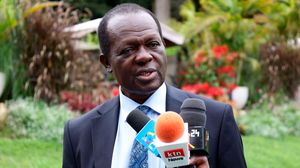
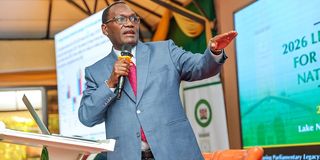
Treasury Principal Secretary Chris Kiptoo addresses MPs during the 2026 Legislative Retreat at Lake Naivasha Resort, Nakuru County, on January 29, 2026.

Photo credit: Boniface Mwangi | Nation Media Group

Members of Parliament (MPs) yesterday put Treasury Principal Secretary Chris Kiptoo to task for what they termed rushed sale of the government's 15 percent stake in Safaricom to South Africa's Vodacom Group in the absence of a legal framework to ringfence the Sh204.3 billion proceeds.

The MPs also demanded to know whether there was an independent valuation in the transaction in which the government is also to receive a separate Sh40.2 billion, representing an upfront payment of dividends that will accrue on the State’s residual 20 percent stake in Safaricom.
MPs expressed concerns that in the absence of a legal framework establishing the Infrastructure Fund, the proceeds of the sale of shares will be deposited in the Consolidated Fund, thereby making it vulnerable for diversion to recurrent expenditure.

The government reached an agreement to sell six billion Safaricom shares to Vodacom at a price of Sh34 each. This represents a premium of 15.2 percent compared to the telco's share price price of Sh29.5 on Thursday.

The National Assembly has a few days to either approve, reject or amend the proposed transaction.

Finance and National Planning committee chairperson Kuria Kimani, whose committee is overseeing the transaction, said the biggest concern on the partial divestiture is how Parliament will guarantee that the money will go toward funding infrastructure projects in the absence of a legal framework.

“If the money went to the Consolidated Fund as required by the Constitution as Article 206, are we as Parliament able to trace this expenditure?” Posed Teso South MP Mary Emmase.

Kitui South MP Rachael Nyamai demanded to know why the government had not tabled a Bill on the establishment of the Infrastructure Fund to ensure the money is ring fenced.

“We have the debt and pending bills which takes priority in spending. This money could be diverted to pay this pressing need including salaries and debt,” she said.

Dr Kiptoo told lawmakers that the Treasury had created the Infrastructure Fund as a limited liability company to receive the proceeds.

“We thought we could use the Companies Act to set up the Infrastructure Fund quickly as a limited liability company and have Parliament approve the instrument. We are amenable to any proposals that you may have because we know that there is an ongoing public participation,” Dr Kiptoo said.


“We will do further consultations quickly and see how to address the matter as to whether we have a law before passing the sessional paper on divestiture.”

Suba South MP Caroli Omondi demanded to know whether there was an independent market survey done before the government moved with the divestiture of its Safaricom shares.

Machakos Woman Representative Joyce Kemene demanded the methodology that was used to arrive at the price of Sh34 per share.

Majority Leader Kimani Ichung’wah sought to know if there were other pathways for partial divestiture of Safaricom.

“Tell Kenyans if there is anybody with an alternative pathway that can deliver higher value, are you opposed to it?” Mr Ichung’wah asked.

Dr Kiptoo said the National Treasury would welcome any option that will enable Kenyans to get better value than the offer it has negotiated with Vodacom.

When he appeared before the joint parliamentary committee that is considering the deal, National Treasury Cabinet Secretary John Mbadi said that proceeds from the transaction will only be used to finance commercially viable infrastructure projects.

State agencies have already submitted a list of viable projects that the proceeds the government will get from the deal will be invested in.

“The proceeds of the sale of Safaricom shares will be exclusively used to de-risk and lower the cost of infrastructure projects. I have already established the National Infrastructure Fund Limited where I am the sole shareholder,” Mr Mbadi told the lawmakers.

“This money is not going to fund our budget, it is not going to be used to fill our fiscal deficit, not to pay pending bills nor capitation. This money is going to be used exclusively on only commercially viable projects.

The funds, according to the Cabinet Secretary, will also go towards the energy sector where it will be used to fund generation and transmission of power that will be economically viable.

Follow our WhatsApp channel for the latest business and markets updates.

PAYE Tax Calculator

Note: The results are not exact but very close to the actual.