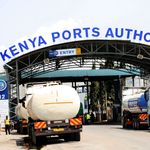
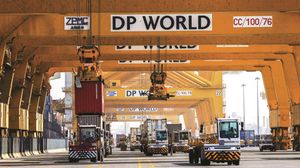
The Treasury has revived plans to lease Kenya’s port assets to private investors, marking a change of tune by the Kenya Kwanza administration that previously objected to a similar proposal to offer the facilities to Dubai-based DP World.
The Exchequer has backed a proposal by the Kenya Ports Authority (KPA) to lease some of its assets, including the Lamu Port Container Terminal, four berths at the Mombasa Port and four berths at the Mombasa Port Container Terminal 1.
This mirrors an earlier plan where the Treasury in 2022 invited Dubai State-owned ports operator DP World to table a commercial proposal to finance, build and manage five large projects.
Kenya has been at sea on how to manage multi-billion shilling port assets built over the past decade using expensive loans.
Now, it is seeking to have private investors operate facilities at the Mombasa and Lamu ports for 30 years in a deal previously opposed by politicians who are now in government.
The public-private partnership model was thrust into the limelight after Kenya cancelled the procurement process that could have seen India’s Adani Group upgrade and operate Jomo Kenyatta International Airport (JKIA) in exchange for a 30-year lease.
The Treasury is now seeking a transaction advisor on behalf of the KPA to shepherd the leasing of the port assets to a private investor.
“The main objective of the consultancy is the provision of transaction advisory services to KPA for the development, operations, maintenance and management of the identified assets in line with the PPP Act of 2021,” the Treasury says in new tender documents.
“Specifically, the transaction advisor will carry out the technical and financial feasibility studies, develop output specifications and performance standards, draft project arrangements and support the contracting authority in the selection of the concessionaire.”
The pursuit of a private investor to manage part of KPA assets comes amid the push to improve the effectiveness and efficiency of the Mombasa port by reducing cargo clearance time and increasing port capacity to process more vessels per month.
The targeted private investor will run four berths each in the new and old Mombasa port, which was built in 1967. The new section of the port, called Mombasa Port Container Terminal 1, was built from 2012 to boost the volume of cargo handled by East Africa’s largest seaport.
A gateway to East and Central Africa, the Indian Ocean port funnels imports of fuel and consumer goods as well as exports of tea and coffee from landlocked neighbours such as Uganda and Rwanda
Tanzania has tapped DP World to operate part of the Dar es Salaam port for 30 years, putting pressure on the Mombasa port to boost performance and facility conditions.
In Tanzania, DP World leases and operates four of the 12 berths at the country’s largest port.
The Dubai firm plans to spend $3 billion over the next three to five years on new port infrastructure in Africa to meet long-term growth that includes surging demand for critical mineral exports.
Its chief executive officer, Mohammed Akoojee, recently said DP World had assessed harbours in South Africa and Kenya for potential investment.
Eight of the world’s 15 fastest-growing economies will be in Africa this year, according to the International Monetary Fund (IMF).
That is luring companies, including DP World.
It also comes at a time when Kenya, under President William Ruto, who took over in September 2022, has actually pursued more detailed ties with the UAE, including purchase of refined fuel, a new trade pact and a $1.5 billion loan for budget plan support that is being finalised.
DP World managing director for sub-Saharan Africa told Bloomberg News that the firm is increasingly looking at the port of Lamu in Kenya, citing a lease deal.
The deep-water Lamu Port, which was opened in 2021, is struggling with undercapacity, derailing its ambition to open a new transport corridor linking the country’s vast northern region and neighbouring nations to the sea.
Kenyan officials hoped that the Indian Ocean port, the country’s second deep water facility, would attract cargo destined for neighbouring landlocked nations like Ethiopia and South Sudan, and offer transshipment services where large vessels bring in cargo for onward distribution by smaller ships.
The Lamu port was built to compete with ports in Djibouti and Sudan and Kenya’s main port of Mombasa.
It has struggled for business.
“The Port of Lamu has an annual design capacity of 1.2 million twenty-foot equivalent units (TEUs). However, the port handled 382 TEUs and 1,779 TEUs in 2021 and 2022 respectively,” the Treasury said.
Kenya is building several roads from Lamu towards its borders with Ethiopia and South Sudan. It also plans to eventually build a railway network and a crude oil pipeline to Lamu.
The new corridor is expected to reduce pressure on the existing Mombasa-Nairobi transport corridor, which serves landlocked Uganda and Rwanda.
The construction of Lamu port was first mooted in 1972, but the plans lay gathering dust in Nairobi until 2011 when then President Mwai Kibaki revived them. Construction began in 2014.
KPA’s master plan of 2018-2047 envisages that the Lamu port will be operated principally as a landlord port.
Under the model, KPA would act as a landlord, owning and managing infrastructure while private companies lease and operate the port’s terminals and cargo handling operations.
The planned Lamu Special Economic Zone (SEZ) is also set to be developed under the PPP model.