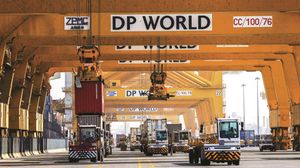
Revenue collections by the Kenya Revenue Authority (KRA) at border points hit a monthly record of Sh85.15 billion in September, the agency announced on Wednesday, attributing the milestone to reforms that have sealed loopholes and accelerated cargo clearance.
The historic performance shattered the previous record of Sh82.55 billion set in January this year.
The customs revenue in September further exceeded the monthly target of Sh81.34 billion by nearly Sh3.81 billion, representing a 104.7 percent achievement rate and an 18.8 percent year-on-year jump.
Commissioner for Customs and Border Control Lillian Nyawanda credited the establishment of a Central Release Operations Office for helping plug revenue leakages at border points and reducing turnaround times for release of cargo from major ports such as Port of Mombasa and Jomo Kenyatta International Airport.
“Under this innovative system, head verification officers operate from a central location and randomly allocate release stations to verify and clear goods. This process has minimised human contact, ensuring more objective cargo release decisions and closing potential revenue loopholes,” Dr Nyawanda wrote in a press statement.
By reducing face-to-face interactions between traders and customs staff, the reform has curtailed opportunities for rent-seeking, improved compliance among importers, ensured faster movement of goods and better facilitation of trade, the KRA statement said.
September’s receipts were driven by trade taxes which netted Sh51.7 billion against a target of Sh50.7 billion, and represented a 22 percent jump from the same period last year.
Petroleum-related revenues also brought in Sh33.41 billion, outperforming the Sh30.6 billion goal by a 9.17 percent.
The performance has come at a time the KRA is piloting artificial intelligence-enabled scanners in a bid to enhance efficiency in surveillance of goods entering and leaving the country.
The AI-enabled scanners at the Mombasa port and JKIA read and interpret images of the cargo, flagging consignments that appear suspicious for thorough inspections.
KRA says it is aiming to strike a balance between faster trade facilitation and tougher enforcement against cheats strike by narrowing inspections to consignments flagged by the AI-enabled scanners.
“At the moment, we largely use our own staff or the naked eye to read cargo images, but with machine learning and AI, we can improve and enhance that capability,” KRA Commissioner-General Humphrey Wattanga told the Business Daily on August 25.
The shift is promising a break from years of reliance on human-led inspections at Kenya’s ports — a loophole shrewd importers have often exploited by concealing goods, under-declaring volumes or misclassifying items to dodge taxes.