Kenya dodges China scrutiny in Mau Summit toll road deal

BDHighwayone

An artistic impression of Nairobi to Mau summit toll road. 

Photo credit: Pool

Kenya has made a last-minute decision to split the contract for the Nairobi–Nakuru–Mau Summit toll road to avoid scrutiny and lengthy approval by the Chinese government.

In a U-turn, the Kenya National Highways Authority (KeNHA) has revealed that it is reinstating the runner-up from the original bids and giving it a section of the 236-kilometre road network, while the initial contract winner will handle the remaining portion.

This follows revelations that the winning bidder -- China Road and Bridge Corporation (CRBC)—would require a lengthy internal review from Beijing, which demands its approval for overseas projects exceeding $1 billion (Sh129.6 billion) that are handled by state-owned Chinese companies.

The highways regulator has since offered CRBC a smaller deal involving 81 kilometres from Nairobi to Gilgil via Naivasha and a 58 kilometre-stretch from Nairobi to Naivasha through Maai Mahiu.

Another Chinese firm -- Shandong Hi-Speed Road and Bridge International Engineering (SDRBI)—will construct the 94 kilometres stretching from Gilgil to Mau Summit.

The split gave SDRBI a piece of the deal after it lost in the initial bidding for projects to a consortium of CRBC and the National Social Security Fund (NSSF), which had a more competitive bid and offered lower base toll rates.

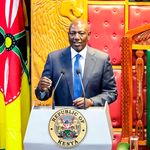
The consortium was in October awarded the entire Sh170 billion project, with President William Ruto announcing that it will be launched this Friday after meeting with the president of the China Communications Construction Company (CCC), CRBC’s parent firm.

But the launch looked set to be derailed after CRBC said the investment would attract “extensive and tedious” scrutiny by the Chinese government because of the $1 billion threshold, arguing that it would take more than a year to get approvals from Beijing.

This prompted the split of the contract.

“With neither of the proponents able to deliver the full corridor within the terms of the PPP Act, the contracting authority [KeNHA], guided by the National Treasury and Economic Planning, initiated evaluation of the feasibility study reports of the alternative split-scope proposals earlier submitted by the proponents,” KeNHA said in a new disclosure.

The two Chinese firms will have to harmonise their toll charges for the roads.

The NSSF consortium edged out SDRBI, which had also submitted a privately initiated proposal (P-i-P), after quoting a lower base toll rate.
Kefa Seda, the director-general of the Public-Private Partnerships (PPP) Directorate, told the Business Daily that the split will not translate into different toll fees for the different sections, even though the two companies had initially proposed different rates.

“The rates must be harmonised. Each developer will individually manage and toll the section they have constructed, but the fees will be the same across the road network,” he said.

“There will be a framework that will go through Parliament to harmonise that tolling rate, so that even though the implementing companies are different, the tolls will be the same.”

The winning consortium also agreed to absorb traffic-volume risk rather than pass it to the government—a departure from a proposal by the French contractors, who were awarded the deal during President Uhuru Kenyatta’s era and wanted the State to shoulder the cost of any fall in traffic.

The French deal was cancelled in favour of the Chinese.

The ability to work under a tight deadline was another factor in favour of the CRBC–NSSF bid, as the Ruto administration rushes to complete the project before the next elections in 2027.

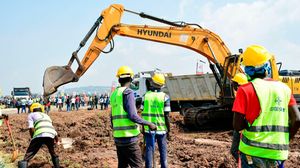
The two Chinese companies have already conducted feasibility studies for the full project and the alternative split, meaning construction could begin once KeNHA completes negotiations and project agreements are signed.

KeNHA has not ruled out the option of a single contractor for the entire project and is inviting other interested firms to submit counter-proposals.

“To promote competition and openness in privately initiated proposals, the public is hereby notified that any other qualified private party with the technical and financial capacity may, within the statutory timelines, submit a competing privately initiated proposal (PIP) for the project,” the authority said.

The Nairobi–Nakuru–Mau Summit toll road project has been in the pipeline since 2016. According to KeNHA plans, at completion, it will be a dual-carriage four-lane road, and all of it will be tolled. The administration of former President Kenyatta awarded the contract to a French consortium led by Vinci SA Highway.

But President Ruto’s government terminated the deal valued at Sh190 billion in 2022, citing high costs.

While this will be SDRBI’s first major project in Kenya, CRBC is no stranger to large infrastructure works in the country.

It constructed the standard gauge railway (SGR), the Nairobi Expressway, the Nairobi western, eastern, and northern bypasses, and is currently building the Sh44 billion Talanta Stadium.

President Ruto is keen to see the project completed before the next polls, a key campaign pitch to residents of the Rift Valley, Western Kenya and Nyanza, where motorists often endure long traffic snarl-ups, especially during festive seasons.

The road is expected to significantly cut travel time along the corridor, easing congestion on the main artery from Nairobi to western Kenya and neighbouring Uganda, Rwanda and the Democratic Republic of the Congo.

The Ruto administration cancelled the deal inked by his predecessor with the three French contractors, terming it too expensive. The government is expected to pay termination fees of around Sh7.2 billion to the French consortium led by Vinci SA Highway.

PAYE Tax Calculator

Note: The results are not exact but very close to the actual.