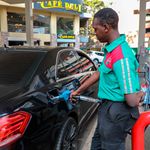
Kenya is set to join a host of countries that have lowered taxes on fuel in a bid to cushion consumers from steep fuel prices in the wake of the US-Israel war on Iran, shifting focus to local pumps ahead of the upcoming pricing review.
Treasury Cabinet Secretary John Mbadi told lawmakers on Thursday that the government could move to review the Value Added Tax (VAT) of 16 percent on fuel to avert a steep rise in pump prices in the wake of the Middle East conflict which has triggered a sharp rise in the global prices of fuel and a surge in shipment costs.

“We will play around with VAT so that the prices do not increase too high,” Mr Mbadi told lawmakers when asked if the subsidy would be enough to cushion consumers in the coming months, starting with the April 15-May 14 monthly cycle.
The move, if effected, could see Kenya join South Africa, Zambia, Namibia, Brazil, Cyprus, Sweden, Poland, and Ireland in lowering taxes on fuel as governments race to protect consumers from price hikes tied to the escalating Middle East conflict that has disrupted supplies and sent crude oil prices through the roof.
South Africa suspended fuel levy for one month, while Namibia halved taxes on the commodity for three months. Zambia suspended excise duty and zero-rated VAT on petrol and diesel for three months. The changes took effect on April 1.
The Energy and Petroleum Regulatory Authority (Epra) will announce new prices that will come into force from April 15. A sharp increase in pump prices from the current Sh178.28 per litre of petrol and Sh166.54 for the same quantity of diesel will significantly escalate the cost of living and worsen lives for millions of financially hit Kenyans.
Kenya has one of the highest taxation rates on fuel globally, with seven levies and two taxes charged on diesel, petrol, and kerosene. The heavy taxation is blamed for the high fuel prices.
For example, in the current monthly cycle, taxes and levies on a litre of petrol amount to Sh80.94, higher than the actual product cost of Sh75.42.
The Roads Maintenance Levy (RML) is the biggest tax at Sh25 for every litre of petrol and diesel, followed by Value Added Tax at the rate of 16 percent on diesel, petrol, and kerosene, or Sh24.59, Sh22.97, and Sh21.07 respectively in the current prices.
Excise duty is the third biggest tax on the three fuels, followed by Petroleum Development Levy, charged at the rate of Sh5.40 for every litre of petrol and diesel, and Sh0.40 on every litre of kerosene.
Consumers also pay an anti-adulteration levy of Sh18 for every litre of kerosene. The other taxes on the three grades of fuel are the import declaration fee, railway development levy, merchant shipping fee, and the petroleum regulatory levy.
The current fuel cargoes were imported when global crude prices had skyrocketed to past the $110 per barrel mark, setting the stage for steep prices in the April 15-May 14 pricing cycle.
Industry players have already warned of steep prices unless the State applies a sharp subsidy on the new prices to be announced in two weeks.
A subsidy of Sh6.53 and Sh0.53 on a litre of diesel and petrol, respectively, has kept prices unchanged in the current pricing cycle. It remains to be seen whether the subsidy alone will avert a spike in pump prices from April 15.