Kenya banks on World Bank framework for Sh65bn sustainability bond

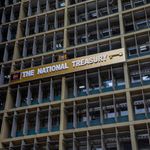
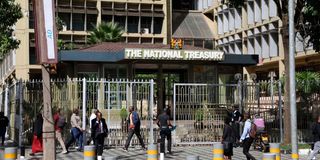
The National Treasury building in Nairobi on April 16, 2025.

Photo credit: Dennis Onsongo | Nation Media Group

The government is banking on a World Bank-backed framework to woo investors as it plans to raise $500 million (Sh65 billion) through Kenya’s debut sustainability-linked bond early next year.

Disclosures by the National Treasury showed that it plans to float the sustainability-linked bond in March 2026.
A sustainability-linked bond is a debt instrument where key characteristics, such as the coupon paid to investors, are tied to the issuer realising predefined environmentally friendly benchmarks within a prescribed time.

The Business Daily has established that the government and the World Bank have been working on this framework ever since the conclusion of the inaugural Africa Climate Summit in September 2023.

The planned Sh65 billion bond-issuance in March 2026 is likely to be pegged on targets around improving forest cover and rural access to electricity, given that these two are the main pillars of the sustainability framework developed in partnership with the World Bank.

“Following the Nairobi Africa Climate Summit and the declaration, Kenya has been working on coming up with a sustainability framework through which it could do a bond issuance.

“The World Bank has been helping the government in developing that framework with key performance indicators (KPIs) on deforestation and enhancing rural access to electricity,” said World Bank lead specialist for finance, innovation and competitiveness, Isfandyar Zaman Khan, at the Banking Industry Nature Positive Financing Forum on September 12 in Nairobi.

According to the 2025-26 Annual Borrowing Plan published by the National Treasury, the government has lined up a sustainability-linked bond and a Samurai Bond (Japanese yen-denominated debt) as key external financing mobilisation vehicles for the current financial year.

The World Bank says the framework for sustainability-linked issuances is at its final stage and should be completed before the close of 2025.

“The framework right now is more or less complete and is going for something called Second Party Opinion, where you have an outsider agency that rates it, and then it gets released for public views and also the Cabinet’s approval. We expect this to happen sometime before the end of the year. It details the key performance indicators on forestation and rural access to electricity and what policy the government is taking to impact these two”, said Mr Khan.

If successful with the planned Sh65 billion issuance, Kenya will be joining the growing pool of countries that are opting for this route of debt issuance, including Chile, which raised $2 billion (Sh258.4 billion) through a 20-year sustainability-linked bond in March 2022, and Uruguay, which raised $1.5 billion (Sh193.8 billion) in October 2022.

The most recent issuance of a sustainability-linked bond by a sovereign was by Thailand, which raised $944.2 million (Sh121.9 billion) 15-year instrument in November 2024.

Chile’s sustainability-linked bond has key performance indicators tied to achieving half of the country’s electricity generation from renewable energy sources by 2030.

Thailand’s sustainability-linked bond has KPIs tied to reducing greenhouse gas emissions by 30 percent by 2030 and increasing the annual registration of zero-emission passenger vehicles and pick-up trucks to 440,000 by 2030.

PAYE Tax Calculator

Note: The results are not exact but very close to the actual.