External funding an uphill task without IMF and World Bank, Moody’s says

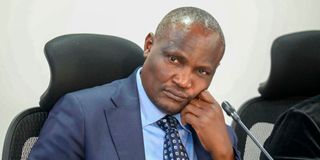
 Cabinet Secretary for National Treasury and Economic Planning John Mbadi Ng'ongo.

Photo credit: Dennis Onsongo | Nation Media Group

Global credit rating agency Moody’s says Kenya will face difficulties in sourcing external financing without having programmes from the World Bank or the International Monetary Fund (IMF) in place.

The ratings agency says Kenya will likely dent its official foreign currency reserves on debt service without the support of the multilateral lenders.
Moreover, Moody's reckons that the country would face hurdles in accessing external financing as creditors view the presence of a concessional funding programme as a sign of confidence in the nation’s creditworthiness.

Moody’s warning comes at a time when Kenya has been unable to unlock Sh96.9 billion ($750 million) from the World Bank on unmet terms.

The country is also without a programme from the IMF following the fund’s termination of a multi-year arrangement with Kenya in March over missed targets including revenue underperformance.

Kenya has, nevertheless, requested a new successor programme from the fund and is currently engaged in discussions with the Washington DC based lender.

Moody’s suggests that Kenya’s fiscal sustainability is tied at the hip with the IMF and the World Bank with financing from the pair seen as crucial to the country’s ability to meet its debt obligations.

“Meeting these obligations without eroding the central bank’s reserve buffer will require continued access to concessional and market-based external financing,” Moody’s said in a note.

“An IMF programme would aid this strategy of meeting external debt service obligations without drawing down on the stock of reserves. Beyond providing direct support, an IMF programme would help unlock funding from the World Bank and other development partners and reinforce market confidence, helping to lower external borrowing costs."

Delays in passing a bill to curb conflict of interest involving politicians and public officials has seen the World Bank withhold the disbursement of Sh96.9 billion ($750 million).

The freeze is widely expected to force the National Treasury to increase domestic borrowing amid concerns of ballooning public debt or resort to cutting spending.

The Treasury had expected to receive the funds this month after MPs passed an improved version of the bill that was later blocked by Senators.

The bill seeks a “high bar” on accountability, integrity and anti-corruption measures.

Senators had favoured a watered-down version of the proposed law that included a provision allowing public servants to receive gifts while on official duty.

President William Ruto refused to assent to the initial version of the bill, requiring that Parliament pass a “tougher” one to meet the recommendations of the World Bank.

Kenya expects to deepen its reliance on the World Bank to plug the fiscal deficit and has forecast to tap Sh170.5 billion loans from the bank in each fiscal year until June 2029.

World Bank loans are mostly long-term and often carry less-stringent conditions in comparison to facilities by the IMF.

Kenya has not factored new funding from the IMF in upcoming financial years in a move to manage expectations.

National Treasury Cabinet Secretary John Mbadi said previously that the exchequer is avoiding overstating expected financing.

“We are being very cautious because before you go into an arrangement with the IMF, you can’t start assuming that you will get funding. But it doesn’t mean that we are terminating our programme with the IMF,” he said.

“We have to continue with the IMF programme even if it's not funded.”

PAYE Tax Calculator

Note: The results are not exact but very close to the actual.