End of auctions? Treasury sends State vehicles to TVETs

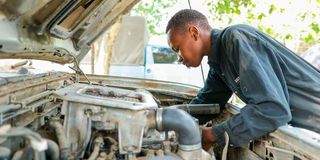
A mechanical engineering student during a practical session at a TVET workshop in Nakuru on August 12, 2025.

Photo credit: Francis Mureithi | Nation Media Group

State-owned polytechnics and Technical and Vocational Education and Training (TVET) institutions are set to benefit from a new National Treasury policy that redirects unserviceable government vehicles from public auctions to training use.

In a shift from the long-standing disposal practice, Treasury Cabinet Secretary John Mbadi has announced that grounded State vehicles will instead be transferred to TVET institutions as training aids. This marks a departure from auctions, where proceeds were previously channelled to the Consolidated Fund or respective Ministries, Departments and Agencies (MDAs).
“Unserviceable vehicles shall, where appropriate, be transferred to TVET institutions as training aids, in accordance with prevailing service regulations and approved disposal procedures,” he said in a circular to his fellow Cabinet Secretaries, Principal Secretaries and County Governors.

The change is expected to strengthen hands-on training in maintenance, repair and diagnostics, while reducing the volume of vehicles available for public auction.

TVETs and polytechnics will also gain access to disused government vehicles for training student mechanics and take up the repair and maintenance of government fleets, unlocking millions of shillings in revenue.  

Beyond training aids, the Treasury has directed MDAs and county governments to prioritise garages run by State-owned polytechnics and TVET institutions for fleet repair and maintenance, dealing a blow to privately owned mechanic service outlets.

Mr Mbadi said the shift would support skills development in institutions focused on practical, industry-driven training.

“Priority shall be given to garages owned by National Polytechnics and TVET institutions for vehicle repair and maintenance, where capacity exists within a radius of 40 kilometres unless the vehicle is under warranty,” he said in the circular.

Government vehicles purchased outside lease programmes have relied on private garages for repair and maintenance. This will change as TVETs and polytechnics take on these services and generate revenue.

TVETs form a key part of President William Ruto's economic blueprint aimed at unlocking jobs for the youth through technical skills under the Bottom Up Economic Transformation Agenda.

Data from the Education ministry shows that at the beginning of 2026, there were 2,969 accredited TVET institutions in the country, including 1,800 technical and vocational colleges, 34 national polytechnics and more than 1,200 vocational training centres.

The number of TVET institutions expanded from 2,401 to 2,969, driving a 63.8 percent increase in enrolment to 565,842 trainees. Kenya’s TVET sub-sector focuses on practical, industry-driven training to equip students with skills for employment, with emphasis on fields such as ICT, engineering and hospitality.

Follow ourWhatsApp channel for the latest business and markets updates.

PAYE Tax Calculator

Note: The results are not exact but very close to the actual.