Time flies with great content! Renew in to keep enjoying all our premium content.
Prime
Electricity overtakes milk, eggs as top import from Uganda
Power demand peaked at 2,439.06megawatt (MW) in early December 2025, dwarfing the marginal growth in local production recorded over the past seven years.
Electricity is now among Kenya’s top imports from Uganda, overtaking traditional goods such as milk, eggs, grains and timber, by value and underscoring a trend where power demand is rising faster than domestic generation.
Data from the Kenya National Bureau of Statistics (KNBS) show that Kenya imported electricity worth Sh978.3 million in the third quarter of 2025, up from Sh666.3 million in the same quarter a year earlier.
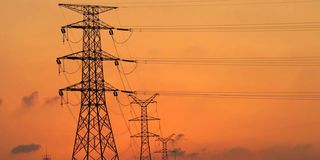
The 46.82 percent jump placed electricity second only to sugar among the country’s biggest imports from Uganda by value, reflecting growing reliance on regional supplies as Kenya struggles to keep pace with consumption growth.
The increase pushed power imports above milk and cream, whose value fell sharply to Sh764.3 million from Sh1.36 billion in the third quarter of 2024.
The shift highlights a trend in which Kenya has increasingly been tapping electricity from neighbouring Uganda and Ethiopia to avert widespread power rationing, as demand from households and businesses continues to outstrip local generation.
Data from Kenya Power shows electricity imports from Uganda climbed to 83.74 million kilowatt-hours (kWh) between July and September 2025, compared with 54.5 million kWh, or units, in the same period of 2024.
Over the January–November 2025 period, Uganda exported 254.7 million kWh to Kenya, a 28.04 percent increase from 198.92 million a year earlier.
The growing imports of electricity from neighbouring countries point to a situation where growth in demand is not being matched by new generation capacity, prompting the government and Kenya Power to rely on imports from neighbouring countries to avoid rationing and blackouts.
Power demand peaked at 2,439.06megawatt (MW) in early December 2025, dwarfing the marginal growth in local production recorded over the past seven years.
While imports have helped stabilise supply, Kenya Power, the near-monopoly State-run electricity distributor, has warned that they also exposed Kenya’s vulnerabilities, citing the region’s heavy reliance on hydropower.
A prolonged drought or a major plant failure in exporting countries could disrupt supply.
“My concern is that this is hydropower from these countries, and in a situation where there is a serious drought, then they might be left in a position where they might be unable to meet this obligation,” Kenya Power chief executive Joseph Siror told Business Daily last year.
Kenya Power has not signed new power purchase agreements (PPAs) since 2018, following a Cabinet-imposed freeze which was backed by Parliament, leaving local capacity lagging behind demand. Parliament voted in November 2025 to lift the ban, raising hopes of new generation projects coming on stream.
President William Ruto has pledged to add 5,000 MW to the grid by 2030—more than Kenya has installed historically. The country currently has an installed capacity of about 3,300MW, with less than 300MW added in the past three years.
“We are reorganising that space. Just give me a bit of time, and we will have a clearer picture. By God’s grace, before 2030, we should have doubled the grid that we have. And we should try and do it with renewable energy,” Dr Ruto told business leaders on August 6, 2025.
The pledge by Dr Ruto is echoed in the draft 2026 Budget Policy Statement, where the National Treasury warned that the current installed capacity remains insufficient for an economy that is rapidly modernising.
Treasury said the government plans to prioritise the development of an additional 10,000MW of affordable and dependable power over the next seven years, tapping geothermal, hydro, solar, wind, and nuclear energy to support manufacturing, e-mobility, digital expansion, and emerging technologies.