At least 16 counties failed to pay thousands of workers in May and June, raising concerns over financial discipline in the devolved units that had received their allocations from the Treasury.
The regions, including Nairobi, Mombasa, Nyandarua, Turkana, Narok and Bungoma, did not request to withdraw salaries from the main account at the Central Bank of Kenya (CBK), said the Controller of Budget (CoB).

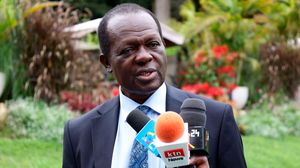
CoB Margaret Nyakang’o reckons that the counties processed more than Sh10 billion in salaries manually in the year to June, exposing them to risks of losing public funds.
“Notably, out of the 47 county governments, 16 did not request their June 2025 salaries,” Dr Nyakang’o said.
Official data shows that Turkana, Narok and Bungoma last withdrew salaries from the official government accounts in April, leaving staff without pay in May and June.
Bomet, Kilifi, Kisumu, Machakos, Makueni, Mandera, Marsabit, Meru, Murang’a, Nairobi, Nyandarua, Tharaka Nithi and Mombasa also last requested the CoB for approval to withdraw salaries from official government accounts in May, Dr Nyakang’o said.
The counties failed to seek withdrawal of the salaries despite the Treasury having released all the equitable share of revenues to the devolved units for the year to June.
“For those county governments that did not requisition their June 2025 salaries, the controller advises them to ensure adequate allocation for employee compensation in 2025/26 fiscal year to cover wages for 12 months, as well as any arrears,” Dr Nyakang’o said.
During the year counties received a total of Sh533.1 billion, comprising Sh387.43 billion equitable share for the year, Sh30.83 billion equitable share arrears from 2023/24 fiscal year, Sh24.86 billion as additional allocations, Sh22.69 billion cash balances brought forward from 2023/24 and Sh67.3 billion revenue from their own sources.
Overall, the 47 counties spent Sh220.6 billion on salaries and allowances, accounting for 41.4 percent of all the revenues they received during the year. The wage bill rose five percent from Sh209.8 billion the previous year.
The CoB has faulted the counties for breaching a legal requirement capping spending on salaries and allowances at 35 percent of revenues, with only seven having adhered to the law.
Those that complied are Kilifi, whose wage bill formed 24 percent of the revenues it received during the year, Siaya (26 percent), Tana River (27 percent), Nakuru (30 percent), Kwale (31 percent), Nandi (33 percent) and Nyandarua (33 percent).
Counties have also been faulted for paying Sh10.7 billion in salaries outside the official payroll system, exposing them to possible loss of funds due to the lack of accountability.
“Further analysis also indicates that Sh10.7 billion, five percent of the total expenditure on employee compensation, was processed manually and paid outside the government payroll system,” said the CoB.
The salaries processed manually during the year are, however, a 33 percent reduction from Sh15.9 billion that was paid through manual systems the previous year.
Dr Nyakang’o says counties continue to spend heavily on the wage bill despite a national resolution to drive the burden towards the legal limit.
She has also raised concerns over the health wage bill for counties, which currently accounts for nearly half of the total burden.
“As of June 30, 2025, the counties have spent Sh141.78 billion on the health sector, representing approximately 30 percent of the total expenditure of Sh470.74 billion. Out of the reported health sector expenditure, Sh97.45 billion was allocated for the compensation of health sector employees,” she said.
The office notes that counties burdened by the health sector wage bill include Baringo, whose salaries for the sector account for more than two-thirds of its total wage bill, Nyeri (56 percent), Trans Nzoia (55 percent), and Taita Taveta (54 percent).
Dr Nyakang’o reckons that while high allocation to the sector boosts delivery of health services, “it also limits funding for other sectors.”
“County governments should mobilise additional funds for the health sector in collaboration with other stakeholders. This strategy would help alleviate the financial burden and free up resources for other sectors,” she said.