Time flies with great content! Renew in to keep enjoying all our premium content.
Prime
Chinese firm in fresh SGR deal raises questions
President William Ruto (right) and China Communications Construction Company Chairman Song Hailiang, launch the land-mark construction of the Naivasha-Kisumu-Malaba Standard Gauge Railway line in Narok.
A Chinese firm has bagged the deal to extend the standard gauge railway (SGR) to Kisumu amid questions over the terms of the transaction and financing.
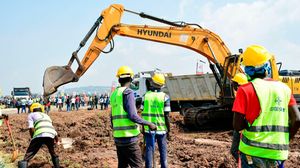
China Communications Construction Company (CCCC) on Thursday broke ground to extend the line from Naivasha, reviving a project that has stalled for over six years after initial lending from Beijing dried up.
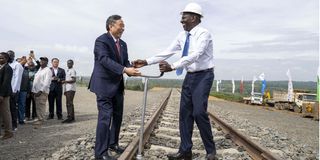
CCCC is the parent company of China Road and Bridge Corporation (CRBC), which has been tapped as a contractor for a multi-billion dollar railway extension after building the line from Mombasa to Naivasha.
But State officials have remained tightlipped on the structure of the deal with CCCC, with banks to extend the SGR loan.
Kenya borrowed Sh655 billion ($5.08 billion) from the China Export-Import Bank in the fiscal year ended June 2015 for the construction of SGR from Mombasa to Nairobi and later to Naivasha.
Last year, the Treasury successfully renegotiated the terms of the loan, turning the three dollar-denominated facilities into yuan loans and extending the maturity on the longest tranche to 2040 from 2035 previously.
The Treasury has disclosed limited details on the restructuring, citing a government-to-government negotiation that requires confidentiality, whose violations risk straining relations between Kenya and its largest trading partner.
Kenya had flirted with securing funding from the United Arab Emirates (UAE) for completing a regional railway after China initially showed a lack of commitment.
It later revived a push for Chinese funding during President Ruto’s visit to China in April last year.
The preference for a securitised bond for the SGR expansion signals China’s reluctance to fund the project amid Beijing’s reduced infrastructure support.
Under securitisation, projected future revenue streams are packaged into marketable securities that are sold to investors.
In the latest development, the government has securitised the Sh22.7 billion annual collections through the Sports, Arts and Social Development Fund in floating the 15-year Linzi Asset Backed Bond.
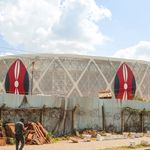
Linzi's proceeds of Sh44.8 billion are building the Talanta Sports Stadium.
The government has touted securitisation as a viable route to taming rising external debt pressures in the economy.
Roads and Transport Cabinet Secretary Davis Chirchir earlier said the government will finance the construction of the railway infrastructure, while a private investor will supply the rolling stock, including locomotives, passenger coaches and freight wagons.
“We have a framework where we are seeking to commercialise aspects of the project that are profitable,” he said.
“So with that investment of $5 billion, we will be looking to reduce the portion that would otherwise go to freight—buying the engines, bogies and rolling stock.”
Investors will recover their money from passenger and freight charges while paying the State a fee for use of the railway and stations.
Rolling stock is capital-intensive, and by offloading this to private investors, the government hopes to avoid heavy upfront spending and reduce borrowing needs.
“We are seeking a freight concession. The way we build a road and people buy their vehicles and run on it—we will build the rail, get investors to provide the rolling stock, and concession the freight,” said Mr Chirchir.