The Treasury has disclosed that its plan to sell a mega stake in telecoms operator Safaricom now rests with the Cabinet.
The Exchequer announced plans to reduce its 34.9 percent stake in the largest listed firm on the Nairobi Securities Exchange (NSE) in the current fiscal year, aiming to mobilise part of the Sh149 billion expected from the privatisation of State-owned enterprises.
The sale of the State’s share in the telco took a back seat as the Treasury sought to first sell shares in Kenya Pipeline Company (KPC) for Sh100 million.
However, the High Court has halted the sale of KPC shares following a petition from the consumer lobby, Cofek, which cited a lack of transparency, public participation and parliamentary oversight.
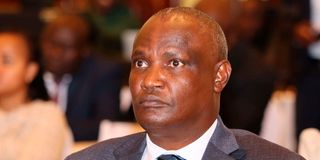
Treasury Cabinet Secretary John Mbadi told Bloomberg News that the reduction in the government’s stake in Safaricom has yet to be agreed upon and would require Cabinet approval to be implemented.
He previously said that Safaricom was the only big-ticket firm that could help the State meet its target of raising billions of shillings in a fiscal year when it avoided new taxes in the Finance Bill.
The State retained a 34.9 percent stake in the Nairobi bourse-listed firm worth Sh386.9 billion after selling a 25 percent stake to investors via an initial public offering (IPO) in 2008.
The planned sale promises the largest transaction in the region as global private equity firms prowl Africa for telecoms deals anchored on their predictable revenues and steady cash flows, which can then be used to service the debt taken on to buy the company.
“There is talk that if we could offload more of our ownership of Safaricom, we are likely to get the Sh149 billion through privatisation in the 2025/26 financial year,” Mr Mbadi told the Business Daily in a recent interview.
Safaricom’s IPO was oversubscribed by 532 percent after the State sold the 25 percent stake, or 10 billion shares, earning Sh51.75 billion for the Treasury.
Analysts expect a scramble for the additional sale of the government stake in Safaricom.
Safaricom’s stake could take the form of a secondary IPO or an auction to a high-net-worth investor for a block sale.
A second offer occurs when an investor sells their shares to the public on the secondary market after the first offer, with proceeds going directly to the pockets of investor.
The sale of five to 10 percent of the government’s stake in the telco would, for instance, yield between Sh19.1 billion and Sh38.2 billion at the prevailing share price of Sh27.25.
Analysts favour an off-market transaction if the government is to unlock the maximum possible return from the planned divestiture.
This involves sales to high-net-worth investors like private equity (PE) funds that offer a premium to the market price.
The State has been short of entities deemed ripe for privatisation as the bulk of them are struggling after years of loss-making and mismanagement.
Apart from Safaricom, the State is ramping up to offload a majority stake in KPC, which is seen as the only other viable firm to bring in billions in proceeds to fund the national budget.
Mr Mbadi told Parliament earlier this month that the divestiture from KPC was the most viable route to optimising returns generated from the firm, which already pays the exchequer annual dividends.
“Although it is profit-making, the government gets just about Sh3 billion or Sh4 billion annually as dividends. I am sure that if we privatise KPC and just retain a 35 percent stake of ownership, we could make up to four or five times more out of that entity,” he told the Public Debt and Privatisation Committee.
The transaction is, however, facing headwinds after the High Court halted the privatisation of the pipeline operator.
Safaricom remains the region’s most profitable firm, riding on the back of data and M-Pesa, which has seen the operator consistently pay dividends.
The telco posted a 7.2 percent growth in the financial year ended March 2025 to Sh45.7 billion from Sh42.6 billion, including results from its Ethiopia business.
It proposed to pay Sh0.65 per share as a final dividend, having paid an interim dividend of Sh0.55.
The Sh1.20 total dividend payout represents a windfall of Sh16.8 billion for the Exchequer.
Initially, the State had selected 11 firms, including KPC, Kenyatta International Convention Centre (KICC) and New KCC, from among more than 35 companies that are slated for sale to partially help the government raise revenue in the face of growing debt repayments.