Time flies with great content! Renew in to keep enjoying all our premium content.
Prime
Kenya phases out low-end phones with Type-C charger rule
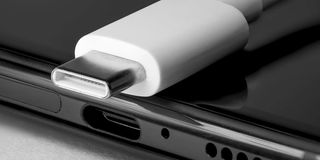
A USB Type-C charger. Kenya moves to phase out low-end phones as new rules mandate USB‑C charging, aiming to standardise tech and cut electronic waste.
Low-end phones are being phased out as Kenya mandates USB Type-C charging ports for all mobile phones sold or produced in the country, aligning with a growing global push to standardise charging technology and reduce electronic waste.
All smartphones, tablets, and feature phones — commonly known as kabambe —must support USB Type-C charging, and cables must be detachable from the power adapter, marking a shift away from legacy charging systems.
The requirement is part of the Communications Authority of Kenya (CA)’s new technical specifications governing the importation and sale of mobile cellular devices, which will apply to equipment vendors, manufacturers, local assemblers and buyers.
It mirrors the European Union (EU)’s Common Charger Directive, which requires all new devices sold in the bloc to adopt USB-C ports as regulators seek to harmonise charging standards, cut costs for consumers and curb the growing volume of discarded chargers.
“The charging solution for mobile cellular devices shall be USB Type-C,” the CA’s Technical Specifications for Mobile Cellular Devices, 2026, published on Tuesday, says.
“The charging solution shall be such that the charging cable is detachable from the power adapter.”
It was not immediately clear when the new rules would take effect and if there would be penalties for flouting the guidelines.
The CA did not respond to email requests for comment.
Type-C or USB-C charging is a modern charging standard whose connector can be plugged in either way up and delivers high power up to 240 watts and fast data transfer up to 40 Gigabits per second across devices like phones, laptops and tablets. It is becoming the global industry standard, replacing older connectors such as Micro-USB and USB-A.
Kenya’s local phone assembly industry is still small, and the models produced by East Africa Device Assembly Kenya, M-Kopa, and HMD have USB-C connectors. But the new rules affect importers of the popular low-cost feature phones, which use Micro USB.
The rules also lock out the importation of Apple phones produced before the iPhone 15 in 2023 and iPads older than the third generation, which use the Lightning connector before the company shifted to USB-C to comply with EU legislation.
Beyond charging, Kenya’s new guidelines introduce minimum performance and safety thresholds for devices entering the market. Mobile phone and tablet batteries must support at least eight hours of talk time and 24 hours of standby time. Power plugs must also comply with the local three-pin ‘Type G’ wall socket standard or include compatible adapters.
“Where a device is sold with a power plug, the plug shall conform to the ‘Type G’ standard, 3-pin plug used in Kenya,” the regulations say. “Where the device is sold with a power plug that is not 3-pin, an adapter to convert the non-3-pin to 3-pin shall be included.”
The authority has also introduced mandatory accessibility standards; phones and tablets must now have screen readers, text-to-speech functionality, real-time captioning, and compatibility with assistive technologies to support users with visual, hearing, speech, and mobility impairments.
The CA said it seeks to improve safety, interoperability, and environmental sustainability in the mobile device market. Standardising charging systems is expected to reduce duplication of accessories, allowing users to reuse chargers across devices while also improving compatibility with fast-charging technologies.
“To ensure that mobile devices are interoperable with existing and future telecommunication networks, and compliant with applicable environmental standards related to device manufacturing, use, and disposal,” the watchdog said.
The EU introduced common charger rules in December 2024, requiring all new mobile phones and portable electronic devices sold in the 27-member bloc to support USB Type-C charging.
The policy aims to cut electronic waste, reduce the number of chargers consumers need to buy, and improve convenience by allowing a single charger to be used across multiple devices regardless of brand.
It also seeks to harmonise fast-charging technology to ensure consistent charging speeds across compatible devices. The directive gave manufacturers a 24-month transition period and applies to smartphones, tablets, headphones and gaming consoles, with laptops set to comply from April 2026.
Similar measures are being adopted globally, with Saudi Arabia rolling out a phased USB-C mandate from 2025 and India requiring the standard for smartphones and tablets from mid-2025, extending to laptops by the end of 2026.