Time flies with great content! Renew in to keep enjoying all our premium content.
Prime
Boon for electric vehicle dealers as State orders 600 units
The gradual switch to EVs comes on the back of government expenditure on transport costs having nearly doubled in the past four years, mainly driven by spending on fuels, lubricants, operations, and maintenance.
Electric vehicle (EV) dealers are set for a boon as the State moves to lease 600 units in its latest fleet expansion plan, which also includes 2,423 petrol and diesel vehicles.
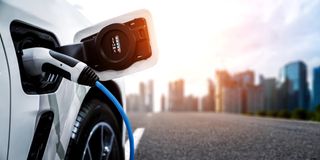
The Treasury is seeking to lease the units alongside 70 EV fast chargers of 200 kilowatts as it steps up efforts to shift from internal combustion engine vehicles (ICEs). This will mark the single-largest order for EVs.
The order for the green fleet is part of the State’s latest round of a leasing programme that targets vehicles for use by the National Government Administrative Services, the National Police Service, the Kenya Prisons Services, and other ministries, departments, and agencies (MDAs).
Disclosures by the Treasury show that the State will lease a mix of electric and hybrid vehicles for four years, with the bulk going to fully electric units.
The order book, which closes on April 21, shows the State wants 335 units of double-cab 4x4 EV pick-ups, 125 units of medium-duty 4x4 passenger EVs, and 90 units of medium-duty 4x2 passenger EVs.
In addition, the Treasury is seeking smaller volumes of hybrid units — 10 medium-duty 2-wheel drive vehicles and 40 all-wheel drive crossover vehicles.
“The government of Kenya, through the National Treasury, seeks to roll out the use of EVs across MDAs and counties. For this reason, the rollout of EVs starts with the security sector agencies,” the Treasury said.
Subject to budgetary availability, the EV rollout will extend to other MDAs and counties under the leasing framework. The move will see EV dealers get more business.
Earlier estimates from the Treasury showed that each EV unit needs to be charged at Sh508 for a 430-kilometre drive, translating to Sh185,000 annually.
This means one EV unit will save the government Sh894,580 annually in fuel alone, compared to fuel worth Sh1.08 million spent on ICEs. Each ICE consumes about 15 litres of fuel daily at a monthly cost of at least Sh90,000.
The EV fleet will be supplemented by 2,423 diesel- and petrol-powered vehicles supplied in nine batches, with the largest batches being the second, first, and seventh at 997, 669, and 248 units, respectively.
The government is also looking for fuel suppliers for ICE vehicles, highlighting the wider commercial benefits of the leasing programme. “The objective of the lease programme is to support the motor industry in terms of creating opportunities for local industries by way of forward or backward linkages,” the Treasury said.
According to the Treasury, the vehicle leasing programme provides the insurance sector with business worth Sh700 million in premiums annually, business worth Sh400 million to parts and accessory manufacturers, and a market for oil products amounting to Sh2.2 billion annually.
The gradual switch to EVs comes on the back of government expenditure on transport costs having nearly doubled in the past four years, mainly driven by spending on fuels, lubricants, operations, and maintenance.
Statistics on budgetary allocation to government transport show a steady rise from Sh8.6 billion in 2020/21 to Sh9.7 billion in 2021/22, Sh14.3 billion in 2022/23, and a further rise to Sh12.2 billion in 2023/2024.
Data by the Electric Mobility Association of Kenya (EMAK) shows that Kenya had a total of 14,570 registered electric vehicles by the close of 2024. A majority of the — 8,097 — were electric motorcycles.
Electric bicycles stood at 5,524, while passenger cars, tuk-tuks, buses, minibuses, and other vehicle classes that are electric-powered were 326, 324, 54, and 245, respectively.
Contrasting data by the Energy and Petroleum Regulatory Authority, however, puts the total EVs, including motor bikes and tuk tuks, in Kenya at a lower figure of 6,442 units as of June 2025.
The government launched the vehicle leasing programme in 2013, targeting efficient and cost-effective transport to the public workforce instead of outright purchases.
The multi-year car leasing programme, now on the eighth cycle with more than 8,000 vehicles mainly leased out to the National Police Service, was designed to provide efficient and cost-effective transport to the government extension workforce by providing cheap access to vehicles.
The Treasury said the leasing model had cumulatively saved the government Sh2.69 billion by mid-2024 by addressing challenges such as fuel misuse, high maintenance costs, and obsolescence of vehicles.
The State’s car lease scheme has a blend of participants, including the original equipment manufacturers such as Isuzu EA, ECTA, Simba Motors Corporation, and CFAO Mobility.
The scheme also supports leasing companies, including RentCo, Rentworks, NCBA leasing, Coop-Bank Fleet Africa, Star Rentals, and Avenue Car Hire, as well as insurance and financial institutions such as CitiBank, Co-op Bank, NIC, NCBA, Absa, Equity Bank and KCB. Accessory manufacturers such as Robbs Magic, Sai Raj, and NMC, and vehicle assemblers comprising KVM, AVA, and Isuzu Assembly, are also service providers.