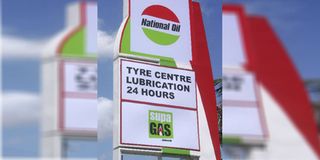
National Oil Corporation of Kenya’s (Nock) proposed deal with French oil major Rubis fell through, dimming hopes of reviving the struggling State-owned oil company.
Sources say the government failed to clear the over Sh10 billion loan that Nock tapped from KCB Group and Stanbic Bank years ago, leading to collapse of the deal. Payment of the loans was one of the key conditions from Rubis Kenya whose parent firm is Paris-based Rubis SCA.
Nock and Rubis had inked an agreement in 2024 but closing the deal was pegged on a number of conditions that the French oil firm gave, including commitment from the National Treasury to pay the loans.
Rubis and the Ministry of Energy and Petroleum had not responded to queries over what led to the collapse of the deal. However, a source said that failure to clear the two bank loans was a major reason why the joint venture flopped.
“There were conditions that Nock was unable to meet including the repayment of the loan to Stanbic and KCB Group. This is one of the reasons why the deal collapsed,” said the source who sought anonymity.
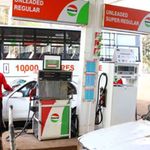
Under the deal, Rubis was to inject Sh6 billion into Nock with Sh3 billion for working capital while the remaining half was to be used to revamp Nock’s aging retail network and expand it. Rubis would then recoup the cash via a profit-sharing agreement for every litre of fuel sold.
The collapsed deal has dashed hopes of reviving Nock and this could compound its struggles to match the well-oiled multinationals like Vivo Energy, TotalEnergies Marketing Kenya, Rubis and local firms such as Hass Petroleum, Galana and Stabex.
Besides Rubis, Nock had also sounded out Total and Vivo for the joint venture in 2023 as it sought to expedite the process that had been approved by the Cabinet that year. Total and Vivo declined the proposal.
Nock tapped Sh4.69 billion from KCB Group and Sh1.3 billion from Stanbic Bank more than a decade ago to fund operations. But penalties for defaulting pushed the credit facilities to Sh7.53 billion and Sh2.5 billion respectively as at June 2024.
In its prime in the 1990s, Nock had over 100 fuel stations across Kenya but years of losses, underfunding from the Exchequer and fierce competition from the well-oiled multinationals and local firms squeezed it into near oblivion.
Vivo Energy, seller of Shell-branded petroleum products, is the biggest oil firm in Kenya with a market share of 20.6 percent in the six months ended December 2025, ahead of Total at 14 percent and Rubis at 13.77 percent.
Hass had a market share of 3.4 percent in the period ahead of Galana Energies and BE Energy at 3.2 percent each and Stabex at 2.8 percent, making them the four biggest oil firms by market share. Nock’s share was less than one percent.
Nock’s floundering fortunes are a stark contrast to its peers in the region, who have in the past few years been tasked with ensuring the security of fuel for their respective countries under Government-to-Government (G-to-G) deals.
Uganda National Oil Company (Unoc) rolled out a five-year deal with Vitol Bahrain to import fuel meant for the Ugandan market. The deal started in 2024 and allows Unoc to get the fuel on credit.
In Rwanda, the State-owned Rwanda National Energy Company (RNEC) was recently formed to import fuel in a deal with OQ Trading, which is owned by the Sultanate of Oman.
Kenya, Uganda and Rwanda are all importing fuel on G-to-G deals with Gulf oil majors. However, in Kenya, private oil firms have been tasked with importing the fuel as opposed to relying on Nock.
Nock was formed to ensure that Kenya has enough fuel reserves of fuel in case of disruptions in the global market.
Under the petroleum regulations, 30 percent of the monthly imports of fuel is reserved for Nock but the firm's funding struggles have hindered it from exercising this right.