2026 pivotal year in Kenya’s quest to raise power output

BDOLKARIAV3110t

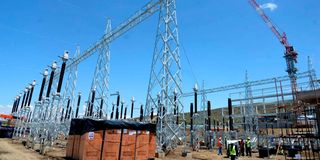
A power substation at Olkaria.

Photo credit: File | Nation Media Group

An eight-year freeze on new power purchase agreements (PPA) has left Kenya teetering on the brink of a crisis with Kenya Power forced to ration electricity in some parts of the country to protect the grid whenever demand peaks in the evening.

The Ministry of Energy and Petroleum describes 2026 as pivotal in the quest to start growing local generation and ensure that the country does not continue to overly rely on neighbouring economies, mainly Ethiopia and Uganda.
A ban on new PPAs came into force in May 2018 on recommendations of a presidential taskforce to pause all new deals and scrutinise the existing ones. Cabinet lifted it in 2023 but Parliament reinstated it in 2024 saying it needed more time to investigate the current PPAs amid costly electricity and reluctance by most power producers to lower their wholesale prices of electricity.

MPs lifted the freeze in November 2025, ending the moratorium which had significantly hurt local generation of electricity, forcing the country to increasingly rely on electricity imports to avert large-scale power rationing.

Kenya Power is now racing to complete talks with investors who are keen to set up plants with a combined generation capacity of 1,112 Megawatts (MW) and avert a crisis where peak demand for electricity has jumped by 637.06MW between 2018 and this year.

The new peak of 2,439.06MW, recorded on December 4, 2025 dwarfs the marginal growth in local production over the seven years, exerting pressure on Kenya Power in its efforts to avoid countrywide rationing of electricity.

Alex Wachira, the Principal Secretary in the State Department of Energy says that 2026 is a crucial year with increased efforts to get most of the PPAs under negotiation into a financial close and start construction.

“2026 will be critical in the sense that all those investors who had been lined up in the least cost power development plan and have already negotiated tariffs with KPLC will now get to financial close and start development,” says Mr Wachira.

Financial close is the final step in PPAs and entails securing funds, paving the way for a power producer to start constructing a plant.

Power plants take at least 18 months to build and commission, underscoring why Kenya Power is keen to close the deals next year and ensure that new plants are onboarded as early as end of 2027.

Some of the big power plants where talks are expected to be expedited in 2026 include four wind plants, where one has a 100MW capacity and will be built by Hewani Energy. Each of the remaining three has a 50MW capacity. These are Chania Green, Prunus Energy Systems and Aperture Green.

“The first and second meeting was and a third meeting followed on October 17, 2025. KPLC to prepare a draft PPA template to share with the investor for mark up,” the Ministry of Energy says on one of the three plants.

President William Ruto recently said that Kenya needs to produce an additional 10,000MW by 2030, in a bid to help the country meet the fast-growing demand for electricity.

Failure to get new power plants to the national grid, coupled with the surging demand has exposed Kenya with the country rendered insecure in terms of electricity supply.

Spinning reserves —extra electricity which is available above the peak demand— are currently at four percent, which is significantly low compared to the globally accepted standard range of 15-35 percent.

Kenya Power reopened talks with investors over the new electricity plants last year, in anticipation that Parliament would be fast to lift new PPAs.

Onboarding new power plants within the next two years is critical in helping Kenya Power to reduce reliance on electricity imports.

Kenya has deepened reliance on Ethiopia and Uganda with power imports from the two economies rising to 10.6 percent or 1.53 billion Kilowatt-hours (kWh) of the total 14.4 billion kWh bought in the year to June 2025 compared to two years earlier.

But the reliance on imports has exposed Kenya’s soft underbelly, in the event of a prolonged drought or major failure by one of the plants which could disrupt generation in the two countries.

“My concern is that this is hydropower from these countries and in a situation where there is a serious drought, then they might be left in a position where they might be unable to meet this obligation,” Kenya Power CEO Joseph Siror recently told this publication.

Mr Wachira says that the Ministry of Energy is keen to bolster the generation of the baseload power (geothermal and hydro) and ensure that the country.

“We are looking to increase more generation as opposed to having a specific number of PPAs signed. Most activities that are ongoing are targeting to increase the baseload,” Mr Wachira added.

Kenya Power had targeted to close some of the talks before the end of this year but this was delayed after Parliament delayed lifting the ban on new PPAs.

The electricity distributor has been forced to scale power rationing over recent years in a bid to safeguard the national grid due to the imbalanced demand against supply.

Rationing has at times been enforced from as early as 5pm and largely targets the Western region, underscoring the fast mounting pressure on the country’s electricity supply.

Besides the talks for new power plants, Kenya is expected to get an additional 133MW by the end of next year. This will be an additional 63MW when uprating of the Olkaria I geothermal plant is complete.

Globeleq and OrPower 22 are expected to complete construction of two plants in Menengai, Nakuru County. Each of the plants will have a production capacity of 35M.

Sosian Energy, which is owned by the family of the late President Daniel Moi recently completed its 35MW geothermal plant in Menengai, making it the latest plant to be linked to the national grid.

Clean sources (geothermal, hydro, wind and solar) account for 80 percent of the national electricity mix. But the country is not able to rely on wind and solar when demand peaks in the evening.

Wind and solar power plants in Kenya lack battery storage, making it impossible to store the power generated during sunny days or when there are high wind speeds.

Lack of battery storage has forced Kenya Power to continue relying on the dirty and expensive thermal plans to compliment imports during peak demand.

There are seven thermal plants supplying electricity to Kenya Power. But the company is keen to progressively reduce the amount of electricity tapped from these plants.

Follow our WhatsApp channel for the latest business and markets updates. 

PAYE Tax Calculator

Note: The results are not exact but very close to the actual.