The United States has issued a new health alert for Kenya due to an increase in dengue fever cases. This places the country back on the US Centres for Disease Control and Prevention's (CDC) Global Dengue Travel Health Notice, more than two years after the agency first issued the global advisory in June 2024.
The updated notice, released on August 3, maintains Kenya at Level 1 – Practice Usual Precautions, which is the lowest travel advisory level. However, it flags an elevated risk along the coast and in Wajir and Garissa counties. Although it does not advise against travel, the CDC recommends that travellers take steps to prevent mosquito bites.
Kenya is one of 11 countries reporting higher-than-usual dengue activity, or a higher-than-expected number of dengue infections among US travellers returning from these destinations. The others are Bolivia, Cambodia, Colombia, Malaysia, the Maldives, New Caledonia, Samoa, Sri Lanka, Tonga and Vietnam.
"Dengue is a mosquito-borne virus common in tropical and subtropical climates that can lead to fever, aches and pains, nausea and rashes," the statement said.
"Travellers to risk areas should prevent mosquito bites by using an EPA-registered insect repellent, wearing long-sleeved shirts and long trousers outdoors and sleeping in an air-conditioned or screened room."
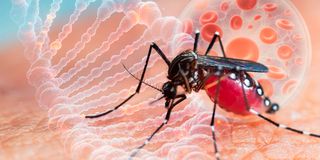
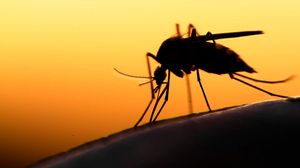
Dengue is a viral infection mainly transmitted by the Aedes aegypti mosquito, which breeds in stagnant water and bites mainly during the day. The disease can range from a mild or asymptomatic infection to severe dengue, including haemorrhagic fever, which can be fatal without prompt medical care.
Symptoms usually develop within three to 10 days of being bitten by an infected mosquito, most commonly within five to seven days. These include sudden high fever, severe headache, pain behind the eyes, and intense muscle and joint pain. Others are nausea, skin rash, and in some cases, mild bleeding such as nosebleeds or bleeding gums.
Diagnosis can be difficult because the initial symptoms are similar to those of malaria and chikungunya.
Kenya does not currently offer a dengue vaccine; therefore, the main defences against the disease are mosquito-bite prevention, vector control, and early treatment.
Kenya's current outbreak began in November 2025.
The country has experienced repeated dengue outbreaks over the past four decades. Major outbreaks have been recorded along the coast in 1982, from 2013 to 2014, and in 2021.
The northeastern counties of Garissa, Wajir, and Mandera have also experienced periodic surges, including a major outbreak in Mandera between 2011 and 2012 that infected several thousand people.