Turkana, Mandera top in open defecation

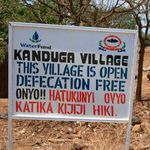
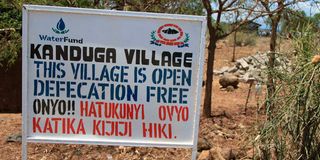
A sign in Kanduga village, in Tharaka Nithi county warning residents against open defaecation on October 15, 2020.

Photo credit: Joseph Kanyi| Nation Media Group

Turkana, Mandera and Migori counties have the highest number of residents who practice open defecation in fields, forests, bushes, lakes and rivers, and in open pits with no slabs– rather than using a toilet, a new survey shows.

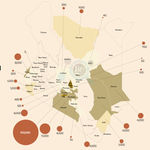
The study by the Kenya National Bureau of Statistics (KNBS), which covered all 47 counties, shows that Turkana leads in open defecation with 72.6 percent of households using bush and hanging toilets, almost three times the national average.
Mandera followed with 72.5 percent of homes not having proper and safe sanitation facilities.

“Survey results show that 93.4 percent of urban households have access to an improved toilet facility. However, some counties like Turkana, Mandera, Marsabit, and Wajir registered high numbers of households using unimproved toilet facilities, with percentages of 72.6, 72.5, 67.9 and 63.6 respectively,” said KNBS.

Unimproved toilet facilities include open pits or pit latrines without slabs, bucket toilets, hanging latrines and bushes or fields.

In Tana River (59.9 percent), Bomet (59.8 percent), Samburu (56.6 percent), Elgeyo Marakwet (55.9 percent), Narok (53 percent) and Nyandarua (52 percent), more than half of households use bushes, pits without slabs and hanging toilets.

Hanging latrines consist of a structure that usually floats above water, in most cases with a squat hole in the floor to allow excreta to fall directly into the water.

Nandi (49.6 percent) and Kericho followed with 49.4 percent of its residents using pit latrines without a slab.

Top counties

Kiambu (99 percent), Nairobi (97.5 percent) and Mombasa (96 percent) were the top counties with proper and improved toilet facilities.

About 93.4 percent of Embu households, Taita Taveta (93 percent) and 89.7 percent of Murang’a residents have proper toilet facilities.

This means that residents of towns in these counties use flush toilets that connect to the main sewer, septic tank, cesspool or pit latrine.

Improved lavatory facilities have ventilated pits, covered latrines, biodigesters, and composting units. The majority of Kenyan households use pit latrines with slabs, at 39.1 percent and 10.5 percent use pits with ventilation.

About three in 10 urban households use toilets that flush into a sewer system, and 19.6 percent flush into a septic tank.

Access to safe and usable toilet facilities is a crucial component of public health and safety.

Open defecation is associated with the spread of diseases such as diarrhoea, cholera and typhoid.

Improved sanitation is associated with long-term benefits, such as improved school attendance, especially for girls, who benefit from separate, hygienic facilities, and helps reduce the impact of malnutrition on health and development.

There is a significant difference between access to toilet facilities in rural and urban households. In rural areas, it is much more common not to use a toilet facility and to use an open field for defecation.

The data shows that the counties with high open defecation rates also have the highest rates of food poverty.

A poverty report by KNBS shows that the top five food poor counties (among the 15-24- year youth) are Mandera (with a food poverty rate of 86 percent), Turkana (74 percent), Marsabit (67 percent), Kilifi (61 percent), Samburu (57 percent) and West Pokot (57 percent).

Turkana, Mandera, Marsabit, Tana River, and Samburu are the most affected by hardcore poverty among the elderly.

PAYE Tax Calculator

Note: The results are not exact but very close to the actual.