Hospitals to get accreditation scores like hotels in safety push

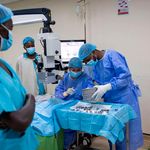
Doctor and patient

Under the Bill, hospitals will be evaluated on key indicators such as patient safety, quality of care, staffing levels, and availability of medicines and equipment.

Photo credit: Pool

Kenyans will soon have the power to make informed choices on where to seek treatment after the government unveiled plans to assign every hospital in the country a quality score—much like the star ratings used for hotels.

The proposed scoring and rating system, contained in the Quality Healthcare and Patient Safety Bill, 2025, will assess facilities on service delivery, safety, and patient care standards, offering citizens a transparent guide to the quality of care available.

It seeks better outcomes for patients in the push to lower death rates and rate of readmissions at accredited hospitals.

Under the Bill, hospitals will be evaluated on key indicators such as patient safety, quality of care, staffing levels, and availability of medicines and equipment.

Results will be compiled by the Health Standards and Quality Assurance Authority, which will then publish rankings, allowing citizens to compare hospitals before seeking treatment.

“The Authority shall establish a quality scoring and rating framework for health facilities,” says the Bill sponsored by National Assembly Majority Leader Kimani Ichung’wah.

Health economists have, however, warned that the government should focus on minimum standards of safety rather than accreditation, which they argue should be left to independent agencies free from political interference.

Among such agencies is the US-based Joint Commission International (JCI), which accredits hospitals globally based on rigorous quality and patient safety benchmarks.

“It is a good idea, well-intentioned but the wrong prescription,” one expert told the Business Daily.

Facilities that consistently fall below required benchmarks risk sanctions, ranging from corrective directives to suspension of licenses.

Those failing to ensure patient safety could face fines of up to Sh50 million or jail terms of up to 10 years for owners and managers.

“A health facility which fails to comply with provisions of this section commits an offence and shall be liable, on conviction, to a fine not exceeding fifty million shillings or to imprisonment for a term not exceeding ten years, or to both,” states section 18 of the Bill.

The legislation also compels hospitals to audit their safety systems and submit annual reports, while every facility will be required to hold a professional indemnity cover to protect patients from negligence or malpractice.

The Bill comes in the wake of high-profile medical errors in Kenya, including wrong-patient surgeries at Kenyatta National Hospital, maternal deaths linked to negligence, and reports of malpractice in both private and public facilities. Some cases have been fatal, underlining glaring gaps in patient safety oversight.

Most recently, Mediheal Hospital, associated with former Kesses MP Swarup Mishra, came under sharp scrutiny following allegations of illegal kidney harvesting.

The scandal, which was investigated by a government-appointed taskforce, underlined weak oversight and inadequate enforcement. Mediheal has denied wrongdoing.

Globally, the problem is just as severe. According to the World Health Organization (WHO), one in 10 patients worldwide suffers harm while receiving hospital care.

In low- and middle-income countries, unsafe care contributes to 2.6 million deaths annually. Beyond the human toll, medical errors and unsafe practices cost the global economy billions of dollars every year, says the WHO.

Kenya’s push for universal health coverage (UHC), relaunched in 2024 under the Social Health Authority, demands not just affordable but safe and reliable care. The Bill defines a health facility broadly to include not just hospitals and clinics but also pharmacies, medical laboratories, funeral homes, ambulances, home care centres, and even mobile digital health platforms.

Every facility will be required to verify the qualifications of healthcare providers, ensure staff undergo regular training, and comply with clinical guidelines and internship standards.

Patients, too, will bear responsibility: they will be required to adhere to medical advice and provide accurate health information.

Kenya is not alone in adopting performance-based hospital ratings. The United Kingdom’s Care Quality Commission (CQC) routinely inspects hospitals and publishes ratings from “Outstanding” to “Inadequate,” giving patients’ confidence in choosing providers. In the United States, Medicare’s Hospital Star Rating system offers consumers comparative performance data, influencing patient choice and insurance reimbursements.

In India, the National Accreditation Board for Hospitals (NABH) accredits facilities based on standards similar to JCI, while in South Africa, the Office of Health Standards Compliance (OHSC) conducts inspections to enforce quality benchmarks.

By adopting a similar scoring framework, Kenya is attempting to align itself with global patient safety movements, such as WHO’s Global Patient Safety Action Plan 2021–2030, which calls for stronger regulation, accountability, and patient engagement.

The proposed law comes just weeks after Health Cabinet Secretary Aden Duale announced the closure of over 1,000 health facilities for failing to meet licensing requirements.

President William Ruto has also said that nearly 1,000 clinics implicated in fraudulent Social Health Authority claims have been shut, with owners expected to refund monies.

The Bill is the fifth major health law tabled under Ruto’s administration to operationalise UHC, following the Primary Health Care Act, Digital Health Act, Facility Improvement Financing Act, and Social Health Insurance Act.

Still, experts caution that the real test will lie in implementation and independence. Some critics have also wondered whether the new authority will not clash with the other regulators, including the Kenya Medical Practitioners and Dentist Board (KMPDB)

PAYE Tax Calculator

Note: The results are not exact but very close to the actual.