Analyst brews a homegrown high-quality coffee business

Coffee Lab Nairobi founder Wanjiru Mari poses for a photo during an interview at her main outlet along Mugumoini Lane in Nairobi, on July 22, 2025.

Photo credit: Wilfred Nyangaresi | Nation Media Group

As a data analyst predicting Kenya’s food security, Wanjiru Mari spent her days crunching numbers, but her weekends told a different story. Between sips of office coffee, a question nagged at her: Why does Kenya, one of the world’s top coffee producers, export its best beans while locals drink low-quality brews?

That curiosity led her to coffee farms, where she studied every step of the value chain, from harvest to roast. What began as a side hustle—renting roastery space on weekends to experiment with flavour profiles— soon became Coffee Lab Nairobi, a specialty coffee brand on a mission to make Kenyans fall in love with their own coffee.
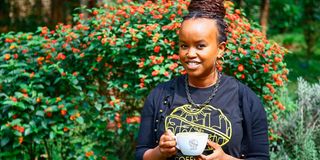
“Coffee tastes different based on who grows it and how it’s processed,” Wanjiru explains. “Some Kenyan producers add yeast during fermentation and win global awards, but locals never taste it. We’re an export-heavy industry, so Kenyans miss out.”

For her, coffee wasn’t just a product; it was a story waiting to be told. While cafes served commercial-grade blends, she focused on emotional connection; teaching customers how soil, climate, and craft shape each cup. “We’re creating ownership,” she says.

Coffee Lab Nairobi, has grown steadily, but not without its challenges. “It’s easier to do commercial coffee like most cafés. But we need depth, not just growth—and that takes time.”

Strategic shift

Trained as a physicist in Germany, Wanjiru says her gradual transition from employment to entrepreneurship helped reduce risk. “There’s nothing romantic about entrepreneurship,” she says. “At first, I was doing everything myself; from roasting to selling to building the website.”

Coffee Lab Nairobi founder Wanjiru Mari (right) and head roaster Kabubah Kimani prepare coffee during an interview at their main outlet along Mugumoini Lane in Nairobi, on July 22, 2025.

Photo credit: Wilfred Nyangaresi | Nation Media Group

By the time she left full-time employment, she had already developed an understanding of the coffee business—price fluctuations, auctions, and how to buy and sell effectively. “That context is often lost when people say they’re just doing what they love,” she points out.

Today, Coffee Lab’s core business is roasting and packaging coffee. It runs a café, but Wanjoiru clarifies, it is simply a channel to introduce people to the product and build value from the top.

A tough start

Wanjiru says the toughest part in the beginning was learning how to roast coffee. Now, her focus has shifted to managing people, growing revenue, and maintaining cash flow.

“Every stage of business growth has its own challenges,” she reflects. “Early on, even getting information about coffee was difficult. Entry is expensive. Coffee is auctioned in lots—you either buy the whole lot or nothing. That doesn’t work for small businesses.”

She adds that the industry is highly regulated, which, while protective, can also be restrictive. “It’s a ‘big boys’ game’. The big players move prices, and you need several licences and inspections. That dictates who can participate, and at what scale.”

Hiring skilled personnel and affording rent were also major hurdles. “But as a business owner, you must take bigger risks—otherwise, you stay stuck.”

Targeting tanatics

Rather than competing on volume, Coffee Lab Nairobi has taken a more deliberate approach: building a network of loyal, informed customers.

A variety of specialty coffee blends on display at Coffee Lab Nairobi on July 22, 2025.

Photo credit: Wilfred Nyangaresi | Nation Media Group

“We let them taste coffee from different countries and origins, including cooperatives that experiment—like coffee soaked in orange—to see what more can be done with flavour,” she says.

This unique approach has paid off. Within a year, the company tripled its revenue. But Wanjiru cautions that growth in this industry takes time. “You have to be intentional about telling your story.”

In 2024, she explored working with investors, but came to a key insight. “The best investor is one who brings customers. Sometimes, investment isn’t money, it’s expertise.”

Coffee Lab also launched an annual subscription model after noticing repeat customers. “It’s been a real source of growth. It gives long-term value, gives us recurring revenue, and ties customers in emotionally and financially.”

Brewing a culture

Looking ahead, Wanjiru plans to open more outlets—but says foot traffic and customer experience will be key. “We want people to experience and get enthusiastic about coffee. That’s what drives the culture.”

For her, coffee should become a national symbol, much like wine is for the French. “I want coffee to be a culture carrier, a source of pride and identity.”

A barista measures and weighs coffee beans at Coffee Lab Nairobi on July 22, 2025.

Photo credit: Wilfred Nyangaresi | Nation Media Group

According to Wanjiru, the biggest costs in the business are rent, personnel, roasting equipment, and licensing. An initial investment of around Sh300,000 can set up a small outlet, but buying roasted coffee wholesale is a more affordable entry point.

“This is a high-margin business,” she says, “but we reinvest everything. That’s the short-term sacrifice for the long-term vision.”

In 2023, when the Kenya shilling was volatile, Wanjiru chose to convert revenue to dollars instead of hedging. “Forex fluctuations can kill a business,” she says. While the dollar is now stable, coffee prices remain unpredictable—fluctuating between $6 and $10 per kilo.

Ultimately, her goal is to export roasted coffee. “Kenya produces more than it consumes. But those who define coffee value and taste are not the producers. Shifting that is key.”

PAYE Tax Calculator

Note: The results are not exact but very close to the actual.